Advanced Computational Drug Discovery Masterclass Training Course
Advanced Computational Drug Discovery Masterclass Training Course is engineered to equip experienced scientists and data professionals with the cutting-edge computational methodologies necessary to accelerate therapeutic discovery and significantly reduce the time and cost associated with bringing novel drugs to market
Skills Covered
Course Overview
Advanced Computational Drug Discovery Masterclass Training Course
Introduction
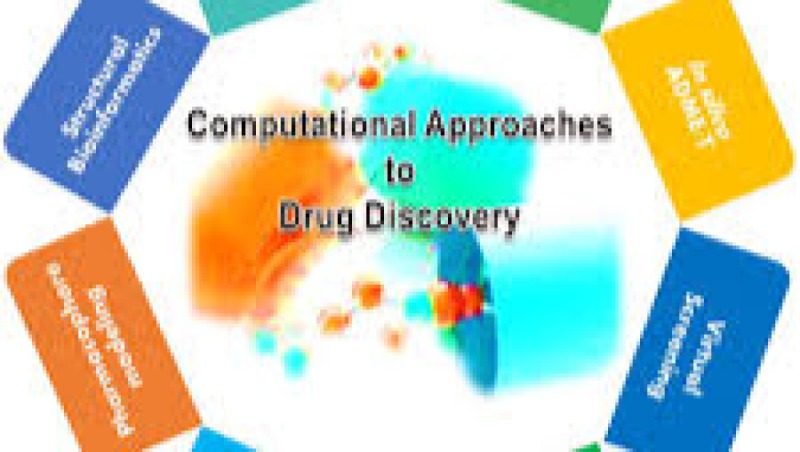
The landscape of pharmaceutical research is undergoing a profound and rapid transformation, driven by the convergence of Artificial Intelligence (AI), Big Data Analytics, and High-Performance Computing (HPC). Advanced Computational Drug Discovery Masterclass Training Course is engineered to equip experienced scientists and data professionals with the cutting-edge computational methodologies necessary to accelerate therapeutic discovery and significantly reduce the time and cost associated with bringing novel drugs to market. Traditional drug discovery pipelines are resource-intensive and plagued by high attrition rates; modern Computer-Aided Drug Design (CADD), especially with Deep Learning and Generative Models, offers the precision and efficiency to rationally design molecules, predict ADMET (Absorption, Distribution, Metabolism, Excretion, and Toxicity) properties in silico, and manage complex multi-omics data. This mastery is crucial for navigating the next generation of drug modalities, from small molecules to PROTACs and biologics.
This intensive, hands-on program moves beyond foundational concepts to explore advanced physics-based simulations (like Free Energy Perturbation (FEP)) and state-of-the-art Machine Learning (ML) pipelines for De Novo Drug Design. Participants will gain practical expertise in developing, validating, and deploying predictive models for virtual screening, target identification, and lead optimization. The focus is on translating theoretical knowledge into practical, industry-relevant skills that drive tangible innovation, leveraging public and proprietary datasets, and mastering tools that are becoming the industry standard. Upon completion, attendees will be strategic leaders capable of integrating complex computational workflows to tackle currently 'undruggable' targets and spearhead the next breakthroughs in precision medicine.
Course Duration
10 days
Course Objectives
- Master Deep Learning for Drug Discovery architectures for molecular property prediction.
- Design and execute Physics-Based Simulations, including Molecular Dynamics (MD) and Free Energy Perturbation (FEP), to calculate absolute and relative binding affinities.
- Develop and validate Quantitative Structure-Activity Relationship (QSAR) and Quantitative Structure-Property Relationship (QSPR) models using advanced Machine Learning techniques.
- Implement Generative AI for De Novo Design to create novel chemical entities with optimized multi-parameter profiles.
- Conduct advanced Virtual Screening campaigns combining Structure-Based Drug Design (SBDD) and Ligand-Based Drug Design (LBDD) methodologies.
- Strategically apply Explainable AI (XAI) methods to interpret and trust complex predictive models for lead optimization.
- Integrate Multi-Omics Data for Target Identification and validation using systems pharmacology approaches.
- Accurately predict ADMET and Toxicity liabilities in silico early in the drug development pipeline.
- Apply computational methods to emerging drug modalities, specifically PROTACs and Peptide Therapeutics.
- Utilize cloud-based High-Performance Computing (HPC) resources and best practices for large-scale computational experiments.
- Perform Target Vulnerability and Hit-to-Lead Optimization using advanced cheminformatics and bio-informatics tools.
- Design robust, data-driven workflows for Drug Repurposing leveraging public and proprietary databases.
- Critically evaluate and report on the capabilities and limitations of state-of-the-art Computational Drug Design tools and literature.
Target Audience
- Medicinal Chemists and Computational Chemists.
- Bioinformatics Scientists and Data Scientists.
- R&D Managers and Team Leads.
- Pharmaceutical Scientists.
- Toxicologists and ADMET Scientists.
- Postdoctoral Researchers and PhD Students in Computational Chemistry, Biochemistry, or Pharmacy.
- Software Engineers.
- Biotech Founders and Strategy Consultants.
Course Modules
Module 1: Foundational Principles of Advanced CADD
- Review of classical CADD.
- Understanding the Drug-Like Chemical Space and the 'Rule of Five' in a modern context.
- Molecular Descriptors and Representations
- Setting up High-Throughput Computational Workflows on HPC/Cloud Infrastructure.
- Case Study: Analysis of a successfully docked and validated hit molecule for a GPCR target.
Module 2: Advanced Cheminformatics and Data Curation
- Handling and curating large-scale chemical databases.
- Advanced techniques for molecular standardization and dealing with tautomers/stereoisomers.
- Chemical Space visualization and diversity analysis
- Integrating assay data and calculating pIC50/Ki values for ML model training.
- Case Study: Data preparation for a QSAR model targeting a specific kinase family.
Module 3: Modern Structure-Based Drug Design (SBDD)
- Flexible docking, ensemble docking, and induced-fit protocols.
- Ligand-protein interaction analysis and visualization of binding poses.
- Using popular SBDD software packages for virtual screening.
- Consensus scoring and rescoring methods for improved hit prioritization.
- Case Study: Identifying novel ligands for a bacterial enzyme using structure-based virtual screening.
Module 4: High-Fidelity Molecular Dynamics (MD) Simulations
- Theory and application of classical force fields
- Setting up and running production-scale MD simulations for protein-ligand complexes.
- Trajectory analysis, root-mean-square deviation (RMSD), and binding pocket flexibility.
- Enhanced sampling techniques to explore conformational changes.
- Case Study: Investigating the conformational stability of a drug-resistant mutant protein binding its inhibitor.
Module 5: Free Energy Perturbation (FEP) for Binding Affinity
- Statistical mechanics and the concepts of GbindΓÇï and FEP theory.
- Implementing FEP and MM/GBSA/MM/PBSA for accurate relative binding affinity calculations.
- Best practices for FEP setup, convergence monitoring, and error estimation.
- Applying FEP to predict the impact of minor chemical modifications on potency.
- Case Study: Retrospective analysis of FEP predictions vs. experimental data for a series of lead optimization analogues.
Module 6: Fundamentals of Machine Learning (ML) for CADD
- Review of supervised and unsupervised learning algorithms
- Feature engineering from molecular descriptors and fingerprints.
- Cross-validation, external validation, and applicability domain.
- Classification vs. Regression tasks in drug discovery
- Case Study: Building and validating a Random Forest model for predicting hERG cardiotoxicity.
Module 7: Deep Learning for Molecular Property Prediction
- Introduction to Graph Convolutional Networks (GCNs) and Recurrent Neural Networks (RNNs) on SMILES strings.
- Training deep learning models for QSAR/QSPR using specialized libraries
- Handling imbalanced datasets common in biological activity screens.
- Multi-task learning for simultaneous prediction of multiple properties.
- Case Study: Developing a GCN model to predict the blood-brain barrier (BBB) permeability of drug candidates.
Module 8: Generative AI and De Novo Drug Design
- Introduction to Generative Chemistry
- Reinforcement Learning (RL) for guiding molecule generation towards desired properties.
- Generating novel molecules optimized for multi-parameter criteria
- Filtering and assessing the novelty and synthetic accessibility of generated molecules.
- Case Study: Using a Deep Generative Model to design a novel scaffold for a known enzyme inhibitor.
Module 9: Predicting ADMET and Toxicity (ADMETox)
- Computational models for Absorption, Distribution, Metabolism, and Excretion.
- Predicting P450 inhibition and substrate specificity
- Advanced models for Hepatotoxicity and Mutagenicity prediction.
- Integrating multiple predictive models into a single, comprehensive scoring function.
- Case Study: Utilizing a panel of open-source tools to profile the liabilities of a lead compound.
Module 10: Advanced Target Identification and Network Pharmacology
- Merging gene expression, proteomics, and phenotypic screening data.
- Building and analyzing biological networks
- Predicting novel targets and understanding off-target effects using computational approaches.
- Identifying new indications for existing drugs based on target overlap.
- Case Study: Applying network analysis to identify key regulatory hubs in a complex disease like AlzheimerΓÇÖs for novel target selection.
Module 11: Computational Design of Emerging Modalities
- Principles of PROTAC design and the ternary complex.
- Modeling and simulation challenges unique to large, flexible molecules like PROTACs and peptides.
- Computational tools for linker design and E3 ligase selection.
- Introduction to computational protein design and AlphaFold applications.
- Case Study: Computational design strategies to optimize the bivalent binder of a PROTAC.
Module 12: Explainable AI (XAI) and Model Interpretation
- Understanding the need for interpretability in regulatory science.
- Applying SHAP and LIME values to deep learning drug discovery models.
- Visualizing feature importance and identifying crucial molecular fragments for activity.
- Using mechanistic interpretations to inform follow-up medicinal chemistry efforts.
- Case Study: Deconstructing a complex QSAR model to justify structural modification in a lead optimization project.
Module 13: High-Throughput Virtual Screening (HTVS) Pipelines
- Designing an efficient HTVS pipeline from library selection to final hit list.
- Combining ligand-based and structure-based filtering.
- Calculating Enrichment Factors and ROC AUC for screening performance.
- Practical considerations for handling massive chemical libraries
- Case Study: Setting up an in-house Virtual Screening campaign against a novel anti-cancer target.
Module 14: Computational Pharmacokinetics and Pharmacodynamics
- Introduction to basic PK/PD modeling concepts and parameters.
- Computational tools for predicting human PK parameters from in vitro data.
- Integrating in silico ADMET predictions into a PK/PD framework.
- Using computational models to predict drug concentration over time in vivo.
- Case Study: Predicting the human dosage and dosing frequency for a preclinical candidate using modeling.
Module 15: Software Mastery and Industry Best Practices
- Hands-on training with industry-standard software and open-source packages
- Version control and reproducible research in computational chemistry
- Ethical and regulatory considerations for AI/ML in drug development.
- Participants develop a complete CADD pipeline for a target of choice.
- Case Study: Review of a major pharmaceutical companyΓÇÖs successful implementation of an AI-driven CADD workflow.
Training Methodology
The Masterclass utilizes a blended, highly interactive and practical methodology to ensure deep understanding and immediate application of skills:
- Interactive Lectures.
- Hands-on Workshops
- Real-World Case Studies.
- Project-Based Learning.
- Expert Mentorship
- Peer Collaboration.
Register as a group from 3 participants for a Discount
Send us an email: info@datastatresearch.org or call +254724527104
Certification
Upon successful completion of this training, participants will be issued with a globally- recognized certificate.
Tailor-Made Course
We also offer tailor-made courses based on your needs.
Key Notes
a. The participant must be conversant with English.
b. Upon completion of training the participant will be issued with an Authorized Training Certificate
c. Course duration is flexible and the contents can be modified to fit any number of days.
d. The course fee includes facilitation training materials, 2 coffee breaks, buffet lunch and A Certificate upon successful completion of Training.
e. One-year post-training support Consultation and Coaching provided after the course.
f. Payment should be done at least a week before commence of the training, to DATASTAT CONSULTANCY LTD account, as indicated in the invoice so as to enable us prepare better for you.