Advanced Directed Evolution Techniques Training Course
. Advanced Directed Evolution Techniques Training Course moves beyond foundational molecular biology to focus on cutting-edge methodologies that leverage the power of accelerated evolution to solve complex, real-world problems.
Course Overview
Advanced Directed Evolution Techniques Training Course
Introduction
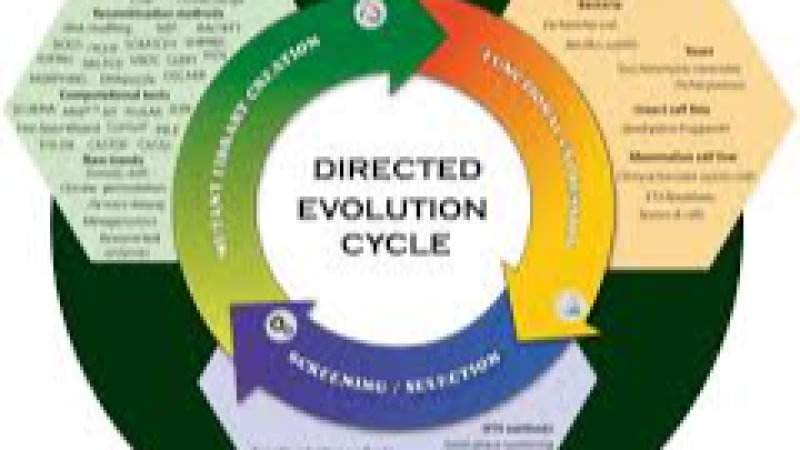
The rapidly advancing fields of Synthetic Biology and Protein Engineering demand sophisticated tools for optimizing biological function. Advanced Directed Evolution Techniques Training Course moves beyond foundational molecular biology to focus on cutting-edge methodologies that leverage the power of accelerated evolution to solve complex, real-world problems. Participants will master the systematic Design-Build-Test-Learn (DBTL) cycle, integrating high-throughput screening with advanced Machine Learning and Computational Biology to efficiently navigate vast protein fitness landscapes.
This program is essential for researchers and industry professionals seeking to accelerate R&D timelines for next-generation biocatalysts, therapeutic antibodies, and novel biosensors. We provide a deep dive into library generation strategies, including site-saturation and combinatorial approaches, alongside emerging platforms like Continuous Directed Evolution and microfluidics. By focusing on data-driven optimization and the latest AI-guided protocols, attendees will gain the expertise to engineer proteins and biological systems with unprecedented performance, stability, and specificity, driving innovation in pharmaceuticals, industrial biotechnology, and sustainable chemistry.
Course Duration
10 days
Course Objectives
- Master the principles of Machine Learning-Guided Directed Evolution to efficiently navigate complex protein fitness landscapes.
- Design and construct highly diverse combinatorial mutagenesis libraries using advanced DNA synthesis and assembly techniques.
- Implement and automate ultra-high-throughput screening using platforms like FACS, microfluidics, and microtiter plate assays.
- Apply Computational Protein Design principles to inform rational mutation design and complement evolutionary strategies.
- Utilize advanced Bioinformatics tools for sequence-function analysis, epistasis detection, and predictive modeling.
- Analyze and interpret complex directed evolution data using statistical methods and Active Learning frameworks.
- Engineer proteins for enhanced properties, including thermostability, solvent tolerance, and novel substrate specificity.
- Differentiate and apply various in vivo continuous evolution systems, such as Phage-Assisted Continuous Evolution
- Develop robust selection and screening assays for challenging targets, including protein-protein interactions and RNA-binding proteins.
- Optimize biocatalytic cascades and metabolic pathways by evolving rate-limiting or non-native enzymes.
- Formulate comprehensive intellectual property strategies based on engineered protein variants and evolutionary platforms.
- Apply directed evolution to the development of next-generation therapeutic modalities, including Antibody-Drug Conjugates and Viral Vectors.
- Troubleshoot common pitfalls in library creation, screening sensitivity, and local optima escape strategies.
Target Audience
- Protein Scientists/Engineers.
- R&D Scientists in Pharmaceutical and Biotech companies focusing on Therapeutics
- Industrial/Applied Biologists.
- Synthetic Biologists.
- Computational Biologists/Bioinformaticians.
- Graduate Students and Post-Doctoral Fellows.
- Group Leaders/Managers.
- Chemical Engineers.
Course Modules
1. Fundamentals & The DBTL Cycle
- Core principles of Directed Evolution vs. Rational Design.
- Detailed review of the Design-Build-Test-Learn cycle.
- Understanding protein fitness landscapes and local optima.
- Metrics for successful evolution campaigns
- Case Study: Frances Arnold's work on Cytochrome P450 for novel chemical synthesis.
2. Advanced Library Design
- Site-Saturation Mutagenesis.
- Combinatorial Library Construction.
- Gene shuffling, Staggered Extension Process, and SHIP-DE.
- Targeting loop regions, active sites, and allosteric pockets.
- Case Study: Evolution of novel reporter proteins
3. High-Throughput DNA Assembly
- Overview of seamless DNA cloning methods.
- Automation strategies for library construction
- Integration with next-generation sequencing for quality control.
- Rapid construction of multi-gene pathways for pathway engineering.
- Case Study: Assembling a multi-enzyme biocatalytic cascade with optimized genes.
4. Computational Protein Design
- Introduction to structure prediction and modeling tools.
- Using molecular dynamics to predict mutation effects
- Designing minimal libraries based on structural hot spots.
- Rational design of stabilizing point mutations for scaffold robustness.
- Case Study: Rational design of a thermostable enzyme for industrial washing detergents.
5. High-Throughput Screening
- Developing robust, quantitative enzyme assays for HTS.
- Automation using robotics and microtiter plate readers.
- Assay sensitivity, signal-to-noise ratio, and Z'-factor calculation.
- Microtiter plate assays for soluble protein activity.
- Case Study: Screening for altered substrate specificity in a drug metabolism enzyme.
6. High-Throughput Selection
- Principles of Selection vs. Screening for library size management.
- Cell-surface display systems.
- Fluorescence-Activated Cell Sorting for single-cell selection.
- Designing biosensors and genetic circuits for growth-coupled selection.
- Case Study: Engineering a high-affinity therapeutic antibody using Yeast Display.
7. Continuous Directed Evolution Platforms
- Introduction to Phage-Assisted Continuous Evolution
- Designing the necessary components.
- Phage-Assisted Non-Continuous Evolution and TRAP.
- Setting up and troubleshooting continuous evolution experiments.
- Case Study: Rapidly evolving a viral vector for enhanced cell-specific tropism.
8. Microfluidics for Ultra-HTS
- Principles of droplet microfluidics for single-cell encapsulation.
- Generating and manipulating picoliter-volume droplets.
- Droplet sorting and collection for ultra-high-throughput.
- Challenges in assay integration and data processing.
- Case Study: Screening 108 enzyme variants for a novel reaction in a single day.
9. Introduction to Machine Learning-Guided DE
- The shift from exhaustive search to guided exploration.
- Fundamentals of sequence-function relationships and sequence space.
- Linear models vs. complex models
- Data preprocessing, feature engineering
- Case Study: A foundational study using a simple linear model to predict enzyme stability.
10. Active Learning and Bayesian Optimization
- The core concept of Active Learning.
- Bayesian Optimization for efficient search on rugged fitness landscapes.
- Defining and utilizing an Acquisition Function
- Experimental design for generating high-quality training data.
- Case Study: Optimizing a complex epistatic system using AL-DE to escape a local optimum.
11. Bioinformatics and Data Analysis
- Processing and aligning large volumes of NGS data from evolved libraries.
- Statistical analysis of mutation frequencies and enrichment.
- Identifying key mutations and mapping them to structural changes.
- Visualizing fitness landscapes and evolutionary trajectories.
- Case Study: Analyzing a deep mutational scan dataset to uncover sequence-function rules.
12. Engineering Therapeutic Modalities
- Evolving Antibodies for enhanced affinity, reduced immunogenicity, and stability.
- Developing Antibody-Drug Conjugates via evolved conjugation enzymes.
- Directed evolution of CAR T-cell components for improved signaling.
- Strategies for engineering non-native protein-protein interactions
- Case Study: Improving the binding affinity and specificity of an antibody therapeutic.
13. Industrial Biocatalysis and Green Chemistry
- Engineering enzymes for non-aqueous, high-temperature, or extreme-pH conditions.
- Optimizing Stereoselectivity and Enantioselectivity for chiral drug synthesis.
- Evolving enzymes for the efficient capture and utilization of CO2ΓÇï.
- Industrial-scale expression and purification considerations.
- Case Study: Achieving high enantiomeric excess for a pharmaceutical intermediate.
14. Applications in Synthetic Biology and Diagnostics
- Evolving novel Transcription Factors and gene regulators for circuits.
- Developing highly specific Biosensors for environmental or medical diagnostics.
- Engineering Xenobiotic Nucleic Acid Polymerases.
- Optimizing metabolic pathways for enhanced compound yield.
- Case Study: Creating a cell-based biosensor to detect low concentrations of a pollutant.
15. The Future of Directed Evolution
- Integrating Large Language Models and protein generative AI into the DBTL cycle.
- CRISPR-mediated evolution and Multiplex Automated Genome Engineering
- Ethical and regulatory considerations for engineered biological systems.
- Developing a strategic roadmap for internal DE platform implementation.
- Case Study: Discussion of a recent breakthrough paper using AI to design an entirely novel protein.
Training Methodology
The course employs a blended, intensive learning model designed for maximum engagement and practical skill transfer:
- Lectures & Interactive Discussions.
- Computational Workshops.
- Experimental Protocol Reviews
- Case Study Analysis.
- Project-Based Learning.
Register as a group from 3 participants for a Discount
Send us an email: info@datastatresearch.org or call +254724527104
Certification
Upon successful completion of this training, participants will be issued with a globally- recognized certificate.
Tailor-Made Course
We also offer tailor-made courses based on your needs.
Key Notes
a. The participant must be conversant with English.
b. Upon completion of training the participant will be issued with an Authorized Training Certificate
c. Course duration is flexible and the contents can be modified to fit any number of days.
d. The course fee includes facilitation training materials, 2 coffee breaks, buffet lunch and A Certificate upon successful completion of Training.
e. One-year post-training support Consultation and Coaching provided after the course.
f. Payment should be done at least a week before commence of the training, to DATASTAT CONSULTANCY LTD account, as indicated in the invoice so as to enable us prepare better for you.