Backup and Disaster Recovery for ERP Systems Training Course
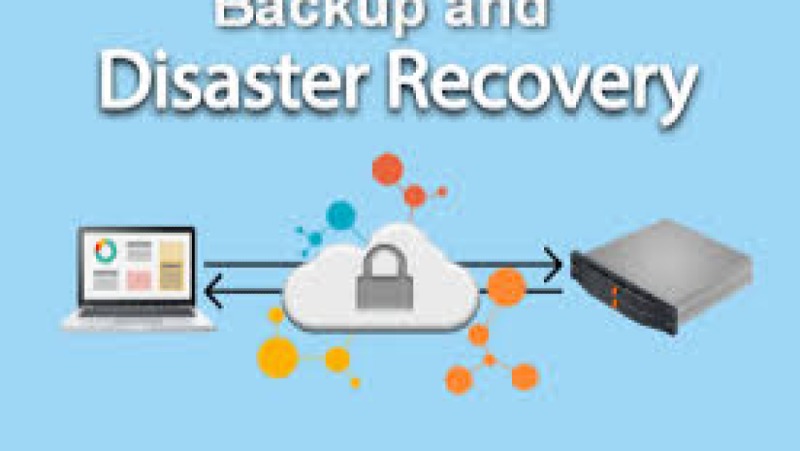
Backup and Disaster Recovery for ERP Systems Training Course is designed to empower IT professionals, System Administrators, and Business Continuity managers with the cutting-edge strategies and technical expertise needed to architect, implement, and rigorously test a resilient Backup and Disaster Recovery (BDR) plan for their organization's ERP environment.
Course Overview
Backup and Disaster Recovery for ERP Systems Training Course.
Introduction
In today's hyper-connected, always-on digital landscape, an Enterprise Resource Planning (ERP) system is the central nervous system of any modern business. Any disruption from a cybersecurity breach like Ransomware to a simple human error can lead to catastrophic financial losses and severe reputational damage. Backup and Disaster Recovery for ERP Systems Training Course is designed to empower IT professionals, System Administrators, and Business Continuity managers with the cutting-edge strategies and technical expertise needed to architect, implement, and rigorously test a resilient Backup and Disaster Recovery (BDR) plan for their organization's ERP environment. We focus on achieving stringent Recovery Time Objectives (RTO) and Recovery Point Objectives (RPO), mastering Cloud-Based Disaster Recovery (Cloud DR) solutions, and ensuring regulatory compliance in an era of increasing data governance requirements.
This course moves beyond theoretical knowledge, emphasizing practical application through real-world case studies and hands-on labs. Participants will learn to perform a comprehensive Business Impact Analysis (BIA), select optimal data replication and automated backup solutions, and execute seamless failover/failback procedures. The core focus is on building a proactive, multi-layered defense strategy integrating Business Continuity Planning (BCP) with robust technical recovery to safeguard critical business processes and secure data integrity, transforming the IT department from a cost center into a strategic pillar of organizational resilience.
Course Duration
5 days
Course Objectives
Upon completion of this course, participants will be able to:
- Strategically Architect a multi-tier ERP BDR Framework aligned with critical Business Continuity Planning (BCP) goals.
- Conduct a thorough Business Impact Analysis (BIA) to determine and validate precise Recovery Time Objectives and Recovery Point Objectives (RPO).
- Implement and manage advanced Automated Backup Solutions to combat modern threats like Ransomware.
- Master Cloud-Based Disaster Recovery strategies, including IaaS and DRaaS, for cost-effective off-site data replication.
- Design and configure high-availability and Fault-Tolerant ERP architectures to minimize single points of failure.
- Execute comprehensive, non-disruptive Disaster Recovery (DR) Testing and validation drills
- Ensure Data Governance and Regulatory Compliance throughout the entire backup and recovery lifecycle.
- Develop a robust Cybersecurity Incident Response Plan specific to ERP system compromise and data loss events.
- Select the optimal Data Replication technology based on application criticality.
- Manage and troubleshoot complex Database Recovery scenarios essential for ERP functionality.
- Implement Continuous Monitoring and Automated Alerting for BDR system health and performance metrics.
- Perform seamless Failover and Failback procedures to alternate sites or cloud environments.
- Calculate and justify the Total Cost of Ownership (TCO) for various BDR solutions to executive leadership.
Target Audience
- IT/System Administrators
- Disaster Recovery & Business Continuity Managers
- IT Directors and CTOs
- Security and Compliance Officers
- ERP Consultants and Implementation Specialists
- Data Center/Cloud Operations Engineers
- Senior Business Analysts involved in Business Impact Analysis
- Internal Audit and Risk Management Professionals
Course Modules
Module 1: Foundations of ERP Resilience & BIA
- Introduction to Business Continuity and Disaster Recovery in an ERP context.
- Defining and calculating critical RTO and RPO metrics for core ERP modules.
- Methodology for conducting a comprehensive Business Impact Analysis (BIA).
- Mapping ERP system dependencies and data flows
- Case Study: Analyzing an e-commerce company's supply chain downtime to establish RTO/RPO requirements.
Module 2: Modern Backup Strategies & Solutions
- Differentiating between Full, Incremental, Differential, and Synthetic Backups.
- Implementing the 3-2-1-1 Rule.
- Selection and configuration of leading Automated Backup Solutions
- Securing backup repositories against Ransomware and insider threats.
- Case Study: Implementing immutable, WORM-compliant cloud backups for a financial services ERP system.
Module 3: Database & Application Recovery Deep Dive
- Advanced techniques for database-specific recovery
- Understanding transaction logs and their role in minimizing data loss.
- The process of restoring the core ERP application layer and dependencies.
- Strategies for application consistency and data integrity verification post-restore.
- Case Study: A complex database corruption scenario and the use of log shipping for recovery.
Module 4: High Availability (HA) and Fault Tolerance
- Comparing HA solutions.
- Configuring Geographic Redundancy and Multi-Site Architectures.
- Implementing Zero Downtime maintenance strategies.
- Understanding and utilizing virtualization features for fast recovery.
- Case Study: Designing a three-site HA cluster for a global manufacturing ERP system.
Module 5: Cloud-Based Disaster Recovery (Cloud DR)
- DRaaS and IaaS for ERP DR environments.
- Migrating and orchestrating ERP systems in the Cloud
- Leveraging Cloud Replication and Cloud Bursting capabilities.
- Optimizing cloud DR for cost efficiency and scalability
- Case Study: Transitioning from a secondary data center to a managed DRaaS solution for a pharmaceutical company.
Module 6: DR Plan Development & Documentation
- Creating the formal Disaster Recovery Plan document and runbooks.
- Establishing clear roles, responsibilities, and a Communication Plan during a crisis.
- Defining triggers and declaration procedures for a disaster.
- Integrating the DRP with the broader Cybersecurity Incident Response Plan.
- Case Study: Drafting a concise, actionable DRP for a mid-sized utility company that minimizes decision-making delay.
Module 7: DR Testing, Audit & Validation
- Techniques for conducting different DR tests.
- Measuring and documenting test results against established RTO/RPO targets.
- Implementing a continuous improvement and Change Management process for the DRP.
- Audit requirements and proving Regulatory Compliance through testing evidence.
- Case Study: Running a surprise full-scale failover test and addressing identified gaps in RTO.
Module 8: Security, Compliance & Emerging Trends
- Integrating Cyber Resilience and security best practices into BDR.
- Addressing Data Governance issues in multi-cloud backup scenarios.
- Understanding the role of AI in BDR for automated threat detection and response.
- Future-proofing your BDR strategy.
- Case Study: Analyzing a real-world ransomware attack on an ERP system and the role of the BDR plan in recovery.
Training Methodology
This course employs a participatory and hands-on approach to ensure practical learning, including:
- Interactive lectures and presentations.
- Group discussions and brainstorming sessions.
- Hands-on exercises using real-world datasets.
- Role-playing and scenario-based simulations.
- Analysis of case studies to bridge theory and practice.
- Peer-to-peer learning and networking.
- Expert-led Q&A sessions.
- Continuous feedback and personalized guidance.
Register as a group from 3 participants for a Discount
Send us an email: info@datastatresearch.org or call +254724527104
Certification
Upon successful completion of this training, participants will be issued with a globally- recognized certificate.
Tailor-Made Course
We also offer tailor-made courses based on your needs.
Key Notes
a. The participant must be conversant with English.
b. Upon completion of training the participant will be issued with an Authorized Training Certificate
c. Course duration is flexible and the contents can be modified to fit any number of days.
d. The course fee includes facilitation training materials, 2 coffee breaks, buffet lunch and A Certificate upon successful completion of Training.
e. One-year post-training support Consultation and Coaching provided after the course.
f. Payment should be done at least a week before commence of the training, to DATASTAT CONSULTANCY LTD account, as indicated in the invoice so as to enable us prepare better for you.