Designing Effective M&E Dashboards Training Course
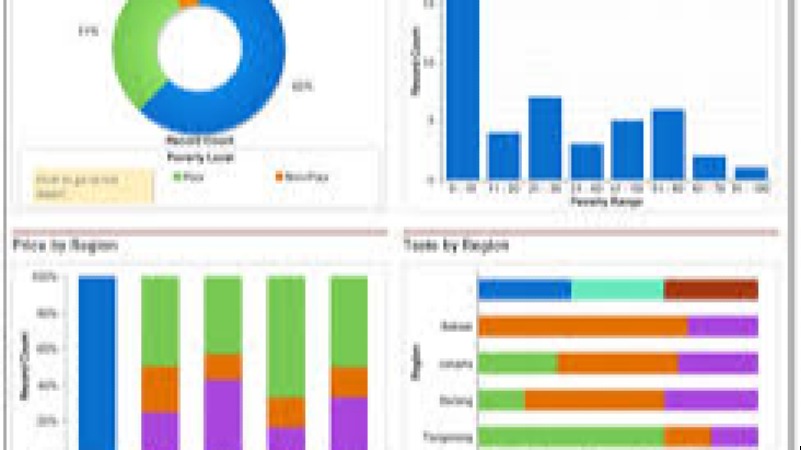
Designing Effective M&E Dashboards Training Course equips participants with the skills to create dynamic, visually compelling, and decision-oriented dashboards.
Course Overview
Designing Effective M&E Dashboards Training Course
Introduction
In today’s data-driven world, Monitoring and Evaluation (M&E) professionals must transform raw data into actionable insights that drive programmatic success. Designing Effective M&E Dashboards Training Course equips participants with the skills to create dynamic, visually compelling, and decision-oriented dashboards. This course focuses on integrating real-time data visualization, interactive reporting, and performance tracking to ensure M&E systems are not just informative but strategic. Participants will gain hands-on experience using dashboard tools, data analytics frameworks, and user-centered design principles to enhance program accountability and impact.
This course blends practical application with strategic learning, enabling participants to leverage trend analysis, KPI monitoring, and evidence-based decision-making. Through a combination of case studies, interactive exercises, and scenario-based projects, learners will understand how to design dashboards that communicate complex data effectively to stakeholders. Whether aiming to improve organizational reporting or enhance program evaluation, this course delivers high-impact skills for M&E professionals, data analysts, and program managers, positioning them at the forefront of data visualization excellence.
Course Duration
5 days
Course Objectives
By the end of this training, participants will be able to:
- Develop interactive M&E dashboards using best-in-class visualization tools.
- Apply data storytelling techniques to communicate insights effectively.
- Design dashboards aligned with program KPIs and outcomes.
- Integrate real-time data monitoring for timely decision-making.
- Use advanced data analytics to enhance dashboard functionality.
- Implement user-centered dashboard designs for diverse stakeholders.
- Apply performance tracking and trend analysis techniques.
- Optimize data visualization for clarity and impact.
- Ensure data accuracy, quality, and reliability in dashboards.
- Leverage predictive analytics and forecasting in M&E dashboards.
- Customize dashboards for donor reporting and compliance.
- Interpret complex datasets using visual analytics strategies.
- Evaluate the effectiveness of dashboards for decision-making and program improvement.
Target Audience
- M&E Officers and Specialists
- Data Analysts and Statisticians
- Program Managers and Coordinators
- Monitoring Officers in NGOs and Government Agencies
- Project Evaluators and Consultants
- Donor Reporting Specialists
- Business Intelligence and Data Visualization Professionals
- IT Professionals supporting M&E Systems
Course Modules
Module 1: Introduction to M&E Dashboards
- Overview of M&E dashboards and their importance in decision-making
- Key components and features of effective dashboards
- Dashboard types: operational, analytical, and strategic
- Best practices in M&E visualization design
- Case Study: Dashboard adoption in a health project
Module 2: Data Collection and Preparation for Dashboards
- Understanding data sources and types
- Data cleaning, validation, and transformation techniques
- Integrating multiple datasets for dashboard use
- Ensuring data quality and consistency
- Case Study: Multi-source data integration in education programs
Module 3: Key Performance Indicators (KPIs) for Dashboards
- Identifying and defining program KPIs
- Linking KPIs to organizational objectives
- Selecting the right metrics for visualization
- Benchmarking and target setting
- Case Study: KPI dashboard for a nutrition project
Module 4: Dashboard Design Principles
- Visual hierarchy, layout, and color theory
- User-centered design and accessibility
- Choosing appropriate chart types for data representation
- Avoiding clutter and enhancing readability
- Case Study: User-focused dashboard redesign for donor reporting
Module 5: Data Visualization Tools for M&E
- Overview of popular dashboard tools (Power BI, Tableau, Google Data Studio)
- Features and functionalities for M&E professionals
- Connecting data sources to visualization tools
- Tips for interactive and dynamic dashboards
- Case Study: Tableau implementation in a water and sanitation project
Module 6: Interactive and Real-Time Dashboards
- Incorporating live data feeds
- Drill-down, filtering, and interactive options
- Designing dashboards for real-time decision-making
- Monitoring trends and anomalies dynamically
- Case Study: Real-time health surveillance dashboard
Module 7: Advanced Analytics and Forecasting in Dashboards
- Predictive analytics and trend projection
- Integrating statistical models into dashboards
- Scenario analysis and decision simulations
- Enhancing dashboards with automated insights
- Case Study: Forecasting malnutrition trends using dashboard analytics
Module 8: Dashboard Evaluation and Reporting
- Measuring dashboard effectiveness and user satisfaction
- Reporting insights to stakeholders
- Continuous improvement of dashboard systems
- Aligning dashboards with donor and organizational requirements
- Case Study: Evaluating impact of dashboards in a multi-country development program
Training Methodology
This course employs a participatory and hands-on approach to ensure practical learning, including:
- Interactive lectures and presentations.
- Group discussions and brainstorming sessions.
- Hands-on exercises using real-world datasets.
- Role-playing and scenario-based simulations.
- Analysis of case studies to bridge theory and practice.
- Peer-to-peer learning and networking.
- Expert-led Q&A sessions.
- Continuous feedback and personalized guidance.
Register as a group from 3 participants for a Discount
Send us an email: info@datastatresearch.org or call +254724527104
Certification
Upon successful completion of this training, participants will be issued with a globally- recognized certificate.
Tailor-Made Course
We also offer tailor-made courses based on your needs.
Key Notes
a. The participant must be conversant with English.
b. Upon completion of training the participant will be issued with an Authorized Training Certificate
c. Course duration is flexible and the contents can be modified to fit any number of days.
d. The course fee includes facilitation training materials, 2 coffee breaks, buffet lunch and A Certificate upon successful completion of Training.
e. One-year post-training support Consultation and Coaching provided after the course.
f. Payment should be done at least a week before commence of the training, to DATASTAT CONSULTANCY LTD account, as indicated in the invoice so as to enable us prepare better for you.