ERP for Healthcare: Clinical and Financial Integration Training Course
ERP for Healthcare: Clinical and Financial Integration Training Course will focus on leveraging ERP systems to achieve seamless clinical-financial integration, moving beyond basic administrative functions to strategic advantage
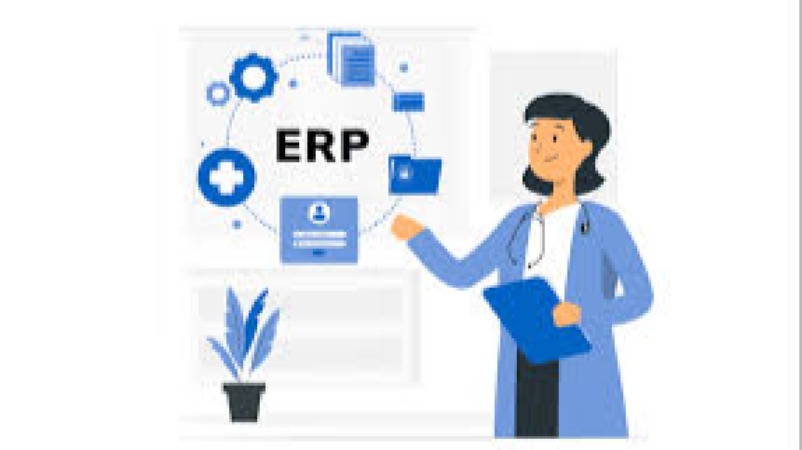
Course Overview
ERP for Healthcare: Clinical and Financial Integration Training Course
Introduction
The modern healthcare landscape is defined by the dual pressures of delivering exceptional patient care and maintaining strict financial sustainability. Traditional siloed information systems where Electronic Health Records (EHR) manage clinical data and separate legacy systems handle financial management create massive inefficiencies, hinder strategic decision-making, and often lead to compliance risks. Enterprise Resource Planning (ERP) for healthcare emerges as the crucial solution, offering a unified platform that breaks down these departmental barriers, integrating mission-critical operational and clinical data in real-time. This integration is no longer a luxury but a fundamental necessity for achieving true operational excellence and data-driven patient outcomes.
ERP for Healthcare: Clinical and Financial Integration Training Course will focus on leveraging ERP systems to achieve seamless clinical-financial integration, moving beyond basic administrative functions to strategic advantage. Participants will gain practical, hands-on expertise in mastering modules from Revenue Cycle Management (RCM) and Supply Chain Optimization to Workforce Management (WFM), all within a compliant framework like HIPAA. We will explore real-world case studies demonstrating how leading health systems have used ERP to improve patient safety, dramatically reduce costs, enhance interoperability, and accelerate the shift to value-based care models. This training is essential for professionals seeking to drive digital transformation and secure a future-ready, high-performing healthcare organization.
Course Duration
5 days
Course Objectives
Upon completion of this course, participants will be able to:
- Master the principles of Clinical-Financial Integration within an enterprise ERP framework.
- Optimize Revenue Cycle Management (RCM) for accelerated cash flow and reduced claim denials.
- Ensure continuous HIPAA and HITECH Compliance through automated ERP security and audit trails.
- Implement best practices for Supply Chain Optimization to cut costs and prevent critical stockouts.
- Analyze and leverage Real-Time Healthcare Analytics for predictive decision-making and performance improvement.
- Streamline Workforce Management (WFM), including clinical scheduling and payroll integration.
- Design and execute a successful ERP Implementation Strategy tailored to a complex healthcare environment.
- Bridge the gap between EHR/EMR and ERP systems through robust Interoperability standards
- Apply ERP tools for effective Healthcare Cost Management and activity-based costing.
- Utilize ERP to support the transition from fee-for-service to Value-Based Care models.
- Develop automated workflows for patient billing, claims processing, and Audit Readiness.
- Identify and mitigate risks related to Healthcare Data Security and governance in an ERP environment.
- Drive Digital Transformation by automating administrative and clinical support processes.
Target Audience
- Healthcare IT/Informatics Leaders.
- Finance and Accounting Professionals.
- Clinical Administrators.
- Supply Chain and Procurement Managers.
- ERP Implementation/Project Managers.
- EHR/EMR Integration Specialists.
- Compliance and Risk Officers.
- Human Resources (HR) and Payroll Leaders.
Course Modules
Module 1: ERP Foundations and Clinical-Financial Unification
- The architecture of Healthcare ERP.
- Understanding the data synchronization challenge between EMR/EHR and financial GL.
- Key performance indicators (KPIs) driven by unified clinical and financial data.
- Security and Governance.
- Case Study: Analyzing a multi-hospital system that achieved a 25% reduction in data reconciliation errors post-integration.
Module 2: Revenue Cycle Management (RCM) in ERP
- Automating patient registration and eligibility verification via ERP.
- Optimizing charge capture processes for complete and accurate billing.
- Advanced claims processing and denial management workflows.
- Managing contracts and reimbursements from third-party payers.
- Case Study: A clinic system that used ERP analytics to identify and eliminate a $1M annual loss from unbilled services.
Module 3: Strategic Healthcare Financial Management
- Implementing activity-based costing for accurate service line profitability.
- Budgeting, planning, and financial forecasting using real-time ERP data.
- Capital expenditure planning and asset management.
- Financial reporting, drill-down analytics, and executive dashboards.
- Case Study: A medical center that improved its operating margin by 5% through granular cost-center analysis.
Module 4: Supply Chain and Materials Optimization
- Automated procurement and vendor management integration.
- Inventory control for high-value medical devices and pharmaceuticals.
- Predictive Demand Forecasting to minimize stockouts and reduce carrying costs.
- Logistics and tracking from dock to patient bedside.
- Case Study: A regional hospital that reduced supply costs by 18% using centralized, demand-driven ERP purchasing.
Module 5: Workforce Management (WFM) and Human Capital Management (HCM)
- Integrating clinical scheduling with payroll and time/attendance.
- Managing credentialing, licensing, and compliance tracking for clinical staff.
- Optimizing staff-to-patient ratios for cost control and quality of care.
- Talent acquisition, onboarding, and performance management modules.
- Case Study: A children's hospital that cut overtime expenses by 15% through optimized, real-time shift scheduling.
Module 6: EHR/ERP Interoperability and Master Data
- Architectures for seamless data exchange
- Managing Master Data across systems.
- Clinical data warehousing and business intelligence integration.
- Data quality validation, cleansing, and governance protocols.
- Case Study: A health system’s successful migration of clinical data for unified reporting, improving diagnostic turnaround time.
Module 7: ERP Implementation and Change Management
- Phase-gate methodology for healthcare ERP projects
- Developing effective User Training strategies for diverse clinical and non-clinical staff.
- Key considerations for Cloud and On-Premise deployment models.
- Risk mitigation, contingency planning, and post-go-live support.
- Case Study: Lessons learned from a major hospital's delayed ERP rollout and the vital role of executive sponsorship.
Module 8: Advanced Analytics and Future Trends
- Leveraging AI and Machine Learning for predictive insights
- Using ERP data to benchmark performance against industry standards.
- Supporting the shift to Population Health Management with integrated data.
- Exploring the future of ERP.
- Case Study: A large physician group utilizing predictive analytics to optimize resource allocation and care pathways.
Training Methodology
This course employs a participatory and hands-on approach to ensure practical learning, including:
- Interactive lectures and presentations.
- Group discussions and brainstorming sessions.
- Hands-on exercises using real-world datasets.
- Role-playing and scenario-based simulations.
- Analysis of case studies to bridge theory and practice.
- Peer-to-peer learning and networking.
- Expert-led Q&A sessions.
- Continuous feedback and personalized guidance.
Register as a group from 3 participants for a Discount
Send us an email: info@datastatresearch.org or call +254724527104
Certification
Upon successful completion of this training, participants will be issued with a globally- recognized certificate.
Tailor-Made Course
We also offer tailor-made courses based on your needs.
Key Notes
a. The participant must be conversant with English.
b. Upon completion of training the participant will be issued with an Authorized Training Certificate
c. Course duration is flexible and the contents can be modified to fit any number of days.
d. The course fee includes facilitation training materials, 2 coffee breaks, buffet lunch and A Certificate upon successful completion of Training.
e. One-year post-training support Consultation and Coaching provided after the course.
f. Payment should be done at least a week before commence of the training, to DATASTAT CONSULTANCY LTD account, as indicated in the invoice so as to enable us prepare better for you.