Managing Renewable Energy Grids Training Course
Managing Renewable Energy Grids Training Course is designed to equip a new generation of power systems professionals with the critical skills and knowledge required to navigate this complex environment
Skills Covered
Course Overview
Managing Renewable Energy Grids Training Course
Introduction
The global energy landscape is undergoing a profound transformation, driven by the urgent need for a sustainable and decarbonized future. The large-scale integration of variable and distributed renewable energy sources, such as solar and wind, is a key component of this transition. However, this shift presents unprecedented challenges to the stability, reliability, and security of traditional power grids. Managing Renewable Energy Grids Training Course is designed to equip a new generation of power systems professionals with the critical skills and knowledge required to navigate this complex environment. Participants will master the advanced technical and operational strategies necessary for modernizing grid infrastructure, from leveraging smart grid technology and advanced forecasting to deploying energy storage solutions and developing resilient microgrids. This training will bridge the gap between emerging renewable energy technologies and the practical demands of their widespread implementation, ensuring that professionals can contribute effectively to building the next-generation, high-renewables power system.
This comprehensive program provides a deep, practical dive into the engineering solutions that enable large-scale renewable integration. The curriculum focuses on managing the inherent intermittency and unpredictability of renewables, enhancing grid flexibility, and optimizing the performance of a decentralized energy network. Through a blend of theoretical instruction, hands-on exercises, and real-world case studies, attendees will gain proficiency in key areas, including power system modeling, demand-side management, and grid-edge device integration. By the end of this course, participants will be empowered to design and implement robust, forward-thinking strategies that not only support a high-renewables grid but also contribute to a more efficient, secure, and sustainable energy future for their organizations and communities.
Course Duration
5 days
Course Objectives
- Comprehend the fundamental principles, drivers, and global trends of power grid modernization.
- Analyze the technical challenges and impacts of integrating high penetrations of renewable energy sources.
- Gain practical skills in deploying and managing smart grid components, including advanced metering infrastructure (AMI) and distribution automation.
- Learn to model and simulate the effects of renewables on grid stability, frequency, and voltage.
- Explore the strategic role of battery energy storage systems (BESS) and other technologies for grid balancing and flexibility.
- Apply cutting-edge forecasting techniques, including machine learning, to predict variable renewable generation with high accuracy.
- Implement demand-side management (DSM) and grid-balancing mechanisms to ensure supply-demand equilibrium.
- Understand the principles of microgrid design, control, and operation for enhanced energy resilience.
- Analyze the integration of multiple energy sources (solar, wind, storage) in a cohesive, hybrid system.
- Recognize and mitigate cyber threats and risks associated with interconnected smart grid and IoT devices.
- Identify and assess the legal, policy, and market mechanisms that support renewable energy integration.
- Leverage big data and analytics for real-time grid monitoring, predictive maintenance, and operational efficiency.
- Perform cost-benefit and levelized cost of energy (LCOE) analysis for renewable grid projects and investments.
Organizational Benefits
- Equip your workforce with the skills to optimize grid performance, reduce operational costs, and improve system reliability in a high-renewables environment.
- Mitigate the risks of grid instability, blackouts, and cybersecurity threats by implementing advanced management and control strategies.
- Invest in your employees' professional development in a rapidly growing and competitive sector, improving staff retention and attracting skilled professionals.
- Position your organization at the forefront of the energy transition, enabling access to new projects, government incentives, and emerging market opportunities.
- Directly contribute to corporate social responsibility (CSR) targets and carbon reduction commitments through the effective deployment of clean energy technologies.
- Enable data-driven insights for strategic planning, investment in new infrastructure, and resource allocation.
- Maximize the value and lifespan of grid assets through predictive maintenance and smart operational practices.
Target Audience
- Electrical & Power Engineer.
- Grid Operators & System Planners.
- Utility & Energy Professionals.
- Renewable Energy Project Developers.
- Government & Regulatory Officials.
- Consultants.
- Researchers & Academics.
- IT & Cybersecurity Professionals.
Course Modules
Module 1: Foundations of a Modern Renewable Grid
- Introduction to the global energy transition and grid modernization drivers.
- Understanding the technical challenges of variable and intermittent renewables.
- The role of distributed energy resources (DERs) and decentralization.
- Key concepts of grid flexibility, stability, and inertia.
- Case Study: The South Australia "Big Battery" projectΓÇöanalyzing the impact of a utility-scale battery on grid stability and blackout prevention.
Module 2: Advanced Renewable Energy Forecasting
- Principles of short-term and long-term forecasting for solar and wind power.
- Utilizing meteorological data, satellite imagery, and weather models.
- Applying statistical and machine learning algorithms for improved accuracy.
- Impact of forecasting on grid scheduling, dispatch, and market operations.
- Case Study: A wind farm operator's use of AI-powered forecasting to optimize energy output and minimize grid curtailment.
Module 3: Power System Modeling and Analysis
- Introduction to power flow analysis and transient stability studies.
- Modeling the impact of high-penetration renewables on voltage and frequency.
- Using simulation software (e.g., PSS/E, PSCAD) for grid performance analysis.
- Techniques for power quality assessment and harmonic mitigation.
- Case Study: Simulating a high-solar penetration scenario in California to identify potential voltage stability issues and mitigation strategies.
Module 4: Energy Storage and Grid Balancing
- Types of energy storage systems (BESS, pumped hydro, hydrogen).
- Strategic deployment of storage for peak shaving, frequency regulation, and ancillary services.
- Economic models for BESS integration and revenue streams.
- Demand-side management (DSM) and its role in grid flexibility.
- Case Study: The integration of residential BESS with a virtual power plant (VPP) to provide grid support and reduce consumer electricity bills.
Module 5: Smart Grid Technologies and Automation
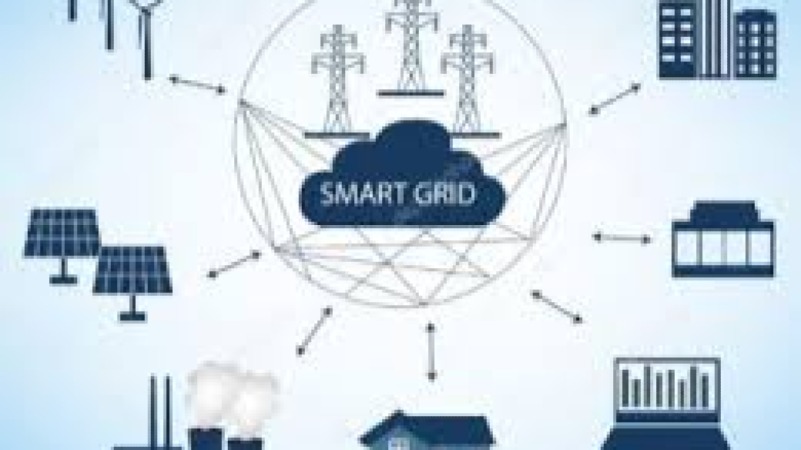
- Overview of smart grid architecture and its components.
- Advanced Metering Infrastructure (AMI) and its role in data collection.
- Distribution automation and self-healing grid concepts.
- The Internet of Things (IoT) at the grid-edge and smart inverters.
- Case Study: A utility's implementation of a smart grid pilot project to improve outage response time and system reliability.
Module 6: Microgrids and Islanding Operations
- Principles of microgrid design, control, and benefits.
- Integration of renewable sources, storage, and conventional generation.
- Microgrid control strategies for seamless transition between grid-connected and islanded modes.
- Economic and resilience benefits of microgrids for critical infrastructure.
- Case Study: A university campus microgrid that utilizes solar, combined heat and power (CHP), and storage to ensure continuous power supply during grid outages.
Module 7: Grid Cybersecurity and Resilience
- Identifying key cybersecurity threats to a decentralized power grid.
- Securing critical infrastructure, IoT devices, and communication networks.
- Risk assessment and mitigation strategies for grid operations.
- Best practices for incident response and disaster recovery planning.
- Case Study: The lessons learned from a simulated cyberattack on a utility's SCADA system and the implementation of enhanced security protocols.
Module 8: Policy, Economics, and Future Trends
- Analysis of grid codes, interconnection standards, and market mechanisms.
- Financial modeling and investment analysis for renewable grid projects.
- The future of energy markets: smart contracts, blockchain, and peer-to-peer trading.
- Emerging technologies: green hydrogen, carbon capture, and advanced power electronics.
- Case Study: A deep dive into the regulatory framework that enabled Germany's Energiewende (energy transition) and its impact on grid management.
Training Methodology
This course employs a dynamic, multi-faceted training methodology to ensure maximum knowledge transfer and skill development. The approach combines theoretical instruction with practical application, including:
- Interactive Lectures & Presentations.
- Hands-on Software Simulations.
- Group Discussions & Problem-Solving.
- In-depth Case Studies.
- Q&A and Expert Panels.
Register as a group from 3 participants for a Discount
Send us an email: info@datastatresearch.org or call +254724527104
Certification
Upon successful completion of this training, participants will be issued with a globally- recognized certificate.
Tailor-Made Course
We also offer tailor-made courses based on your needs.
Key Notes
a. The participant must be conversant with English.
b. Upon completion of training the participant will be issued with an Authorized Training Certificate
c. Course duration is flexible and the contents can be modified to fit any number of days.
d. The course fee includes facilitation training materials, 2 coffee breaks, buffet lunch and A Certificate upon successful completion of Training.
e. One-year post-training support Consultation and Coaching provided after the course.
f. Payment should be done at least a week before commence of the training, to DATASTAT CONSULTANCY LTD account, as indicated in the invoice so as to enable us prepare better for you.