Marxist and Neo-Marxist Political Thought Training Course
Marxist and Neo-Marxist Political Thought Training Course provides a comprehensive and critical exploration of Marxist theory and its modern extensions, known as Neo-Marxism.
Course Overview
Marxist and Neo-Marxist Political Thought Training Course
Introduction
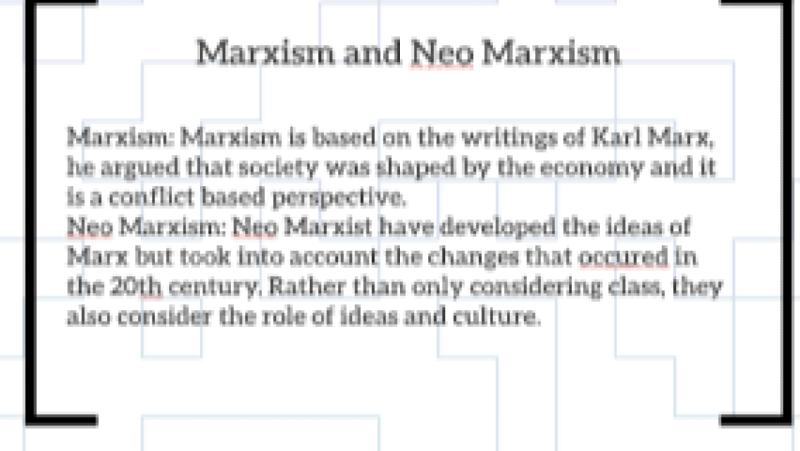
Marxist and Neo-Marxist Political Thought Training Course provides a comprehensive and critical exploration of Marxist theory and its modern extensions, known as Neo-Marxism. Participants will delve into the foundational concepts of historical materialism, class struggle, and surplus value as developed by Karl Marx and Friedrich Engels. Beyond the classic texts, the curriculum moves to an advanced critical analysis of how these ideas have been adapted to understand contemporary global phenomena. We'll examine the evolution of Marxist thought through thinkers like Gramsci, Althusser, and the Frankfurt School, who shifted the focus from purely economic determinism to the significant role of culture, ideology, and hegemony in maintaining power structures.
Our program is designed to bridge historical context with contemporary political analysis. Participants will learn to apply these powerful theoretical frameworks to real-world issues like globalization, neoliberalism, and the rise of new social movements. By dissecting complex power dynamics and social inequalities, this course aims to equip students and professionals with the analytical tools necessary for a nuanced understanding of modern political and economic systems. You'll gain skills in critical thinking, political philosophy, and social theory that are invaluable for academic research, policy analysis, and grassroots activism.
Course Duration
5 days
Course Objectives
- Deconstruct and critically evaluate the core tenets of classical Marxism.
- Analyze the historical materialism framework and its application to social change.
- Comprehend the labor theory of value and the concept of surplus value.
- Examine the state's role as a tool of class domination.
- Explore the transition from classical Marxism to Neo-Marxist thought.
- Investigate the Neo-Marxist focus on ideological hegemony and culture.
- Evaluate the contributions of key Neo-Marxist theorists (e.g., Gramsci, Althusser, Marcuse).
- Apply Marxist analysis to the political economy of global capitalism.
- Assess the relevance of class struggle in the 21st century.
- Critically analyze contemporary social issues (e.g., identity politics, environmentalism) through a Neo-Marxist lens.
- Formulate a critical perspective on globalization and neoliberal policies.
- Develop a deeper understanding of the relationship between power, discourse, and social reproduction.
- Construct persuasive arguments and case studies using Marxist and Neo-Marxist concepts.
Target Audience
- Undergraduate & Graduate Students in Political Science, Sociology, History, and Philosophy.
- Academics & Researchers seeking to deepen their theoretical toolkit.
- Journalists & Writers covering political and economic issues.
- Policy Analysts working on issues of social and economic inequality.
- Community Organizers & Activists aiming to understand power structures.
- Educators looking to enhance their curriculum with advanced concepts.
- Public Sector Professionals interested in the historical context of political systems.
- Anyone with a general interest in political thought and critical social theory.
Course Modules
Module 1: Foundations of Classical Marxism
- The historical and philosophical roots of Marx and Engels.
- Dialectical materialism and its role in historical analysis.
- The concepts of base and superstructure.
- The labor theory of value and exploitation.
- The Marxist view of the state and class conflict.
- Case Study: The Industrial Revolution and the rise of the proletariat.
Module 2: The State & Revolution
- Marx's theory of the state and its role in a capitalist society.
- The concept of the dictatorship of the proletariat.
- Analyzing the path to communist society.
- The role of the Communist Party and revolutionary consciousness.
- Critiques and debates surrounding Marx's vision of revolution.
- Case Study: The Paris Commune and its theoretical significance.
Module 3: Neo-Marxism & Cultural Hegemony
- The shift from economic determinism to the role of culture.
- Antonio Gramsci's theory of hegemony.
- Ideological State Apparatuses (ISAs) and Repressive State Apparatuses (RSAs).
- The importance of civil society in political domination and resistance.
- Gramsci's concept of the "war of position" vs. "war of maneuver."
- Case Study: The role of media and education in manufacturing consent.
Module 4: The Frankfurt School & Critical Theory
- Introduction to Critical Theory as a method of social critique.
- Theories of alienation and the culture industry (Adorno and Horkheimer).
- Herbert Marcuse's analysis of the "one-dimensional man."
- The critique of technology, mass culture, and consumerism.
- The enduring relevance of the Frankfurt School's critiques.
- Case Study: Analyzing modern consumerism through a Frankfurt School lens.
Module 5: Structural Marxism & Althusser
- An introduction to Structural Marxism and its break from humanism.
- Louis Althusser's theory of ideology and interpellation.
- The distinction between "science" and "ideology".
- The concept of overdetermination in social formations.
- Critiques of Althusser's structuralist approach.
- Case Study: Analyzing a political speech or advertisement to identify ideological interpellation.
Module 6: World Systems Theory & Dependency Theory
- Immanuel Wallerstein's World-Systems Theory.
- The core-periphery model and global inequality.
- Dependency Theory and its critique of development models.
- The ongoing relevance of these theories in a globalized world.
- Examining the role of international financial institutions.
- Case Study: The political economy of global supply chains.
Module 7: Post-Marxism & Beyond
- The rise of Post-Marxism and its engagement with post-structuralism.
- Ernesto Laclau and Chantal Mouffe's theory of discourse and radical democracy.
- The critique of essentialism and class reductionism.
- The emergence of new social movements and identity politics.
- Debating the future of Marxist and post-Marxist thought.
- Case Study: Analyzing the discourse and political objectives of a contemporary social movement.
Module 8: Application and Future of Marxist Thought
- Synthesizing and applying concepts from all modules.
- Marxist and Neo-Marxist analysis of neoliberalism.
- Examining climate change and environmental politics from a Marxist perspective.
- Theories of digital capitalism and platform labor.
- A critical discussion on the future of the left and alternative political projects.
- Case Study: Analyzing the political implications of gig economy labor platforms.
Training Methodology
- Interactive Lectures.
- Socratic Seminars.
- Case Study Analysis.
- Guided Readings.
- Role-Playing & Simulations.
- Guest Speaker Sessions.
- Final Project.
Register as a group from 3 participants for a Discount
Send us an email: info@datastatresearch.org or call +254724527104
Certification
Upon successful completion of this training, participants will be issued with a globally- recognized certificate.
Tailor-Made Course
We also offer tailor-made courses based on your needs.
Key Notes
a. The participant must be conversant with English.
b. Upon completion of training the participant will be issued with an Authorized Training Certificate
c. Course duration is flexible and the contents can be modified to fit any number of days.
d. The course fee includes facilitation training materials, 2 coffee breaks, buffet lunch and A Certificate upon successful completion of Training.
e. One-year post-training support Consultation and Coaching provided after the course.
f. Payment should be done at least a week before commence of the training, to DATASTAT CONSULTANCY LTD account, as indicated in the invoice so as to enable us prepare better for you.