Policy and Management for Sustainable Development Training Course
Policy and Management for Sustainable Development Training Course is designed to equip professionals with the knowledge and practical skills to navigate the complexities of the 2030 Agenda for Sustainable Development and its 17 Sustainable Development Goals (SDGs).
Skills Covered
Course Overview
Policy and Management for Sustainable Development Training Course
Introduction
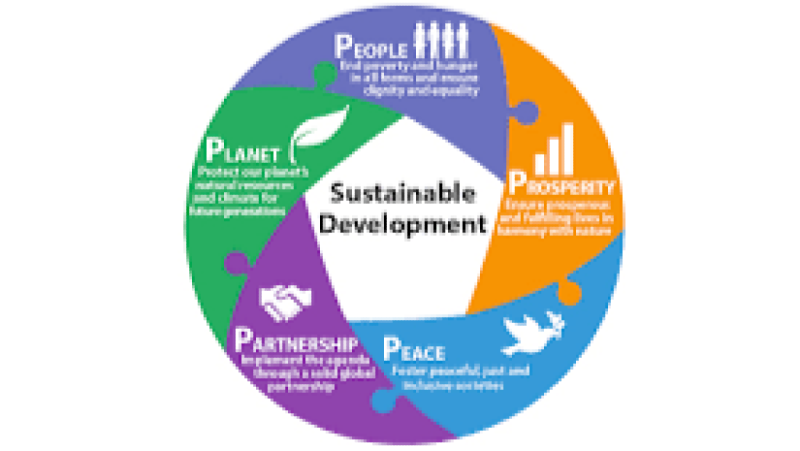
In an era defined by global challenges like climate change, resource depletion, and social inequality, the need for integrated and effective sustainable development policy and management has never been more critical. Policy and Management for Sustainable Development Training Course is designed to equip professionals with the knowledge and practical skills to navigate the complexities of the 2030 Agenda for Sustainable Development and its 17 Sustainable Development Goals (SDGs). We delve into the core principles of ESG (Environmental, Social, and Governance) and the triple bottom line (People, Planet, Profit), providing a holistic framework for creating policies and strategies that foster long-term resilience and inclusive growth. Our curriculum emphasizes a holistic approach, connecting economic development with environmental stewardship and social equity, and focuses on evidence-based approaches to drive tangible, positive change across various sectors.
This program goes beyond theoretical concepts, offering a hands-on, practice-oriented methodology. Participants will learn how to formulate, analyze, and implement sustainable policies and projects, utilizing cutting-edge tools and methodologies for impact management, monitoring and evaluation, and stakeholder engagement. The course content is meticulously crafted to address the urgent need for green skills and climate action leadership. By developing a deep understanding of circular economy models, sustainable finance, and climate resilience, participants will be empowered to become sustainability change agents within their organizations and communities, driving the transition to a more sustainable, resilient, and equitable future.
Course Outline
5 days
Course Objectives
- Master the triple bottom line framework for integrated decision-making.
- Formulate and analyze evidence-based policies aligned with the SDGs.
- Develop effective climate action and climate resilience strategies.
- Implement ESG reporting and sustainability metrics for corporate accountability.
- Lead green transformation and foster a culture of sustainability within organizations.
- Understand and apply principles of the circular economy and sustainable consumption.
- Integrate sustainable finance and green investment into project planning.
- Conduct comprehensive stakeholder engagement for inclusive development.
- Utilize data-driven decision-making for impact management and monitoring.
- Design robust sustainable urban development and smart city initiatives.
- Strengthen institutional frameworks for good governance and policy coherence.
- Mitigate social inequality and promote inclusive economic growth.
- Develop and manage projects that address the poverty-environment nexus.
Organizational Benefits
- Demonstrates a genuine commitment to sustainability, attracting customers and investors.
- Leads to reduced resource consumption, waste, and energy costs.
- Positions the organization as a leader in a rapidly evolving market.
- Proactively identifies and mitigates environmental, social, and regulatory risks.
- Attracts and retains top talent who are motivated by purpose-driven work.
- Qualifies for green loans and investment from ESG-focused funds.
- Builds long-term resilience to global challenges and market shifts.
Target Audience
- Government Officials and Policymakers.
- Corporate Sustainability Professionals.
- Non-profit and NGO Leaders.
- Urban Planners and Architects.
- Project Managers and Consultants.
- Public Sector Managers.
- Financial Analysts and Investors.
- Educators and Researchers.
Course Outline
Module 1: The Foundations of Sustainable Development
- Understanding the core concepts.
- The evolution of the sustainable development agenda from past to present.
- Identifying key global challenges and the interlinkages between economic, social, and environmental issues.
- Analyzing the role of different stakeholders.
- Case Study: The Bhutan Gross National Happiness (GNH) Index as an alternative to traditional economic metrics.
Module 2: Policy Analysis and Design for Sustainability
- Applying frameworks for evidence-based policy analysis.
- Tools for policy formulation, including cost-benefit analysis and strategic environmental assessment.
- Designing policies that foster inclusive economic growth and social equity.
- Addressing trade-offs and synergies between different policy objectives.
- Case Study: The implementation of Norway's national policy on sustainable management of natural resources.
Module 3: Climate Action and Environmental Management
- Developing climate resilience and climate action strategies at national and organizational levels.
- Principles of environmental management systems (e.g., ISO 14001).
- Implementing policies for renewable energy, energy efficiency, and waste management.
- Understanding and mitigating the impacts of climate change on vulnerable communities.
- Case Study: Costa Rica's policy on carbon neutrality and its success in promoting renewable energy sources.
Module 4: Sustainable Finance and Green Investment
- Understanding the landscape of sustainable finance and green bonds.
- Integrating ESG factors into investment and project funding decisions.
- Developing strategies for mobilizing private and public capital for sustainable projects.
- The role of financial institutions in driving the green economy transition.
- Case Study: The European Green Deal and its financial mechanisms for sustainable investment.
Module 5: Good Governance and Institutional Strengthening
- Strengthening institutions to promote transparency, accountability, and citizen participation.
- Developing governance structures that support SDG localization and implementation.
- Combating corruption and fostering a culture of integrity in sustainable development projects.
- Enhancing multi-stakeholder partnerships for collective action.
- Case Study: The institutional reforms in Seoul, South Korea, to promote sustainable urban development.
Module 6: Monitoring, Evaluation, and Impact Management
- Setting meaningful sustainability metrics and key performance indicators (KPIs).
- Designing robust monitoring and evaluation frameworks for sustainable projects.
- Leveraging data-driven decision-making and technology for impact tracking.
- Reporting on progress and communicating sustainability performance to stakeholders.
- Case Study: The use of remote sensing and big data to monitor deforestation in the Amazon and its policy implications.
Module 7: Sustainable Urban and Rural Development
- Principles of sustainable urban planning and smart city design.
- Developing strategies for sustainable transportation, green infrastructure, and community resilience.
- Addressing issues of poverty, inequality, and social cohesion in urban and rural settings.
- Promoting circular economy principles in urban systems.
- Case Study: The city of Copenhagen's strategic plan to become a carbon-neutral capital.
Module 8: Practical Application: Project Workshop
- Applying course concepts to a real-world project or policy challenge.
- Group work on developing a comprehensive sustainable development project plan.
- Presentation and peer review of project proposals.
- Developing a personal action plan for becoming a sustainability change agent.
- Case Study: Participants will select and analyze a local case study, such as a community-led renewable energy project or a corporate waste reduction initiative.
Training Methodology
This course employs a dynamic and interactive training methodology that blends theoretical learning with practical application. The approach includes:
- Interactive Lectures and Expert Presentations.
- Real-world Case Studies and Analysis.
- Group Discussions and Collaborative Workshops.
- Practical Exercises and Simulation Scenarios.
- Individual and Group Project Work.
- Multimedia Resources.
Register as a group from 3 participants for a Discount
Send us an email: info@datastatresearch.org or call +254724527104
Certification
Upon successful completion of this training, participants will be issued with a globally- recognized certificate.
Tailor-Made Course
We also offer tailor-made courses based on your needs.
Key Notes
a. The participant must be conversant with English.
b. Upon completion of training the participant will be issued with an Authorized Training Certificate
c. Course duration is flexible and the contents can be modified to fit any number of days.
d. The course fee includes facilitation training materials, 2 coffee breaks, buffet lunch and A Certificate upon successful completion of Training.
e. One-year post-training support Consultation and Coaching provided after the course.
f. Payment should be done at least a week before commence of the training, to DATASTAT CONSULTANCY LTD account, as indicated in the invoice so as to enable us prepare better for you.