Sustainable Consumption and Production Training Course
Sustainable Consumption and Production Training Course is designed to empower participants with the practical skills needed to implement circular economy principles and resource efficiency across diverse sectors.
Skills Covered
Course Overview
Sustainable Consumption and Production Training Course
Introduction
In an era of unprecedented environmental challenges and growing social awareness, a fundamental shift in economic models is required. Traditional "take, make, dispose" linear economies have led to resource depletion, environmental degradation, and increased waste, posing a significant threat to our planet's future. The global imperative is now to transition towards Sustainable Consumption and Production (SCP), a holistic approach that focuses on decoupling economic growth from environmental impact. This paradigm shift is not just a regulatory obligation but a strategic opportunity for businesses and governments to innovate, build resilience, and create long-term value. This training course provides an in-depth exploration of SCP, equipping participants with the knowledge, tools, and strategies to drive this transformation.
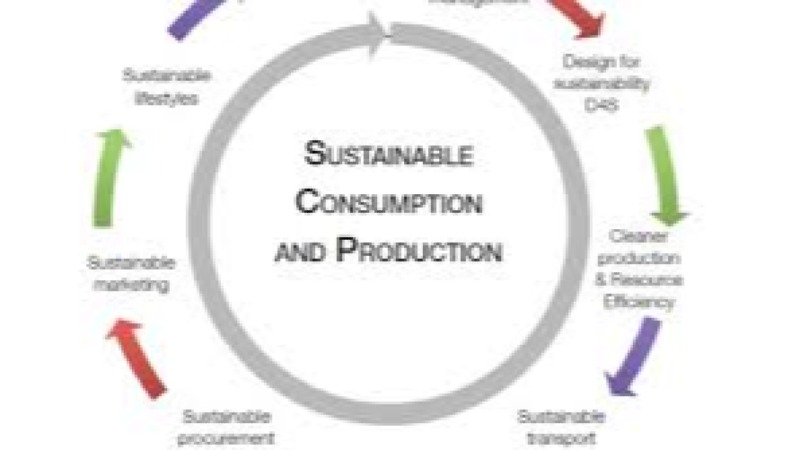
Sustainable Consumption and Production Training Course is designed to empower participants with the practical skills needed to implement circular economy principles and resource efficiency across diverse sectors. We will delve into key concepts such as life-cycle thinking, sustainable procurement, and responsible business practices, demonstrating how these frameworks can be applied to foster green growth and sustainable development. The course will highlight the critical role of consumer behavior, product innovation, and supply chain sustainability in achieving global sustainability goals, including the United Nations' SDG 12. By fostering a new mindset and providing actionable insights, this training aims to cultivate a generation of leaders committed to building a more sustainable, equitable, and prosperous future.
Course Duration
10 days
Course Objectives
- Understand the core concepts of Sustainable Consumption and Production (SCP) and its relevance within the context of Sustainable Development Goal 12 (SDG 12).
- Explore strategies for decoupling economic growth from environmental degradation and resource use.
- Apply life-cycle assessment (LCA) to analyze the environmental impacts of products and services from cradle to grave.
- Develop a roadmap for transitioning from a linear to a circular economy model, focusing on the 5 R's: Refuse, Reduce, Reuse, Repurpose, Recycle.
- Identify and implement resource efficiency and cleaner production techniques to optimize operations and reduce waste.
- Integrate sustainability into supply chain management to minimize environmental and social risks.
- Foster eco-design and green innovation to create products and services with a lower environmental footprint.
- Master sustainable public and private procurement policies to drive market demand for eco-friendly goods.
- Understand the dynamics of consumer behavior and develop strategies to promote sustainable lifestyles and conscious consumerism.
- Analyze key international and national SCP policies, frameworks, and governance structures.
- Effectively engage with diverse stakeholders, including consumers, suppliers, and policymakers, to build a culture of sustainability.
- Utilize sustainability metrics and reporting frameworks (e.g., ESG) to measure progress and demonstrate impact.
- Build organizational resilience and a competitive advantage by embedding SCP principles into core business strategies.
Organizational Benefits
- Demonstrating a commitment to sustainability attracts and retains eco-conscious customers, investors, and talent.
- Implementing resource efficiency and waste reduction strategies leads to significant operational cost savings.
- SCP principles drive product and process innovation, opening new market opportunities and creating a competitive edge.
- Proactive management of environmental and social risks in the supply chain reduces potential liabilities and ensures business continuity.
- Fostering a culture of sustainability increases employee morale, productivity, and retention.
- Staying ahead of evolving environmental regulations and policies ensures legal compliance and avoids penalties.
- Meeting international sustainability standards can open doors to new markets and public procurement contracts.
- Strong sustainability performance, as reflected in ESG ratings, attracts ethical investors and green financing.
Target Audience
- Corporate Sustainability Professionals.
- Environmental, Health, and Safety (EHS) Managers.
- Product Designers and Engineers.
- Supply Chain and Procurement Officers.
- Government Officials and Policymakers.
- NGO and Civil Society Leaders.
- Educators and Researchers.
- Entrepreneurs and Innovators.
Course Outline
Module 1: Foundations of Sustainable Consumption and Production (SCP)
- Defining SCP and its historical context.
- The UN's SDG 12: A global framework for action.
- The linear vs. circular economic models.
- The socio-economic and environmental drivers for change.
- Introduction to key concepts: decoupling, life-cycle thinking, and resource efficiency.
- Case Study: The Ellen MacArthur Foundation's promotion of the circular economy.
Module 2: Life-Cycle Thinking and Assessment (LCA)
- Understanding the stages of a product's life cycle.
- Methodologies for conducting a Life-Cycle Assessment (LCA).
- Identifying environmental hotspots and impact categories.
- Using LCA to inform sustainable design and procurement decisions.
- Challenges and limitations of LCA.
- Case Study: Patagonia's Footprint Chronicles to measure and communicate product impact.
Module 3: The Circular Economy: From Theory to Practice
- Principles of the circular economy: Design out waste, keep products and materials in use, and regenerate natural systems.
- Business models for the circular economy: Product-as-a-service, sharing economy, and resource recovery.
- Strategies for closing material loops and extending product life.
- Analyzing the economic and environmental benefits of circularity.
- Policy levers and incentives for a circular transition.
- Case Study: IKEA's journey to become a fully circular business by 2030.
Module 4: Cleaner Production and Resource Efficiency
- Introduction to cleaner production methodologies.
- Techniques for reducing waste and emissions at the source.
- Strategies for energy and water efficiency in manufacturing.
- Implementing industrial symbiosis and eco-industrial parks.
- Performance metrics and tools for tracking resource efficiency.
- Case Study: Interface's "Mission Zero" initiative to eliminate its negative environmental impact.
Module 5: Sustainable Product Design (Eco-design)
- Principles of eco-design: Designing for durability, repairability, and recyclability.
- Selecting sustainable materials and minimizing toxic substances.
- Packaging design for reduced waste and improved recyclability.
- Innovating for lower environmental impact throughout the product life cycle.
- Integrating user behavior into the design process.
- Case Study: Fairphone's modular design for repairability and longevity.
Module 6: Sustainable Supply Chain Management
- Mapping and assessing environmental and social risks in the supply chain.
- Implementing codes of conduct and supplier sustainability audits.
- Traceability and transparency in supply chains.
- The role of technology in sustainable supply chain management (e.g., blockchain).
- Collaborating with suppliers to drive sustainability improvements.
- Case Study: Unilever's Sustainable Living Plan to source all agricultural raw materials sustainably.
Module 7: Sustainable Procurement and Public Policy
- Defining sustainable public and private procurement (SPP).
- Developing and implementing sustainable purchasing criteria.
- Leveraging procurement power to drive market transformation.
- The role of ecolabels and certifications in procurement decisions.
- Policy frameworks for promoting SPP on a national and international level.
- Case Study: The City of Copenhagen's organic food procurement policy.
Module 8: Sustainable Lifestyles and Consumer Behavior
- Understanding the psychology behind consumer choices.
- Strategies for influencing and nudging sustainable behavior.
- The role of marketing and communication in promoting sustainable products.
- Empowering consumers through information and awareness campaigns.
- Exploring the future of consumerism and shared services.
- Case Study: The "No Straw" movement and its impact on corporate behavior.
Module 9: Waste Management and the Zero-Waste Hierarchy
- The waste hierarchy: Prevention, reduction, reuse, recycling, and disposal.
- Implementing waste reduction and prevention programs.
- Innovative recycling and upcycling technologies.
- Addressing plastic pollution and food waste.
- Extended Producer Responsibility (EPR) schemes.
- Case Study: The City of San Francisco's comprehensive zero-waste program.
Module 10: SCP in Key Sectors (Part 1)
- Agriculture and Food: Sustainable agriculture, food waste reduction, and regenerative farming.
- Textiles and Fashion: Fast fashion's impact, material innovation, and circular fashion models.
- Tourism: Promoting ecotourism and responsible travel practices.
- Construction: Green building principles, sustainable materials, and life-cycle thinking in infrastructure.
- Energy: Transitioning to renewable energy sources and improving energy efficiency.
- Case Study: The Rainforest Alliance certification for sustainable agriculture.
Module 11: SCP in Key Sectors (Part 2)
- Electronics: E-waste management, product durability, and circular electronics.
- Mobility: Sustainable transportation, electric vehicles, and public transit.
- Retail: Sustainable retail operations, supply chain transparency, and product labeling.
- Finance: Green financing, sustainable investing, and ESG criteria.
- Public Services: Government initiatives and policies for promoting SCP.
- Case Study: Philips' lighting-as-a-service model for reduced resource use.
Module 12: Measuring and Reporting on SCP Performance
- Key performance indicators (KPIs) for SCP.
- Frameworks for sustainability reporting: GRI, SASB, and CDP.
- Integrating SCP metrics into corporate financial reporting.
- The importance of transparent and verifiable data.
- Communicating sustainability performance to stakeholders.
- Case Study: The Global Reporting Initiative (GRI) and its use by companies like Novo Nordisk.
Module 13: Policy, Governance, and International Cooperation
- Analyzing international agreements and frameworks (e.g., the Marrakech Process).
- National SCP action plans and policy instruments.
- The role of public-private partnerships.
- Integrating SCP into national development strategies.
- International collaboration and knowledge sharing.
- Case Study: The European Union's Circular Economy Action Plan.
Module 14: Organizational Change Management for SCP
- Building a business case for sustainability.
- Engaging senior leadership and creating a shared vision.
- Developing and implementing a corporate sustainability strategy.
- Fostering a culture of sustainability among employees.
- Training and capacity building for SCP implementation.
- Case Study: Unilever's transformation under its Sustainable Living Plan.
Module 15: Future Trends and Emerging Topics in SCP
- The rise of regenerative business models.
- The role of digitalization and AI in SCP.
- Social sustainability and just transition.
- Addressing climate change and biodiversity loss through SCP.
- The future of business and the next generation of sustainable leaders.
- Case Study: Patagonia's commitment to regenerative organic agriculture.
Training Methodology
Our training course utilizes a dynamic and interactive methodology to ensure effective knowledge transfer and skill development. The approach includes:
- Expert-Led Presentations: Engaging lectures by industry experts and practitioners.
- Interactive Workshops: Hands-on activities and group exercises to apply concepts.
- Case Study Analysis.
- Practical Tools and Frameworks.
- Group Discussions: Facilitating peer-to-peer learning and knowledge exchange.
- Q&A Sessions: Opportunities for direct engagement with instructors.
- Role-Playing and Simulations.
Register as a group from 3 participants for a Discount
Send us an email: info@datastatresearch.org or call +254724527104
Certification
Upon successful completion of this training, participants will be issued with a globally- recognized certificate.
Tailor-Made Course
We also offer tailor-made courses based on your needs.
Key Notes
a. The participant must be conversant with English.
b. Upon completion of training the participant will be issued with an Authorized Training Certificate
c. Course duration is flexible and the contents can be modified to fit any number of days.
d. The course fee includes facilitation training materials, 2 coffee breaks, buffet lunch and A Certificate upon successful completion of Training.
e. One-year post-training support Consultation and Coaching provided after the course.
f. Payment should be done at least a week before commence of the training, to DATASTAT CONSULTANCY LTD account, as indicated in the invoice so as to enable us prepare better for you.