Training Course on Agile Leadership for Digital Product Development
Training Course on Agile Leadership for Digital Product Developmentis meticulously designed to equip forward-thinking leaders with the essential mindset, tools, and strategies to thrive in complex, dynamic environments
Course Overview
Training Course on Agile Leadership for Digital Product Development
Introduction
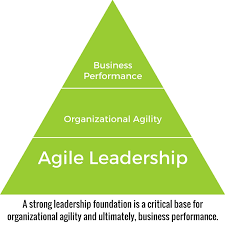
In today's rapidly evolving digital landscape, traditional leadership models often fall short. Training Course on Agile Leadership for Digital Product Development is meticulously designed to equip forward-thinking leaders with the essential mindset, tools, and strategies to thrive in complex, dynamic environments. Participants will learn to foster self-organizing, empowered teams, drive continuous value delivery, and champion organizational agility, ensuring their products meet customer-centric needs and adapt swiftly to market changes.
This immersive course focuses on developing transformational leaders who can navigate the intricacies of digital transformation, build a culture of experimentation and learning, and optimize workflows for accelerated product innovation. Through practical exercises, real-world case studies, and interactive discussions, attendees will master the principles of servant leadership, effective communication, and strategic alignment, enabling them to lead their organizations towards sustained success in the era of rapid digital evolution.
Course Duration
10 days
Course Objectives
- Master Agile Principles and the Agile Manifesto for digital product development.
- Develop a Growth Mindset and Adaptive Leadership capabilities to navigate market volatility.
- Cultivate Self-Organizing Teams and foster Team Empowerment for enhanced productivity.
- Implement Lean Methodologies and Value Stream Mapping to optimize workflows and reduce waste.
- Drive Customer-Centricity and User Experience (UX) in all product development phases.
- Champion Digital Transformation and Organizational Agility across the enterprise.
- Apply Design Thinking principles for innovative problem-solving and product creation.
- Facilitate Continuous Improvement and Iterative Development cycles.
- Enhance Emotional Intelligence and Servant Leadership for effective team coaching.
- Implement Data-Driven Decision Making using Agile Analytics for product strategy.
- Navigate Change Management and foster Organizational Resilience in dynamic environments.
- Develop strategies for Scaling Agile in large and complex organizations.
- Foster a culture of Psychological Safety and Blameless Postmortems for accelerated learning.
Organizational Benefits
- Faster delivery of high-quality digital products.
- Through continuous feedback loops and iterative refinement.
- By prioritizing user needs and delivering valuable solutions.
- Fostering empowered, autonomous, and motivated teams.
- Ability to pivot quickly to market changes and competitive pressures.
- Reduced waste and increased efficiency in product development.
- Encouraging experimentation, learning, and creative problem-solving.
- Through incremental delivery and early identification of issues.
- Breaking down silos and fostering shared understanding.
Target Audience
- Product Managers & Product Owners.
- Team Leads & Project Managers
- Scrum Masters & Agile Coaches
- Mid-Level to Senior Managers
- Executives & Directors
- Technical Leads & Architects.
- Entrepreneurs & Startup Founders.
- Anyone
Course Outline
Module 1: Foundations of Agile Leadership in the Digital Era
- Understanding the Agile Mindset and its relevance to digital product development.
- Exploring the Agile Manifesto and its core values.
- Distinguishing between traditional and Agile Leadership paradigms.
- The role of leadership in fostering a culture of agility.
- Case Study: How Spotify's autonomous "Squads, Tribes, Chapters, and Guilds" model exemplifies distributed Agile Leadership and organizational scaling.
Module 2: The Agile Leader's Mindset and Behaviors
- Cultivating a Growth Mindset for continuous learning and adaptation.
- Embracing Servant Leadership principles for team empowerment.
- Developing Emotional Intelligence for effective team dynamics.
- Fostering Psychological Safety to encourage experimentation and feedback.
- Case Study: Google's Project Aristotle and its findings on the importance of psychological safety for high-performing teams, demonstrating agile leadership's impact.
Module 3: Strategic Vision and Product Roadmapping
- Articulating a compelling Product Vision and aligning it with business strategy.
- Developing Outcome-Oriented Roadmaps over feature-driven plans.
- Techniques for prioritizing initiatives and managing stakeholder expectations.
- Translating strategic goals into actionable product backlogs.
- Case Study: Airbnb's journey in defining its "Belong Anywhere" vision and how it guided their product development through rapid growth and market shifts.
Module 4: Building and Empowering High-Performing Agile Teams
- Principles of Team Self-Organization and cross-functional collaboration.
- Strategies for building trust and transparency within teams.
- Delegation and Empowerment Models for maximum team autonomy.
- Facilitating effective team communication and conflict resolution.
- Case Study: How Netflix empowers its engineering teams with high autonomy and responsibility, leading to rapid innovation and product delivery.
Module 5: Driving Value Delivery and Iterative Development
- Understanding Value Streams and optimizing for continuous flow.
- Implementing Minimum Viable Products (MVPs) and early validation.
- Techniques for shortening feedback loops and continuous integration.
- Metrics for measuring value delivery and product success.
- Case Study: Dropbox's early MVP strategy and how it validated market demand before extensive development, showcasing iterative value delivery.
Module 6: Agile Frameworks and Methodologies (Scrum, Kanban, Lean)
- Deep dive into Scrum roles, ceremonies, and artifacts.
- Applying Kanban principles for workflow visualization and flow optimization.
- Leveraging Lean thinking to identify and eliminate waste.
- Choosing the right framework for different digital product contexts.
- Case Study: Zappos' implementation of a "holacracy" (similar to a highly decentralized agile structure) and its challenges and successes in applying flat organizational models.
Module 7: Scaling Agile in the Enterprise
- Challenges and opportunities of scaling Agile beyond individual teams.
- Introduction to popular scaling frameworks: SAFe, LeSS, Nexus.
- Strategies for organizational alignment and cross-team coordination.
- Fostering a "Team of Teams" approach for large-scale product development.
- Case Study: LEGO's journey with SAFe to align multiple product lines and streamline their digital transformation initiatives.
Module 8: Leading Change and Digital Transformation
- Understanding the dynamics of organizational change in the digital age.
- Developing a change leadership strategy for Agile adoption.
- Overcoming resistance to change and building a culture of adaptability.
- The role of leadership in championing digital literacy and new technologies.
- Case Study: Microsoft's cultural transformation under Satya Nadella, emphasizing a growth mindset and empathy to drive digital innovation.
Module 9: Agile Metrics and Data-Driven Decision Making
- Key Agile metrics for team performance and product health (e.g., lead time, cycle time, velocity).
- Utilizing Agile Analytics for informed decision-making.
- Beyond vanity metrics: Focusing on outcome-oriented metrics.
- Dashboards and reporting for transparency and continuous improvement.
- Case Study: Amazon's relentless focus on A/B testing and data to optimize their e-commerce platform and personalize customer experiences.
Module 10: Cultivating an Innovative and Learning Culture
- Encouraging experimentation and a "fail fast, learn faster" mentality.
- Implementing Blameless Postmortems for collective learning.
- Fostering a culture of continuous learning and skill development.
- Promoting knowledge sharing and internal communities of practice.
- Case Study: IDEO's human-centered design approach and its emphasis on rapid prototyping, iteration, and learning from failure in product innovation.
Module 11: The Agile Leader's Toolkit for Facilitation and Coaching
- Techniques for effective meeting facilitation in Agile ceremonies.
- Developing strong coaching and mentoring skills for team growth.
- Conflict resolution and negotiation in a collaborative environment.
- Feedback techniques for performance improvement and motivation.
- Case Study: How Pixar fosters a "Braintrust" culture where candid feedback and open discussion are central to creative development and problem-solving.
Module 12: Agile Product Discovery and User Experience (UX)
- Integrating Product Discovery into the Agile lifecycle.
- Understanding the importance of User Research and empathy mapping.
- Applying Design Thinking for user-centered product solutions.
- Collaborating effectively with UX Designers and researchers.
- Case Study: How Google Ventures' "Sprint" methodology rapidly tests new product ideas and validates user desirability before extensive development.
Module 13: Technical Excellence and Quality in Digital Products
- The Agile leader's role in promoting Technical Debt management.
- Encouraging Automated Testing and Continuous Integration/Continuous Delivery (CI/CD).
- Fostering a culture of quality assurance and engineering best practices.
- Understanding the impact of DevOps on product development efficiency.
- Case Study: Spotify's approach to "release trains" and automated deployment pipelines to ensure high-quality, frequent software releases.
Module 14: Managing Stakeholders and External Dependencies
- Strategies for effective stakeholder communication and management.
- Navigating dependencies with other teams and external partners.
- Building strong relationships and fostering collaboration beyond the immediate team.
- Techniques for managing expectations and delivering predictable value.
- Case Study: How NASA's Mars Rover missions manage complex interdependencies and external partnerships to achieve ambitious scientific goals, adapting agile principles to large-scale projects.
Module 15: Personal Agile Leadership Journey and Action Planning
- Self-assessment of current leadership style and identifying areas for growth.
- Developing a personal Agile Leadership action plan.
- Strategies for continuous self-development and learning.
- Building a peer support network and seeking mentorship.
- Case Study: Reflection on individual leadership challenges and successes, with facilitated peer coaching for personalized growth strategies.
Training Methodology
Our training course on Agile Leadership for Digital Product Development employs a highly interactive and experiential methodology designed for maximum engagement and practical application. This includes:
- Interactive Workshops: Hands-on exercises, group activities, and simulations.
- Real-World Case Studies: In-depth analysis of successful and challenging Agile implementations.
- Facilitated Discussions: Encouraging peer-to-peer learning and diverse perspectives.
- Role-Playing and Simulations: Practicing leadership scenarios in a safe environment.
- Experiential Learning: Applying concepts immediately to participant's own work contexts.
- Coaching and Mentoring: Individual and group coaching sessions for personalized guidance.
- Action Planning: Developing concrete steps for immediate application post-training.
- Q&A Sessions: Addressing specific challenges and questions from participants.
- Blended Learning (Optional): Pre-course readings, post-course resources, and online forums for continued learning.
Register as a group from 3 participants for a Discount
Send us an email: info@datastatresearch.org or call +254724527104
Certification
Upon successful completion of this training, participants will be issued with a globally- recognized certificate.
Tailor-Made Course
We also offer tailor-made courses based on your needs.
Key Notes
a. The participant must be conversant with English.
b. Upon completion of training the participant will be issued with an Authorized Training Certificate
c. Course duration is flexible and the contents can be modified to fit any number of days.
d. The course fee includes facilitation training materials, 2 coffee breaks, buffet lunch and A Certificate upon successful completion of Training.
e. One-year post-training support Consultation and Coaching provided after the course.
f.