Training Course on AI for Strategic Talent Acquisition and Retention
Training Course on AI for Strategic Talent Acquisition and Retention empowers HR professionals to leverage cutting-edge AI tools and methodologies for optimizing every stage of the talent lifecycle, from dynamic sourcing and bias reduction to hyper-personalized employee experiences and proactive retention analytics.
Course Overview
Training Course on AI for Strategic Talent Acquisition and Retention
Introduction
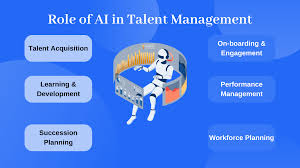
In today's rapidly evolving global talent landscape, Human Resources (HR) leaders face unprecedented challenges in attracting, hiring, and retaining top-tier talent. The advent of Artificial Intelligence (AI) offers a transformative solution, moving HR beyond traditional, reactive approaches to a proactive, data-driven, and predictive talent strategy. Training Course on AI for Strategic Talent Acquisition and Retention empowers HR professionals to leverage cutting-edge AI tools and methodologies for optimizing every stage of the talent lifecycle, from dynamic sourcing and bias reduction to hyper-personalized employee experiences and proactive retention analytics.
This program delves into the strategic integration of AI across all HR functions, focusing on building a resilient and high-performing workforce. Participants will gain practical skills in implementing AI for enhanced candidate experience, skills-based hiring, workforce planning, and fostering a culture of continuous growth and engagement. By mastering AI-driven insights, HR professionals can elevate their role to a strategic business partner, ensuring organizational agility and sustainable competitive advantage in the future of work.
Course Duration
5 days
Course Objectives
- Grasp core AI concepts, machine learning, natural language processing (NLP), and their practical application in human capital management.
- Implement AI-powered tools for predictive sourcing, candidate matching, and expanding talent pipelines globally.
- Design seamless, personalized candidate journeys using AI chatbots and automated communication.
- Apply AI algorithms for bias detection and reduction in job descriptions, resume screening, and interview processes, fostering diverse and inclusive hiring.
- Leverage AI to identify and assess future-ready skills, moving beyond traditional credential-based recruitment.
- Utilize AI-driven video analysis and structured interviewing techniques for fairer and more insightful candidate evaluation.
- Design AI-powered onboarding programs that personalize experiences, accelerate ramp-up time, and boost new hire engagement.
- Employ AI models to forecast turnover risk, identify key attrition drivers, and enable proactive retention strategies.
- Create adaptive learning paths and recommend targeted upskilling and reskilling opportunities using AI.
- Utilize sentiment analysis and AI-driven feedback tools to monitor morale, identify trends, and foster a positive workplace culture.
- Apply AI for forecasting future talent needs, skill gap analysis, and strategic resource allocation.
- Understand and navigate data privacy, fairness, and transparency considerations when implementing AI solutions in HR.
- Develop and track key performance indicators (KPIs) for AI initiatives in talent acquisition and retention, demonstrating ROI.
Organizational Benefits
- AI-driven insights lead to better candidate-job fit and reduced mis-hires.
- Automation and intelligent screening drastically cut down recruitment cycles.
- Predictive analytics enable proactive interventions to retain high-performing employees.
- A streamlined, personalized candidate experience strengthens the organization's reputation.
- Bias mitigation tools foster a more equitable and inclusive workforce.
- Automation of repetitive tasks frees up HR professionals for strategic initiatives.
- Access to rich insights supports more informed talent strategies.
- Proactive skills development and workforce planning prepare the organization for future demands.
Target Audience
- HR Managers and Directors
- Talent Acquisition Specialists and Recruiters
- HR Business Partners
- Learning & Development Professionals
- Workforce Planning Analysts
- HR Generalists looking to specialize in HR Tech
- Chief Human Resources Officers (CHROs)
- Organizational Development Consultants
Course Duration
Module 1: Foundations of AI in HR: Strategic Imperatives
- Understanding the paradigm shift of AI in the modern HR landscape.
- Key AI concepts: Machine Learning, Deep Learning, Natural Language Processing, Robotic Process Automation (RPA).
- The evolution of HR from administrative to strategic business partner through AI.
- Identifying high-impact areas for AI adoption in talent management.
- Case Study: IBM Watson Talent – How IBM leverages AI for skills-based hiring, personalized career development, and employee engagement insights.
Module 2: AI-Powered Talent Sourcing and Attraction
- Leveraging AI for intelligent resume parsing and candidate matching.
- Strategies for passive candidate sourcing and outreach using AI.
- Optimizing job descriptions with AI for SEO and inclusivity.
- Implementing AI chatbots for instant candidate engagement and FAQ resolution.
- Case Study: Unilever – Their use of AI and gamification to screen millions of applications, reducing hiring time by 75% and increasing diversity.
Module 3: AI for Fair and Efficient Candidate Selection
- Utilizing AI for pre-screening and shortlisting with bias mitigation.
- Designing and deploying AI-driven video interviews and assessments.
- Evaluating AI tools for personality assessments and cultural fit.
- Ethical considerations in AI-driven selection processes: transparency and fairness.
- Case Study: Hilton – How AI chatbots and predictive analytics transformed their high-volume hiring, improving candidate satisfaction and time-to-fill.
Module 4: Elevating the Candidate and New Hire Experience with AI
- Mapping the AI-enhanced candidate journey: from application to offer.
- Personalizing communication and feedback loops using AI.
- Automating onboarding workflows and document management with AI.
- Leveraging AI for personalized new hire learning paths and integration.
- Case Study: A large tech firm's AI-driven onboarding program that uses chatbots for queries and AI-recommended resources, significantly boosting new hire productivity and satisfaction.
Module 5: AI for Predictive Employee Retention
- Introduction to predictive analytics in HR for turnover forecasting.
- Identifying early warning signs of attrition through AI-driven data analysis.
- Developing proactive retention strategies based on AI insights (e.g., personalized stay interviews).
- Understanding the role of AI in employee sentiment analysis and feedback.
- Case Study: A telecommunications company that used AI to predict employee flight risk, leading to a 15% reduction in voluntary turnover among high-performers.
Module 6: AI for Personalized Development and Internal Mobility
- Using AI to assess skill gaps and recommend targeted learning interventions.
- Creating adaptive learning platforms with AI-curated content.
- Facilitating internal talent marketplaces and career pathing with AI.
- AI's role in identifying high-potential employees for succession planning.
- Case Study: Nestle's use of AI to connect employees with internal projects and learning opportunities, enhancing internal mobility and talent retention.
Module 7: Ethical AI, Data Privacy, and Responsible Implementation
- Addressing AI bias in algorithms and data: strategies for mitigation.
- Navigating data privacy (GDPR, CCPA) and security in AI HR solutions.
- Ensuring transparency and explainability in AI HR decision-making.
- Building a framework for ethical AI governance in HR.
- Case Study: An organization's journey in auditing their AI recruitment tools for bias and implementing corrective measures to ensure equitable outcomes.
Module 8: The Future of AI in HR and Strategic Workforce Planning
- Emerging AI trends: Generative AI for HR content, AI in well-being.
- Integrating AI with HRIS and HR analytics platforms.
- Developing an AI adoption roadmap for your HR function.
- Measuring the Return on Investment (ROI) of AI in talent acquisition and retention.
- Case Study: A global consulting firm's strategic workforce planning using AI to forecast future skill demands and optimize talent supply chain.
Training Methodology
This course employs a highly interactive and practical methodology designed for immediate application. It combines:
- Expert-Led Sessions: Engaging lectures and discussions led by industry practitioners.
- Hands-on Workshops: Practical exercises using real-world AI tools and platforms (simulated or actual where feasible).
- Case Study Analysis: Deep dives into successful (and cautionary) examples of AI implementation in HR.
- Group Discussions & Peer Learning: Collaborative problem-solving and sharing of best practices.
- Role-Playing & Simulations: Practicing AI-driven scenarios in a safe environment.
- Action Planning: Participants develop personalized strategies for implementing AI in their own organizations.
- Interactive Q&A Sessions: Direct engagement with instructors and peers.
Register as a group from 3 participants for a Discount
Send us an email: info@datastatresearch.org or call +254724527104
Certification
Upon successful completion of this training, participants will be issued with a globally- recognized certificate.
Tailor-Made Course
We also offer tailor-made courses based on your needs.
Key Notes
a. The participant must be conversant with English.
b. Upon completion of training the participant will be issued with an Authorized Training Certificate
c. Course duration is flexible and the contents can be modified to fit any number of days.
d. The course fee includes facilitation training materials, 2 coffee breaks, buffet lunch and A Certificate upon successful completion of Training.
e. One-year post-training support Consultation and Coaching provided after the course.
f. Payment should be done at least a week before commence of the training, to DATASTAT CONSULTANCY LTD account, as indicated in the invoice so as to enable us prepare better for you.