Training Course on AI Strategy for Executive Leadership
Training Course on AI Strategy for Executive Leadership is meticulously designed to equip senior leaders with the strategic acumen and practical frameworks to navigate the complexities of AI, transforming its immense potential from mere hype into tangible business impact
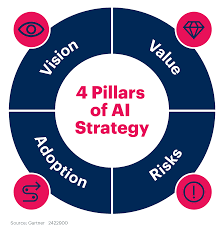
Course Overview
Training Course on AI Strategy for Executive Leadership
Introduction
In today's rapidly evolving digital landscape, Artificial Intelligence (AI) is no longer a futuristic concept but a present-day imperative for executive leadership. Training Course on AI Strategy for Executive Leadership is meticulously designed to equip senior leaders with the strategic acumen and practical frameworks to navigate the complexities of AI, transforming its immense potential from mere hype into tangible business impact. We will explore how to integrate AI seamlessly into core business functions, drive innovation, and cultivate a culture of data-driven decision-making that positions your organization for sustained competitive advantage in the AI-powered economy.
The program will delve into the critical aspects of AI adoption, focusing on governance, ethical AI, talent transformation, and the creation of scalable AI solutions. Executives will gain the confidence to articulate a clear AI vision, lead cross-functional AI initiatives, and effectively manage the organizational change required to thrive in an AI-first world. This is not a technical deep-dive, but a strategic leadership journey, empowering you to move beyond understanding the "what" of AI to mastering the "how" of its strategic implementation.
Course Duration
10 days
Course Objectives
- Understand foundational AI concepts, machine learning algorithms, and generative AI for strategic application.
- Develop a robust, future-proof AI strategy aligned with core business objectives and digital transformation goals.
- Pinpoint high-impact AI use cases across various business functions and industries.
- Foster a culture of innovation and experimentation to drive AI-driven growth and new business models.
- Establish effective AI governance frameworks, policies, and responsible AI principles.
- Understand and address ethical AI challenges, data privacy, and cybersecurity concerns.
- Leverage AI for process automation, predictive analytics, and supply chain optimization.
- Utilize AI for personalized customer engagement, sentiment analysis, and customer journey optimization.
- Lead workforce reskilling and upskilling initiatives for an AI-powered future.
- Define key metrics and frameworks to assess the return on investment (ROI) of AI initiatives.
- Understand the dynamics of human-AI teaming and optimize collaborative intelligence.
- Effectively lead organizational change to ensure successful AI adoption and cultural integration.
- Gain insights into emerging AI technologies like AI agents and quantum computing's impact.
Organizational Benefits
- Drive fundamental shifts in business operations and strategy with AI at the core.
- Establish a distinct market lead through AI-driven innovation and efficiency.
- Make data-informed decisions for more effective deployment of capital and talent.
- Leverage AI for advanced analytics and predictive insights, leading to more strategic choices.
- Automate repetitive tasks, streamline workflows, and reduce operational costs.
- Deliver personalized experiences and anticipate customer needs with AI.
- Empower employees to experiment with AI, fostering creativity and problem-solving.
- Proactively identify and mitigate risks related to market shifts, security, and compliance.
- Develop a skilled and adaptable workforce capable of thriving in an AI-driven environment.
- Ensure AI initiatives align with organizational values and societal expectations, building trust and reputation.
8 Target Audience
- C-Suite Executives.
- Senior Leaders & Department Heads.
- Business Unit Leaders.
- Digital Transformation Leads.
- Strategy & Innovation Directors.
- Board Members.
- High-Potential Leaders.
- Consultants & Advisors.
Course Outline
Module 1: The AI Revolution: From Hype to Business Imperative
- Foundations of AI: Demystifying core AI concepts, Machine Learning, Deep Learning, and Generative AI.
- Historical Context & Evolution: Understanding AI's journey and its accelerated impact on business.
- AI's Transformative Potential: Identifying how AI redefines industries, value chains, and competitive landscapes.
- The Executive's Role in AI: Shifting from technical understanding to strategic oversight and leadership.
- Case Study: Netflix's Recommendation Engine: How AI revolutionized content consumption and customer retention.
Module 2: Crafting Your AI Vision and Strategy
- Strategic Alignment: Integrating AI strategy with overall business objectives and long-term vision.
- Identifying High-Value AI Use Cases: Prioritizing opportunities for maximum impact and ROI.
- AI Readiness Assessment: Evaluating organizational capabilities, data infrastructure, and cultural preparedness.
- Building an AI Roadmap: Developing a phased approach for AI adoption and scaling.
- Case Study: JPMorgan Chase's COiN: Automating contract review and back-office operations for significant efficiency gains.
Module 3: Data as the Fuel: AI Data Strategy for Leaders
- Data Governance for AI: Establishing principles for data quality, security, and accessibility.
- Data Pipelines & Infrastructure: Understanding the executive implications of building scalable data foundations.
- Ethical Data Sourcing & Usage: Addressing bias, privacy, and responsible data practices.
- Leveraging Big Data for AI: Tapping into vast datasets for predictive insights and operational intelligence.
- Case Study: Starbucks' Personalized Marketing: Using data and AI to deliver highly tailored customer experiences.
Module 4: AI in Action: Operationalizing Efficiency and Growth
- AI-Powered Process Automation (RPA & Intelligent Automation): Streamlining workflows and reducing manual effort.
- Predictive Analytics for Business Foresight: Forecasting trends, demand, and potential disruptions.
- Supply Chain Optimization with AI: Enhancing logistics, inventory management, and risk prediction.
- AI in Finance & HR: Automating tasks, improving forecasting, and optimizing talent management.
- Case Study: UPS's ORION System: AI-driven route optimization leading to massive cost savings and reduced emissions.
Module 5: AI for Enhanced Customer Experience & Marketing
- Personalization at Scale: Delivering hyper-personalized products, services, and communications.
- AI-Powered Chatbots & Virtual Assistants: Improving customer service and engagement.
- Sentiment Analysis & Brand Monitoring: Understanding customer emotions and market perception.
- AI-Driven Content Generation & Advertising: Optimizing marketing campaigns and creative output.
- Case Study: Sephora's Beauty Assistant: AI-powered virtual try-on and personalized product recommendations.
Module 6: Leading AI-Driven Innovation and New Business Models
- Disruptive Potential of AI: Identifying new markets, services, and competitive advantages.
- Building an Innovation Ecosystem: Fostering collaboration between internal teams and external AI partners.
- AI as a Product & Service: Developing new offerings powered by AI.
- Monetizing AI: Exploring revenue streams from AI capabilities and solutions.
- Case Study: Tesla's Autonomous Driving: AI at the core of a revolutionary product and business model.
Module 7: The Ethical AI Imperative: Trust and Responsibility
- Understanding AI Bias: Identifying sources of bias and strategies for mitigation.
- Fairness, Accountability, and Transparency (FAT) in AI: Implementing ethical guidelines.
- Regulatory Landscape for AI: Navigating emerging laws and compliance requirements.
- Building Trust in AI Systems: Communicating AI's benefits and limitations responsibly.
- Case Study: IBM's Watson Health Challenges: Lessons learned in ethical AI deployment and data integrity.
Module 8: AI Governance and Risk Management for Executives
- Establishing AI Governance Structures: Defining roles, responsibilities, and oversight.
- Risk Assessment & Mitigation: Identifying and managing operational, reputational, and security risks.
- Cybersecurity in an AI Era: Protecting AI systems and data from evolving threats.
- AI Audit & Compliance: Ensuring adherence to internal policies and external regulations.
- Case Study: Google's AI Principles and Responsible AI initiatives: A framework for ethical development and deployment.
Module 9: Talent Transformation: Leading an AI-Ready Workforce
- Impact of AI on Jobs & Skills: Understanding workforce evolution and future skill requirements.
- Reskilling & Upskilling Strategies: Developing programs to equip employees for AI-driven roles.
- Human-AI Teaming: Optimizing collaboration between human intelligence and AI capabilities.
- Attracting and Retaining AI Talent: Strategies for building a skilled AI team.
- Case Study: Accenture's AI Workforce Transformation: Reimagining job roles and training for an AI-powered future.
Module 10: Measuring Success: ROI and Impact of AI Initiatives
- Defining AI KPIs: Establishing relevant metrics for measuring AI project success.
- Calculating ROI for AI Projects: Quantifying financial and strategic returns.
- Beyond Financial Metrics: Assessing impact on innovation, customer satisfaction, and employee engagement.
- Iterative Measurement & Optimization: Adapting AI strategies based on performance data.
- Case Study: General Electric (GE) & Predix: Measuring the impact of industrial IoT and AI on asset performance.
Module 11: Scaling AI Solutions Across the Enterprise
- From Pilot to Production: Strategies for successful deployment and scaling of AI projects.
- AI Platform Selection: Evaluating cloud vs. on-premise, and open-source vs. proprietary solutions.
- Cross-Functional Collaboration for AI: Breaking down silos and fostering integrated teams.
- Managing AI Ecosystems: Working with vendors, startups, and research institutions.
- Case Study: Amazon's AI Everywhere Strategy: Embedding AI into every aspect of its operations, from logistics to customer service.
Module 12: Change Management in the Age of AI
- Communicating the AI Vision: Engaging stakeholders and building organizational buy-in.
- Overcoming Resistance to Change: Addressing fears and misconceptions about AI.
- Building an AI-Friendly Culture: Fostering experimentation, learning, and adaptability.
- Leadership's Role in Driving Adoption: Championing AI and leading by example.
- Case Study: Microsoft's AI Transformation: Internal strategies for cultural change and AI adoption across its diverse business units.
Module 13: Emerging AI Trends and the Future of Executive Leadership
- AI Agents and Autonomous Systems: Understanding the next wave of AI capabilities.
- Quantum Computing's Intersection with AI: Future implications for data processing and problem-solving.
- Edge AI and Decentralized AI: Exploring new deployment models and their impact.
- The Future of Work and AI: Redefining human roles and organizational structures.
- Case Study: DeepMind's AlphaFold: Revolutionizing protein folding prediction, showcasing AI's scientific frontier.
Module 14: Practical AI Strategy Workshop & Action Planning
- Developing Your Organizational AI Strategy Canvas: A hands-on session to map out your AI vision, objectives, and initiatives.
- Identifying Immediate AI Opportunities: Brainstorming quick wins and pilot projects.
- Crafting an Executive AI Communication Plan: Effectively presenting your AI strategy to key stakeholders.
- Risk Identification and Mitigation Planning: Proactively addressing potential challenges.
- Personal Leadership Action Plan: Defining individual next steps for leading AI transformation within your organization.
Module 15: AI Leadership Simulation & Peer Exchange
- AI Crisis Simulation: