Training course on Asset-Liability Management (ALM) for Pension Funds
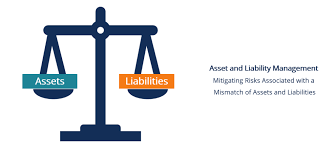
Training Course on Asset-Liability Management (ALM) for Pension Funds is designed to provide professionals with the essential skills and knowledge necessary to effectively manage the relationship between assets and liabilities within pension schemes.
Skills Covered
Course Overview
Training Course on Asset-Liability Management (ALM) for Pension Funds
Introduction
Training Course on Asset-Liability Management (ALM) for Pension Funds is designed to provide professionals with the essential skills and knowledge necessary to effectively manage the relationship between assets and liabilities within pension schemes. In an era of increasing financial complexity and regulatory scrutiny, effective ALM is crucial for maintaining the financial health and sustainability of pension funds. This course will cover the principles and practices of ALM, enabling participants to make informed decisions that balance risk and return, while ensuring compliance with regulatory requirements.
Participants will explore key topics such as risk assessment, investment strategies, regulatory frameworks, and performance measurement. The curriculum integrates theoretical concepts with practical applications, featuring case studies and hands-on exercises that allow attendees to apply their learning in real-world scenarios. By the end of the training, participants will be well-equipped to develop and implement effective ALM strategies tailored to their specific pension fund needs. This comprehensive approach aims to empower professionals to enhance the financial stability and operational efficiency of pension funds.
Course Objectives
- Understand the fundamentals of asset-liability management in pension funds.
- Analyze the relationship between assets and liabilities.
- Evaluate the impact of interest rate changes on pension obligations.
- Explore risk management strategies in ALM.
- Assess investment strategies for optimizing asset performance.
- Discuss regulatory frameworks affecting ALM practices.
- Identify best practices for liquidity management.
- Conduct scenario analysis for stress testing ALM strategies.
- Foster collaboration among stakeholders in the ALM process.
- Create actionable plans for implementing ALM strategies.
- Stay informed about emerging trends in ALM.
- Measure the effectiveness of ALM practices.
- Effective assessment of the present value of future liabilities
Target Audience
- Pension fund managers
- Actuaries and actuarial analysts
- Risk management professionals
- Financial analysts and consultants
- Compliance officers
- Investment strategists
- Graduate students in finance or actuarial science
- Corporate finance professionals
Course Duration: 5 Days
Course Modules
Module 1: Introduction to Asset-Liability Management
- Overview of ALM concepts and methodologies.
- Importance of ALM in pension fund management.
- Key terminology and principles in ALM.
- Historical context and evolution of ALM practices.
- Case studies on successful ALM implementations.
Module 2: Understanding Pension Fund Liabilities
- Types of pension liabilities and their characteristics.
- Techniques for measuring and forecasting liabilities.
- Impact of demographic factors on pension obligations.
- Assessing the present value of future liabilities.
- Real-world examples of liability management.
Module 3: Asset Management Strategies
- Overview of asset classes and investment options.
- Techniques for portfolio construction and diversification.
- Assessing risk-return profiles of various assets.
- Regulatory considerations for pension fund investments.
- Case studies on effective asset management strategies.
Module 4: Risk Management in ALM
- Identifying and quantifying risks in ALM.
- Techniques for integrating risk management into ALM frameworks.
- Evaluating interest rate risk and credit risk.
- Strategies for effective risk communication and reporting.
- Real-life examples of risk management successes and failures.
Module 5: Investment Strategies for ALM
- Overview of investment strategies in the context of ALM.
- Techniques for optimizing asset allocation.
- Assessing the role of alternative investments in ALM.
- Understanding the impact of market conditions on investment decisions.
- Case studies on successful investment strategies in ALM.
Module 6: Regulatory Frameworks and Compliance
- Overview of regulations affecting ALM practices.
- Key legislation impacting pension fund management.
- Best practices for maintaining regulatory compliance.
- Engaging with regulators and stakeholders in ALM.
- Case studies on compliance challenges and solutions.
Module 7: Liquidity Management in ALM
- Importance of liquidity in pension fund management.
- Techniques for assessing and managing liquidity risk.
- Strategies for maintaining liquidity in various market conditions.
- Evaluating the impact of liquidity on investment decisions.
- Real-world examples of effective liquidity management.
Module 8: Creating Action Plans for ALM Implementation
- Steps for developing a comprehensive ALM strategy.
- Engaging teams and stakeholders in the planning process.
- Setting measurable objectives and timelines for implementation.
- Monitoring and adapting ALM strategies over time.
- Presenting ALM plans to stakeholders for approval.
Training Methodology
- Interactive Workshops: Facilitated discussions, group exercises, and problem-solving activities.
- Case Studies: Real-world examples to illustrate successful community-based surveillance practices.
- Role-Playing and Simulations: Practice engaging communities in surveillance activities.
- Expert Presentations: Insights from experienced public health professionals and community leaders.
- Group Projects: Collaborative development of community surveillance plans.
- Action Planning: Development of personalized action plans for implementing community-based surveillance.
- Digital Tools and Resources: Utilization of online platforms for collaboration and learning.
- Peer-to-Peer Learning: Sharing experiences and insights on community engagement.
- Post-Training Support: Access to online forums, mentorship, and continued learning resources.
Register as a group from 3 participants for a Discount
Send us an email: info@datastatresearch.org or call +254724527104
Certification
Upon successful completion of this training, participants will be issued with a globally recognized certificate.
Tailor-Made Course
We also offer tailor-made courses based on your needs.
Key Notes
- Participants must be conversant in English.
- Upon completion of training, participants will receive an Authorized Training Certificate.
- The course duration is flexible and can be modified to fit any number of days.
- Course fee includes facilitation, training materials, 2 coffee breaks, buffet lunch, and a Certificate upon successful completion.
- One-year post-training support, consultation, and coaching provided after the course.
- Payment should be made at least a week before the training commencement to DATASTAT CONSULTANCY LTD account, as indicated in the invoice, to enable better preparation.