Training Course on Climate Resilience in Construction
Training Course on Climate Resilience in Construction equips professionals with the essential knowledge and skills to navigate these challenges. By understanding the impact of climate change on construction, participants will learn to integrate resilient design principles, implement sustainable building materials, and adopt proactive risk management strategies.
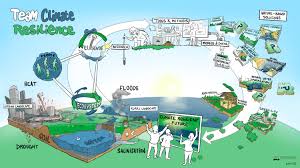
Course Overview
Training Course on Climate Resilience in Construction
Introduction
The construction industry stands at a critical juncture, facing increasing pressure from a rapidly changing climate. Extreme weather events, rising sea levels, and resource scarcity pose significant threats to infrastructure integrity, project timelines, and overall sustainability. Training Course on Climate Resilience in Construction equips professionals with the essential knowledge and skills to navigate these challenges. By understanding the impact of climate change on construction, participants will learn to integrate resilient design principles, implement sustainable building materials, and adopt proactive risk management strategies. This course fosters a proactive approach, enabling the industry to build infrastructure that can withstand future climate shocks, ensuring long-term viability and contributing to a more sustainable built environment.
This comprehensive program delves into the science behind climate change and its specific implications for the construction sector. Participants will explore climate change adaptation and mitigation techniques, learning how to assess vulnerabilities, develop climate-resilient construction practices, and contribute to a lower-carbon future. The curriculum emphasizes practical application through real-world case studies, interactive exercises, and the development of actionable strategies. By mastering climate risk assessment, understanding green building technologies, and implementing disaster preparedness plans, graduates will be empowered to lead the transition towards a more resilient and sustainable construction industry.
Course Duration
5 days
Course Objectives
- Understand the fundamentals of climate science and its direct relevance to the construction industry.
- Identify and assess climate-related risks impacting construction projects and infrastructure.
- Apply resilient design principles to enhance the durability and longevity of buildings and infrastructure.
- Evaluate and select sustainable and low-carbon building materials for climate-resilient construction.
- Implement water-efficient construction techniques in response to changing hydrological patterns.
- Develop strategies for managing the impact of extreme weather events on construction sites and operations.
- Integrate climate change adaptation measures throughout the project lifecycle.
- Explore nature-based solutions for enhancing climate resilience in the built environment.
- Understand the principles of green building certifications and their role in promoting resilience.
- Apply climate risk assessment frameworks to specific construction projects.
- Develop disaster preparedness and response plans for the construction sector.
- Analyze the economic benefits of climate-resilient construction practices.
- Stay informed about the latest climate change policies and regulations impacting the construction industry.
Organizational Benefits
- Reduced vulnerability to climate-related disruptions and associated costs.
- Enhanced reputation as a leader in sustainable and resilient construction practices.
- Improved project performance and reduced delays due to climate impacts.
- Increased competitiveness in a market increasingly focused on sustainability.
- Attraction and retention of talent committed to environmental responsibility.
- Compliance with emerging climate-related regulations and standards.
- Contribution to broader sustainability goals and a positive societal impact.
- Potential for cost savings through efficient resource management and reduced risks.
Target Audience
- Construction Project Managers
- Civil Engineers
- Architects
- Sustainability Managers
- Construction Site Supervisors
- Quantity Surveyors
- Government Officials involved in infrastructure development
- Real Estate Developers
Course Outline
Module 1: Understanding Climate Change and its Impact on Construction
- The science of climate change: causes, impacts, and future projections.
- Specific climate change impacts on the construction industry: temperature rise, extreme weather events sea-level rise.
- Vulnerability assessment of existing infrastructure to climate change.
- Case Study 1: The impact of increased flooding on coastal construction projects
- Case Study 2: The effects of prolonged heatwaves on construction worker productivity and material performance
Module 2: Principles of Resilient Design and Planning
- Integrating climate considerations into the design process.
- Designing for durability and longevity in a changing climate.
- Incorporating flexibility and adaptability in infrastructure design.
- Case Study 3: Application of flexible design principles in a bridge project
- Case Study 4: Designing a building with passive cooling and natural ventilation strategies
Module 3: Sustainable Building Materials and Construction Techniques
- Evaluating the environmental impact of traditional building materials.
- Exploring sustainable alternatives: recycled materials, bio-based materials, low-carbon concrete.
- Implementing energy-efficient construction techniques.
- Case Study 5: The use of recycled concrete aggregate in a large-scale building project
- Case Study 6: Implementing modular construction techniques for reduced waste and faster build times
Module 4: Water Management and Climate Resilience
- The impact of changing precipitation patterns on water availability for construction.
- Implementing water-efficient construction practices and technologies.
- Stormwater management and sustainable drainage systems.
- Case Study 7: Implementing a rainwater harvesting system for a construction site
- Case Study 8: Designing a permeable pavement system to manage stormwater runoff
Module 5: Managing Extreme Weather Events and Natural Disasters
- Identifying and assessing risks associated with specific extreme weather events Developing strategies for mitigating the impact of these events on construction sites.
- Implementing disaster preparedness and response plans.
- Case Study 9: Implementing wind-resistant design features in buildings
- Case Study 10: Developing an emergency response plan for a construction site during a wildfire
Module 6: Climate Change Adaptation and Mitigation in Construction
- Understanding the difference between adaptation and mitigation strategies.
- Implementing adaptation measures to address the impacts of climate change.
- Exploring mitigation techniques to reduce the carbon footprint of construction.
- Case Study 11: Implementing green infrastructure solutions for urban heat island mitigation
- Case Study 12: Calculating and reducing the embodied carbon of a building project
Module 7: Green Building Certifications and Climate Resilience
- Overview of prominent green building certification systems (LEED, BREEAM, etc.).
- How green building standards contribute to climate resilience.
- The role of certifications in promoting sustainable and resilient construction practices.
- Case Study 13: Achieving LEED Platinum certification for a climate-resilient building
- Case Study 14: Comparing the resilience aspects of different green building certification schemes.
Module 8: Policy, Economics, and the Future of Climate-Resilient Construction
- Overview of relevant climate change policies and regulations at local, national, and international levels.
- The economic benefits of investing in climate-resilient construction.
- Future trends and innovations in climate-resilient building technologies and practices.
- Case Study 15: Analyzing the cost-benefit of implementing specific climate resilience measures in a infrastructure project.
- Case Study 16: Exploring emerging technologies for climate-resilient construction, such as self-healing materials.
Training Methodology
This course will employ a blended learning approach, combining:
- Interactive lectures and presentations
- Group discussions and collaborative exercises
- Case study analysis and problem-solving activities
- Real-world examples and best practices
- Guest speaker sessions with industry experts
- Optional site visits (if feasible)
Register as a group from 3 participants for a Discount
Send us an email: info@datastatresearch.org or call +254724527104
Certification
Upon successful completion of this training, participants will be issued with a globally- recognized certificate.
Tailor-Made Course
We also offer tailor-made courses based on your needs.
Key Notes
a. The participant must be conversant with English.
b. Upon completion of training the participant will be issued with an Authorized Training Certificate
c. Course duration is flexible and the contents can be modified to fit any number of days.
d. The course fee includes facilitation training materials, 2 coffee breaks, buffet lunch and A Certificate upon successful completion of Training.
e. One-year post-training support Consultation and Coaching provided after the course.
f. Payment should be done at least a week before commence of the training, to DATASTAT CONSULTANCY LTD account, as indicated in the invoice so as to enable us prepare better for you.