Training Course on Crop Residue Management and Biochar Application
Training Course on Crop Residue Management and Biochar Application empowers agricultural professionals, farmers, and researchers with the latest tools and insights on how to convert crop residues into valuable inputs for soil enhancement using biochar.
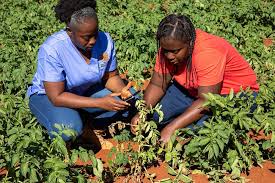
Course Overview
Training Course on Crop Residue Management and Biochar Application
Introduction
Sustainable agriculture is at the forefront of global food security, and crop residue management combined with biochar application has emerged as a transformative solution for improving soil health, mitigating climate change, and enhancing carbon sequestration. Training Course on Crop Residue Management and Biochar Application empowers agricultural professionals, farmers, and researchers with the latest tools and insights on how to convert crop residues into valuable inputs for soil enhancement using biochar. It aims to bridge the knowledge gap and equip participants with climate-smart agriculture techniques that contribute to circular economy goals.
With rising concerns over greenhouse gas emissions, soil degradation, and burning of agricultural waste, this course offers a strategic pathway to resource-efficient farming. Through advanced methodologies, real-world case studies, and hands-on learning, participants will gain deep expertise in residue utilization, carbon farming, and the application of biochar as a soil amendment to drive sustainable land management and improved crop yields.
Course Objectives
- Understand the fundamentals of crop residue management.
- Identify types of crop residues and their potential uses.
- Analyze the impact of burning vs. reusing crop residues.
- Learn the principles of biochar production and application.
- Examine the role of biochar in carbon sequestration.
- Explore innovative biochar production technologies.
- Evaluate biochar’s effects on soil fertility and water retention.
- Integrate biochar into organic and conventional farming systems.
- Analyze case studies of successful implementation in various agro-climatic zones.
- Learn to calculate and monitor carbon credits from biochar.
- Understand policy and regulatory frameworks supporting biochar use.
- Develop sustainable residue management plans for farms.
- Apply monitoring and evaluation frameworks to assess outcomes.
Target Audiences
- Smallholder and commercial farmers
- Agronomists and agricultural extension officers
- Soil scientists and environmental engineers
- Researchers and academic professionals
- Agricultural policymakers and planners
- Sustainable agriculture NGOs and community leaders
- Climate change mitigation consultants
- Agribusiness and biochar entrepreneurs
Course Duration: 10 days
Course Modules
Module 1: Introduction to Crop Residue Management
- Definition and classification of crop residues
- Current practices and challenges
- Environmental and economic implications
- Importance in sustainable farming
- Benefits of residue recycling
- Case Study: India’s residue management policy in Punjab
Module 2: Crop Residue Assessment and Quantification
- Techniques for measuring residue biomass
- Seasonal residue mapping
- Estimating nutrient content in residues
- Impact assessment of crop burning
- Tools for digital residue monitoring
- Case Study: Satellite-based residue tracking in Kenya
Module 3: Environmental Impact of Residue Burning
- Air pollution and greenhouse gas emissions
- Soil nutrient depletion
- Public health implications
- Regulatory issues and enforcement
- Alternatives to burning
- Case Study: Campaigns against burning in Indonesia
Module 4: Principles of Biochar
- What is biochar and how it’s made
- Pyrolysis and other conversion techniques
- Physical and chemical properties
- Biochar vs. compost
- Suitability in different soils
- Case Study: Terra Preta in the Amazon
Module 5: Biochar Production Technologies
- Low-cost biochar kilns
- Advanced pyrolysis units
- Feedstock selection and preparation
- Emission controls
- Energy recovery from biochar production
- Case Study: Village-level biochar units in Uganda
Module 6: Biochar Application Methods
- Soil incorporation techniques
- Application rates and timing
- Mixing with fertilizers and compost
- Precision agriculture and biochar
- Crop-specific strategies
- Case Study: Coffee farming with biochar in Ethiopia
Module 7: Effects on Soil Fertility
- pH balance and nutrient retention
- Cation exchange capacity (CEC) improvement
- Microbial population dynamics
- Moisture retention and drought resistance
- Long-term soil productivity
- Case Study: Maize yield improvement in Zambia
Module 8: Biochar and Carbon Sequestration
- Stable carbon in soils
- Life cycle carbon assessment
- CO? emissions offset
- Linking to carbon markets
- Monitoring and verification tools
- Case Study: Carbon farming projects in Ghana
Module 9: Economic Feasibility of Biochar
- Cost-benefit analysis
- Market trends and opportunities
- Economic incentives and subsidies
- Entrepreneurship in biochar production
- Financial modeling for small farms
- Case Study: Agribusiness startup in Rwanda
Module 10: Biochar in Organic and Regenerative Farming
- Integration into organic certification programs
- Synergies with cover cropping
- Reducing dependency on chemical inputs
- Enhancing soil biology
- Role in permaculture systems
- Case Study: Organic cotton farming in Tanzania
Module 11: Policy and Governance
- International policies and agreements
- National action plans
- Institutional roles and responsibilities
- Funding and incentive programs
- Gaps and opportunities
- Case Study: FAO policy brief on sustainable residue use
Module 12: Gender and Social Inclusion in Residue Management
- Women's role in residue collection and processing
- Inclusive innovation in biochar value chain
- Youth and entrepreneurship
- Training and capacity development
- Gender-sensitive planning
- Case Study: Women-led biochar coops in Nepal
Module 13: Biochar and Climate Change Resilience
- Role in adaptation strategies
- Enhancing agroecosystem resilience
- Synergies with climate-smart technologies
- Disaster risk reduction
- Building climate-resilient communities
- Case Study: Resilience building in drought-prone areas of Malawi
Module 14: Developing a Farm-Level Residue Management Plan
- Farm audit and residue inventory
- Setting management goals
- Choosing appropriate technologies
- Implementation roadmap
- Monitoring and reporting tools
- Case Study: Holistic plan for rice farm in Bangladesh
Module 15: Monitoring, Evaluation & Scaling Up
- M&E frameworks and indicators
- Impact assessment tools
- Data-driven decision-making
- Scaling best practices
- Reporting and feedback loops
- Case Study: Biochar program scale-up in Kenya’s Rift Valley
Training Methodology
- Interactive lectures and expert presentations
- Group discussions and participatory workshops
- Practical field demonstrations
- Real-world case studies and experience sharing
- Multimedia tools and virtual learning options
- Evaluation quizzes and certificate of completion
Register as a group from 3 participants for a Discount
Send us an email: info@datastatresearch.org or call +254724527104
Certification
Upon successful completion of this training, participants will be issued with a globally- recognized certificate.
Tailor-Made Course
We also offer tailor-made courses based on your needs.
Key Notes
a. The participant must be conversant with English.
b. Upon completion of training the participant will be issued with an Authorized Training Certificate
c. Course duration is flexible and the contents can be modified to fit any number of days.
d. The course fee includes facilitation training materials, 2 coffee breaks, buffet lunch and A Certificate upon successful completion of Training.
e. One-year post-training support Consultation and Coaching provided after the course.
f. Payment should be done at least a week before commence of the training, to DATASTAT CONSULTANCY LTD account, as indicated in the invoice so as to enable us prepare better for you.