Training Course on Cross-Cultural Leadership and Global Team Management
Training Course on Cross-Cultural Leadership and Global Team Management provides essential frameworks and practical strategies for developing adaptive leadership skills crucial for thriving in a globalized workforce.
Skills Covered
Course Overview
Training Course on Cross-Cultural Leadership and Global Team Management
Introduction
In today's hyper-connected and increasingly globalized business landscape, effective leadership transcends geographical boundaries and cultural norms. Organizations are expanding their reach, forming diverse, multicultural teams that operate across continents and time zones. This presents both immense opportunities for innovation and growth, and significant challenges in communication, collaboration, and conflict resolution. Leaders who can expertly navigate these complexities, foster cultural intelligence (CQ), and inspire cohesive global teams are no longer an asset but a necessity for sustained success in the modern era.
Training Course on Cross-Cultural Leadership and Global Team Management provides essential frameworks and practical strategies for developing adaptive leadership skills crucial for thriving in a globalized workforce. Participants will gain a deep understanding of diverse cultural dynamics, learn to build psychological safety within distributed teams, and master techniques for optimizing performance across varied cultural contexts. By focusing on inclusive leadership and intercultural communication, this program empowers current and aspiring leaders to transform cultural differences into a powerful competitive advantage, driving organizational effectiveness and fostering a truly global mindset.
Course Duration
10 days
Course Objectives
- Develop a profound understanding of various cultural dimensions (e.g., Hofstede, GLOBE) and their impact on leadership behaviors and team dynamics.
- Enhance verbal and non-verbal communication skills to bridge cultural gaps, minimize misunderstandings, and foster clear, impactful exchanges.
- Acquire practical strategies for effectively managing, motivating, and engaging remote, hybrid, and geographically dispersed multicultural teams.
- Create an environment of trust and openness where all team members feel safe to contribute ideas, take risks, and express diverse perspectives without fear.
- Develop advanced negotiation and mediation skills to effectively address and resolve conflicts arising from cultural differences.
- Implement inclusive practices that champion diversity, equity, and belonging (DEI) within global team structures, leveraging unique strengths of each individual.
- Learn to harness the power of diverse viewpoints to stimulate creativity, problem-solving, and innovative solutions across international boundaries.
- Cultivate flexibility in leadership approaches, adapting strategies and decision-making processes to suit varying cultural expectations and contexts.
- Understand best practices for attracting, retaining, and developing diverse talent pools in a competitive global market.
- Strengthen abilities to build rapport, establish credibility, and forge strong, lasting relationships with international stakeholders and partners.
- Learn to effectively plan, execute, and monitor projects with cross-cultural teams, ensuring alignment with global objectives.
- Identify and address unconscious biases in recruitment, team assignments, and performance evaluations to promote fairness and equity.
- Equip leaders to guide their teams through rapid change and uncertainty in a global environment, fostering resilience and adaptability.
Organizational Benefits
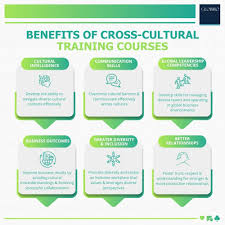
- Companies with diverse and inclusive leadership teams consistently outperform competitors in financial returns and market leadership.
- Diverse perspectives lead to more creative solutions, improved decision-making, and a greater capacity for innovation.
- Fostering an inclusive environment where all employees feel valued and understood leads to higher morale, increased productivity, and reduced turnover rates.
- Culturally intelligent leaders and teams can more effectively navigate new markets, localize strategies, and build strong international alliances.
- Improved intercultural communication skills drastically cut down on misunderstandings, friction, and costly errors arising from cultural differences.
- Demonstrating a commitment to diversity and global competence enhances the organization's reputation as a desirable employer and responsible global citizen.
- Cohesive, culturally aware global teams are more efficient, productive, and achieve higher quality outcomes.
- Develop a pool of leaders capable of leading and managing across diverse environments, supporting future organizational growth and global initiatives.
Target Audience
- Mid to Senior-Level Managers
- Project Managers
- Human Resources Professionals
- Expatriates and Repatriates
- Team Leaders
- Business Development Managers
- Organizational Development Specialists
- Anyone Working in a Multicultural Environment.
Course Outline
Module 1: Foundations of Cross-Cultural Leadership
- Defining cross-cultural leadership and its strategic importance in a globalized world.
- Understanding key cultural dimensions
- Self-assessment: Identifying personal cultural lenses and biases.
- The impact of culture on leadership styles and expectations.
- Introduction to cultural intelligence (CQ) and its four capabilities.
- Case Study: Analyze the cultural clashes and communication breakdowns that contributed to the failure of the DaimlerChrysler merger, highlighting the importance of cultural due diligence and integration.
Module 2: Intercultural Communication Mastery
- Verbal communication across cultures: Direct vs. indirect styles, high-context vs. low-context communication.
- Non-verbal communication: Interpreting gestures, body language, eye contact, and silence in different cultures.
- Active listening and empathetic communication techniques for diverse audiences.
- Strategies for clear, concise, and culturally sensitive written communication.
- Overcoming language barriers and leveraging translation tools effectively.
- Case Study: Examine how communication issues and differing national work cultures within Airbus led to significant production delays for the A380, emphasizing the need for harmonized communication protocols.
Module 3: Building and Leading Global Virtual Teams
- Challenges and opportunities of managing geographically dispersed teams.
- Establishing trust and cohesion in remote and hybrid multicultural environments.
- Effective virtual meeting facilitation and engagement strategies.
- Leveraging technology for seamless global collaboration.
- Strategies for fostering a sense of shared identity and purpose across distances.
- Case Study: Discuss IBM's long history with remote work and its evolution, highlighting strategies for building and maintaining highly effective virtual global teams.
Module 4: Cultural Intelligence (CQ) in Action
- Developing cognitive CQ: Understanding cultural norms, values, and beliefs.
- Enhancing motivational CQ: Building confidence and persistence in cross-cultural interactions.
- Improving behavioral CQ: Adapting verbal and non-verbal actions to cultural contexts.
- Applying CQ to real-world business scenarios and negotiations.
- The role of humility and curiosity in continuous CQ development.
- Case Study: Analyze how Pixar's diverse creative teams and their emphasis on constructive feedback and psychological safety contribute to their consistent innovation and cross-cultural appeal.
Module 5: Navigating Cross-Cultural Conflict
- Understanding cultural approaches to conflict: Direct confrontation vs. indirect resolution.
- Identifying underlying cultural assumptions in conflict situations.
- Mediation and negotiation strategies for intercultural disputes.
- Transforming conflict into constructive dialogue and problem-solving opportunities.
- Building resilience and managing stress in diverse team conflicts.
- Case Study: Examine the cultural tensions and leadership challenges within the Nissan-Renault alliance, particularly after the Ghosn scandal, illustrating how cultural mismatches can escalate conflict.
Module 6: Fostering Inclusive Global Environments
- Defining diversity, equity, and inclusion (DEI) in a global context.
- Recognizing and mitigating unconscious biases in recruitment, promotion, and team assignments.
- Creating psychological safety and a sense of belonging for all team members.
- Developing inclusive communication and decision-making processes.
- Championing diverse perspectives to drive innovation and creativity.
- Case Study: Explore Microsoft's extensive efforts and ongoing journey in fostering diversity, equity, and inclusion, showcasing both successes and challenges in building an inclusive global workforce.
Module 7: Global Leadership Styles and Adaptability
- Exploring different leadership models and their cultural applicability.
- Adapting leadership behaviors to diverse cultural expectations and organizational structures.
- The importance of authenticity while being culturally sensitive.
- Leading change in multicultural organizations.
- Developing a personal adaptive leadership framework.
- Case Study: Analyze Satya Nadella's leadership style at Microsoft, particularly his emphasis on empathy, growth mindset, and cultural transformation, and how it resonated globally.
Module 8: Global Talent Acquisition and Development
- Best practices for recruiting and onboarding diverse international talent.
- Developing culturally sensitive performance management systems.
- Providing effective feedback and coaching across cultural boundaries.
- Strategies for retaining top global talent.
- Building diverse leadership pipelines for future global roles.
- Case Study: Examine Unilever's decentralized yet globally integrated talent management approach, focusing on how they develop local leaders and foster global mobility.
Module 9: Cross-Cultural Negotiation Strategies
- Understanding cultural variations in negotiation styles and priorities.
- Building rapport and trust in cross-cultural negotiation contexts.
- Identifying and leveraging cultural nuances in bargaining and concession-making.
- Strategies for achieving win-win outcomes in international agreements.
- Practical tips for virtual global negotiations.
- Case Study: Discuss Disney's experiences with cultural adaptation in their theme park expansions in Paris and Hong Kong, highlighting negotiation challenges and successes in local integration.
Module 10: Ethical Leadership in a Global Context
- Navigating ethical dilemmas and cultural relativism vs. universal values.
- Understanding varying perceptions of corruption and corporate social responsibility.
- Implementing ethical decision-making frameworks for global operations.
- The role of integrity and transparency in building global trust.
- Compliance with international laws and regulations.
- Case Study: Analyze the Siemens bribery scandal, focusing on the ethical failures and the subsequent efforts to implement a robust global compliance and ethics program, underscoring the importance of ethical leadership across cultures.
Module 11: Leading Global Change and Innovation
- Managing organizational change across diverse cultural landscapes.
- Overcoming resistance to change in multicultural environments.
- Fostering a culture of continuous learning and adaptation.
- Strategies for stimulating cross-cultural innovation.
- Implementing design thinking and agile methodologies in global teams.
- Case Study: Explore Netflix's unique culture of "freedom and responsibility" and how it fosters innovation within their global teams, while also considering the challenges of scaling such a culture internationally.
Module 12: Performance Management in Global Teams
- Setting clear, culturally relevant performance expectations.
- Providing constructive and culturally appropriate feedback.
- Conducting effective performance reviews for global team members.
- Motivation theories and their application in diverse cultural contexts.
- Addressing performance issues and celebrating successes across cultures.
- Case Study: Discuss General Electric's evolution in performance management, from forced ranking to more continuous feedback models, and how these changes impacted their diverse global workforce.
Module 13: Building a Global Mindset
- Developing cognitive complexity and perspective-taking.
- Cultivating curiosity and openness to different ways of thinking and doing.
- The role of empathy and emotional intelligence in global leadership.
- Strategies for continuous learning and cultural immersion.
- Personal action planning for ongoing global mindset development.
- Case Study: Analyze how Coca-Cola adapts its global marketing and branding strategies to resonate with diverse local cultures while maintaining a consistent global identity.
Module 14: Risk Management in Global Operations
- Identifying and assessing cultural and political risks in global expansion.
- Developing contingency plans for international challenges.
- Managing crises with a global and cross-cultural lens.
- Ensuring cybersecurity and data privacy across borders.
- Building resilient supply chains and operations in a global context.
- Case Study: Examine Toyota's global recall crisis and how differing communication norms and perceptions of accountability across cultures impacted their response and reputation.
Module 15: Strategic Planning for Global Impact
- Integrating cultural insights into global strategic planning.
- Developing global market entry and expansion strategies.
- Aligning global and local objectives.
- Measuring and evaluating global team effectiveness and ROI.
- Future trends in cross-cultural leadership and global team management.
- Case Study: Analyze Samsung's successful global strategy, focusing on its ability to localize products and marketing while maintaining a strong global brand identity and leveraging its diverse workforce.
Training Methodology
This program utilizes a highly interactive and experiential learning methodology designed to maximize participant engagement and retention. The approach combines:
- Interactive Workshops & Discussions: Facilitated group discussions, brainstorming sessions, and debates to encourage peer learning and diverse perspectives.
- Case Studies & Real-World Scenarios: In-depth analysis of actual business cases and simulated scenarios to apply theoretical concepts to practical challenges.
- Role-Playing & Simulations: Hands-on exercises to practice intercultural communication, negotiation, and conflict resolution skills in a safe environment.
- Self-Assessments & Reflection Exercises: Tools and activities to help participants identify their cultural preferences, leadership styles, and areas for development.
- Expert-Led Presentations: Concise and engaging presentations delivering foundational knowledge and trending insights.