Training course on Disability Benefits and Rehabilitation Support through Social Insurance
Training Course on Disability Benefits and Rehabilitation Support through Social Insurance is meticulously designed to equip with the advanced theoretical insights and intensive practical tools necessary to excel
Skills Covered
Course Overview
Training Course on Disability Benefits and Rehabilitation Support through Social Insurance
Introduction
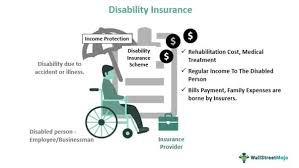
Disability Benefits and Rehabilitation Support through Social Insurance is a crucial and rights-based area of social protection, aiming to provide income security and facilitate the full participation of persons with disabilities in society and the economy. Individuals with disabilities often face significant barriers to employment, higher healthcare costs, and increased vulnerability to poverty, making robust social protection essential. Social insurance schemes, typically funded through contributions, offer a mechanism to provide regular income replacement and cover the costs of medical and vocational rehabilitation, thereby promoting independence, dignity, and inclusion. This specialized field focuses on designing and implementing comprehensive social insurance solutions that recognize the diverse needs of persons with disabilities, emphasize rehabilitation and return-to-work, and uphold their human rights.
Training Course on Disability Benefits and Rehabilitation Support through Social Insurance is meticulously designed to equip with the advanced theoretical insights and intensive practical tools necessary to excel in Disability Benefits and Rehabilitation Support through Social Insurance. We will delve into the foundational concepts of disability and the human rights model, master the intricacies of designing inclusive social insurance schemes, and explore cutting-edge approaches to assessment, rehabilitation pathways, and digital administration. A significant focus will be placed on understanding international human rights and labor standards (e.g., CRPD, ILO Conventions), fostering multi-sectoral coordination, ensuring non-discrimination and accessibility, and navigating the practical challenges of extending coverage and promoting active inclusion for persons with disabilities. By integrating interdisciplinary perspectives, analyzing real-world complex case studies, and engaging in hands-on policy analysis and simulation exercises, attendees will develop the strategic acumen to confidently champion and implement robust disability benefit and rehabilitation support systems, fostering unparalleled inclusion, empowerment, and rights realization.
Course Objectives
Upon completion of this course, participants will be able to:
- Analyze the fundamental concepts of disability, its models (medical, social, human rights), and their implications for social protection.
- Comprehend the strategic importance and potential of social insurance in providing disability benefits and rehabilitation support.
- Master the design and implementation of various types of disability benefits (e.g., temporary, permanent, partial, total).
- Develop expertise in formulating strategies for assessing disability and determining eligibility for benefits.
- Formulate strategies for designing and integrating medical and vocational rehabilitation programs within social insurance.
- Understand the critical role of financing and ensuring the financial sustainability of disability benefit schemes.
- Implement robust approaches to governance, administration, and claims management for disability benefits.
- Explore key policy, legal, and institutional frameworks for disability rights and social protection (e.g., CRPD).
- Apply methodologies for ensuring non-discrimination, accessibility, and reasonable accommodation in service delivery.
- Develop strategies for fostering multi-sectoral coordination and partnerships for comprehensive support.
- Analyze the challenges and opportunities of extending coverage to diverse persons with disabilities.
- Design a preliminary disability benefit or rehabilitation support component for a social insurance scheme.
- Examine global best practices and lessons learned from successful initiatives in disability social protection.
Target Audience
This course is essential for professionals working on social protection and disability inclusion:
- Social Protection Policymakers & Program Managers: Designing and overseeing social security systems.
- Disability Rights Advocates & Inclusion Specialists: Promoting the rights and inclusion of persons with disabilities.
- Rehabilitation Specialists (Medical & Vocational): Designing and delivering rehabilitation services.
- Medical Professionals: Involved in disability assessment and care.
- Actuaries & Economists: Specializing in social security financing and disability risk.
- Government Officials: From ministries of social welfare, labor, health, and disability affairs.
- Social Security Administrators: Managing disability benefit schemes.
- Organizations of Persons with Disabilities (OPDs): Advocating for and representing persons with disabilities.
Course Duration: 5 Days
Course Modules
Module 1: Understanding Disability and its Models
- Define disability: exploring different models (medical, social, human rights) and their implications for policy.
- Discuss the prevalence of disability and its intersection with poverty, gender, age, and other vulnerabilities.
- Analyze the barriers to inclusion faced by persons with disabilities (e.g., attitudinal, environmental, institutional).
- Explore the principles of the Convention on the Rights of Persons with Disabilities (CRPD).
- Overview of global and national statistics on disability and employment.
Module 2: The Strategic Role of Social Insurance for Disability
- Explain why social insurance is a critical mechanism for providing income security and support for persons with disabilities.
- Discuss how social insurance can protect against income loss due to disability and cover rehabilitation costs.
- Analyze its contribution to promoting independence, dignity, and social inclusion.
- Explore the pathways through which social insurance can facilitate participation in the labor market.
- Introduce the ILO's Social Security (Minimum Standards) Convention, 1952 (No. 102) and its relevance.
Module 3: Types of Disability Benefits
- Master the design of various types of disability benefits provided through social insurance:
- Temporary Disability Benefits: Income replacement during short-term incapacity.
- Permanent Disability Benefits: Compensation for partial or total permanent impairment.
- Partial vs. Total Disability: Differentiating benefit levels based on degree of impairment.
- Survivors' Benefits: For dependents in case of death related to disability.
- Discuss the eligibility criteria, duration, and level of benefits.
- Explore the role of social insurance in providing assistive devices and personal assistance.
- Case studies of different disability benefit designs.
Module 4: Disability Assessment and Eligibility Determination
- Develop expertise in formulating strategies for assessing disability and determining eligibility for benefits.
- Discuss different assessment approaches (e.g., medical, functional, biopsychosocial).
- Exploring the use of standardized tools (e.g., Washington Group Questions) for data collection.
- Ensuring fair, transparent, and non-discriminatory assessment processes.
- Managing appeals and grievance redress mechanisms for disability claims.
Module 5: Medical and Vocational Rehabilitation Support
- Formulate strategies for designing and integrating medical and vocational rehabilitation programs within social insurance.
- Discuss the continuum of rehabilitation services: physical therapy, occupational therapy, psychological support.
- Exploring vocational training, skills development, and job placement services.
- Analyzing the importance of early intervention and comprehensive rehabilitation for return-to-work.
- Case studies of successful rehabilitation programs linked to social insurance.
Module 6: Financing and Financial Sustainability of Disability Benefits
- Understand the critical role of financing and ensuring the financial sustainability of disability benefit schemes.
- Discuss contribution models (e.g., payroll-based) and their actuarial considerations.
- Analyzing the impact of demographic trends and disability prevalence on scheme solvency.
- Strategies for ensuring long-term financial viability and adequacy of reserves.
- Explore the role of prevention programs in reducing disability incidence and costs.
Module 7: Governance, Administration, and Claims Management
- Principles of good governance in disability benefit administration.
- Discuss the roles and responsibilities of governing boards, management, and medical assessment bodies.
- Streamlining claims processing: application, assessment, benefit determination, payment.
- Ensuring timely, accurate, and transparent claims management.
- Leveraging digital tools for efficient administration and data management.
Module 8: Policy, Legal, and Institutional Frameworks
- Explore key national policies and legal frameworks for disability rights, social protection, and employment.
- Discuss the alignment of national laws with the Convention on the Rights of Persons with Disabilities (CRPD).
- Strengthening institutional mandates, capacities, and coordination among relevant government agencies.
- Advocating for legal and policy reforms that promote inclusive social insurance for persons with disabilities.
- Case studies of successful policy reforms in disability social protection.
Training Methodology
- Interactive Workshops: Facilitated discussions, group exercises, and problem-solving activities.
- Case Studies: Real-world examples to illustrate successful community-based surveillance practices.
- Role-Playing and Simulations: Practice engaging communities in surveillance activities.
- Expert Presentations: Insights from experienced public health professionals and community leaders.
- Group Projects: Collaborative development of community surveillance plans.
- Action Planning: Development of personalized action plans for implementing community-based surveillance.
- Digital Tools and Resources: Utilization of online platforms for collaboration and learning.
- Peer-to-Peer Learning: Sharing experiences and insights on community engagement.
- Post-Training Support: Access to online forums, mentorship, and continued learning resources.
Register as a group from 3 participants for a Discount
Send us an email: info@datastatresearch.org or call +254724527104
Certification
Upon successful completion of this training, participants will be issued with a globally recognized certificate.
Tailor-Made Course
We also offer tailor-made courses based on your needs.
Key Notes
- Participants must be conversant in English.
- Upon completion of training, participants will receive an Authorized Training Certificate.
- The course duration is flexible and can be modified to fit any number of days.
- Course fee includes facilitation, training materials, 2 coffee breaks, buffet lunch, and a Certificate upon successful completion.
- One-year post-training support, consultation, and coaching provided after the course.
- Payment should be made at least a week before the training commencement to DATASTAT CONSULTANCY LTD account, as indicated in the invoice, to enable better preparation.