Training course on Financial Risk Management for Social Protection Systems
Training Course on Financial Risk Management for Social Protection Systems is meticulously designed to equip with the expert knowledge and practical methodologies
Skills Covered
Course Overview
Training Course on Financial Risk Management for Social Protection Systems
Introduction
Social protection systems, designed to provide security and stability to populations, are inherently exposed to a range of financial risks. These risks, if unmanaged, can jeopardize the long-term solvency of social insurance schemes, undermine the predictability of social assistance programs, and ultimately compromise the ability of governments to protect their most vulnerable citizens, as seen in many countries, including Kenya, during periods of economic volatility or unexpected crises. Training Course on Financial Risk Management for Social Protection Systems is meticulously designed to equip with the expert knowledge and practical methodologies to implement robust financial risk management frameworks for social protection systems. The program focuses on risk identification and assessment, quantitative risk modeling, stress testing, scenario planning, risk mitigation strategies (e.g., hedging, diversification), establishing risk governance structures, and integrating risk management into financial planning and investment decisions, blending rigorous analytical frameworks with practical, hands-on application, global case studies (with a strong emphasis on African contexts, including Kenya's NSSF, NHIF, and cash transfer programs), and intensive risk quantification and strategic planning exercises. Participants will gain the strategic foresight and technical expertise to confidently identify and mitigate financial threats, fostering unparalleled system resilience, fiscal prudence, and long-term security, thereby securing their position as indispensable leaders in safeguarding the financial bedrock of social well-being.
This intensive 5-day program delves into nuanced methodologies for developing comprehensive risk registers tailored to social protection systems, mastering sophisticated techniques for quantifying exposure to market, credit, interest rate, and inflation risks, and exploring cutting-edge approaches to designing stress tests and scenario analyses to evaluate scheme resilience under extreme events (e.g., severe recession, hyperinflation, large-scale natural disasters), developing hedging strategies for foreign exchange or interest rate exposures, formulating robust investment risk guidelines for social security funds, integrating climate-related financial risks into social protection planning, and establishing clear roles and responsibilities for risk oversight and reporting. A significant focus will be placed on understanding the interplay of financial risk management with broader public financial management (PFM) reforms, the specific challenges of data limitations and institutional capacity in developing countries (as observed in Kenya), and the practical application of risk communication and governance best practices.
Course Objectives:
Upon completion of this course, participants will be able to:
- Analyze core concepts and strategic responsibilities of financial risk management within the context of social protection systems.
- Master sophisticated techniques for identifying, categorizing, and assessing various financial risks impacting social protection schemes.
- Develop robust methodologies for quantifying and modeling key financial risks using appropriate statistical and actuarial tools.
- Implement effective strategies for designing and conducting stress tests and scenario analyses to evaluate scheme resilience under adverse conditions.
- Manage complex considerations for developing and implementing comprehensive risk mitigation and hedging strategies for social protection funds.
- Apply robust strategies for establishing strong financial risk governance structures and clear lines of accountability within social protection institutions.
- Understand the deep integration of financial risk management with investment policies and asset-liability management (ALM) for social protection funds.
- Leverage knowledge of global best practices and lessons learned from successful financial risk management in social protection systems across diverse country contexts, particularly in Africa (including Kenya's experiences).
- Optimize strategies for enhancing transparency, reporting, and communication of financial risks to stakeholders.
- Formulate specialized recommendations for integrating emerging risks, such as climate-related financial risks, into social protection planning.
- Conduct comprehensive assessments of existing internal control systems and compliance frameworks related to financial risks.
- Navigate challenging situations such as data limitations, capacity gaps, political interference, and rapid macroeconomic shifts in implementing effective risk management.
- Develop a holistic, evidence-based, and proactive approach to Financial Risk Management for Social Protection Systems, ensuring their long-term solvency, reliability, and responsiveness.
Target Audience:
This course is designed for professionals interested in Financial Risk Management for Social Protection Systems:
- Social Protection Policymakers & Senior Government Officials: From Ministries of Finance, Social Protection, and Planning, responsible for fiscal policy and system sustainability.
- Social Security Fund Managers & Investment Professionals: Responsible for managing assets and liabilities of contributory schemes (e.g., NSSF, NHIF in Kenya).
- Actuaries & Actuarial Analysts: Involved in long-term financial projections and solvency assessments.
- Risk Managers & Compliance Officers: Within social protection institutions or regulatory bodies.
- Treasury Officials & Debt Management Office Staff: Addressing macroeconomic risks impacting public finance and social spending.
- Regulators of Social Insurance/Pension Schemes: Responsible for prudential oversight and financial stability.
- Researchers & Academics: Studying social protection financing, risk management, and public economics.
- Development Partners & International Financial Institutions (IFIs): Supporting countries in strengthening financial management of social protection.
Course Duration: 5 Days
Course Modules:
- Module 1: Introduction to Financial Risk in Social Protection (Day 1)
- Defining financial risk in the context of social protection systems (contributory and non-contributory).
- Identifying common sources of financial risk: macroeconomic (inflation, interest rates, exchange rates), demographic (longevity, fertility), investment, and operational.
- The imperative for robust financial risk management in ensuring long-term sustainability and adequacy of social protection.
- Consequences of unmanaged financial risks: unfunded liabilities, benefit cuts, fiscal strain.
- Examples of financial risks faced by social protection systems in Africa, including Kenya (e.g., NSSF investment volatility, impact of drought on cash transfers).
- Module 2: Risk Identification and Assessment Methodologies (Day 1)
- Developing a comprehensive risk taxonomy and risk register for social protection schemes.
- Qualitative risk assessment techniques: risk mapping, brainstorming, expert judgment.
- Quantitative risk assessment techniques: probability and impact analysis, exposure measurement.
- Tools for assessing specific risks: duration analysis (interest rate risk), currency matching (exchange rate risk).
- Practical exercise: Identifying and rating financial risks for a hypothetical social protection program.
- Module 3: Quantitative Risk Modeling, Stress Testing, and Scenario Analysis (Day 2)
- Introduction to financial modeling for risk quantification (e.g., Value at Risk - VaR, Expected Shortfall).
- Designing and conducting stress tests to evaluate resilience under severe, plausible scenarios (e.g., deep recession, demographic shock, investment crash).
- Developing multi-factor scenario analyses to understand interconnected risks.
- Using actuarial models for long-term solvency projections under different risk assumptions.
- Interpreting and communicating results of stress tests and scenario analyses to decision-makers.
- Module 4: Risk Mitigation Strategies for Social Protection Funds (Day 3)
- Investment Risk Mitigation: Portfolio diversification (asset classes, geographies), asset-liability matching (ALM), passive vs. active management, derivative instruments (hedging).
- Macroeconomic Risk Mitigation: Indexation of benefits/contributions to inflation or wages, contingency reserves, fiscal buffers.
- Demographic Risk Mitigation: Regular actuarial reviews, flexible retirement ages, benefit adjustments.
- Operational Risk Mitigation: Robust internal controls, clear separation of duties, cybersecurity measures.
- Case studies on successful risk mitigation strategies by social security funds globally and in Africa.
- Module 5: Risk Governance and Institutional Frameworks (Day 3)
- Establishing a clear risk governance structure: roles and responsibilities of the board, management, risk committee.
- Developing a comprehensive risk management policy and framework document.
- Integrating risk management into the overall strategic planning and decision-making processes.
- The role of internal audit and external oversight bodies in risk management.
- Building a risk-aware culture within social protection institutions, drawing on lessons from Kenya's financial sector regulators.
- Module 6: Financial Market Risks and Investment Management (Day 4)
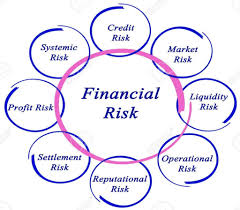
- Detailed analysis of market risk (equity, fixed income), credit risk, and liquidity risk for social protection fund investments.
- Strategies for managing interest rate risk (duration, immunization) and currency risk (hedging, diversification).
- Optimizing portfolio construction to achieve target returns within acceptable risk levels.
- The role of independent investment consultants and asset managers.
- Challenges and opportunities for managing investment risks in nascent or volatile financial markets, with insights from Kenya's capital markets.
- Module 7: Integrating Emerging Risks and Special Topics (Day 4)
- Climate-Related Financial Risks: Assessing physical and transition risks impacting social protection (e.g., impact on agriculture, livelihoods, and fund investments).
- Cybersecurity and data privacy risks in digitized social protection systems.
- Reputational risk and its impact on public trust and scheme sustainability.
- The role of social impact investing and ESG (Environmental, Social, Governance) factors in risk management.
- Strategies for continuously monitoring and adapting to new and evolving risks.
- Module 8: Practical Application: Developing a Risk Management Action Plan (Day 5)
- Review of a real-world financial risk management framework from a social security institution.
- Group exercise: Participants conduct a simplified financial risk assessment for a given social protection scheme scenario.
- Developing a tailored action plan for implementing or strengthening financial risk management within their respective institutions.
- Discussion on overcoming common implementation challenges: data gaps, capacity constraints, political interference.
- Presentation of action plans and peer feedback.
Training Methodology
- Interactive Workshops: Facilitated discussions, group exercises, and problem-solving activities.
- Case Studies: Real-world examples to illustrate successful community-based surveillance practices.
- Role-Playing and Simulations: Practice engaging communities in surveillance activities.
- Expert Presentations: Insights from experienced public health professionals and community leaders.
- Group Projects: Collaborative development of community surveillance plans.
- Action Planning: Development of personalized action plans for implementing community-based surveillance.
- Digital Tools and Resources: Utilization of online platforms for collaboration and learning.
- Peer-to-Peer Learning: Sharing experiences and insights on community engagement.
- Post-Training Support: Access to online forums, mentorship, and continued learning resources.
Register as a group from 3 participants for a Discount
Send us an email: info@datastatresearch.org or call +254724527104
Certification
Upon successful completion of this training, participants will be issued with a globally recognized certificate.
Tailor-Made Course
We also offer tailor-made courses based on your needs.
Key Notes
- Participants must be conversant in English.
- Upon completion of training, participants will receive an Authorized Training Certificate.
- The course duration is flexible and can be modified to fit any number of days.
- Course fee includes facilitation, training materials, 2 coffee breaks, buffet lunch, and a Certificate upon successful completion.
- One-year post-training support, consultation, and coaching provided after the course.
- Payment should be made at least a week before the training commencement to DATASTAT CONSULTANCY LTD account, as indicated in the invoice, to enable better preparation.