Training Course on Lean Principles for Executive Efficiency and Value Creation
Training Course on Lean Principles for Executive Efficiency and Value Creation is designed to equip senior leaders with the strategic mindset and practical tools to revolutionize their organizations.
Course Overview
Training Course on Lean Principles for Executive Efficiency and Value Creation
Introduction
Training Course on Lean Principles for Executive Efficiency and Value Creation is designed to equip senior leaders with the strategic mindset and practical tools to revolutionize their organizations. In today's dynamic business landscape, executives face immense pressure to deliver consistent results, optimize resources, and foster a culture of continuous improvement. This program delves into the core tenets of Lean, moving beyond manufacturing applications to demonstrate its universal power in enhancing operational excellence, driving innovation, and maximizing customer value across all business functions. Participants will gain actionable insights to identify and eliminate waste, streamline processes, empower their teams, and ultimately achieve a sustainable competitive advantage.
This intensive program provides a strategic deep dive into the application of Lean methodologies at the executive level. We will explore how to cultivate a Lean culture, implement effective value stream mapping, and leverage data-driven decision-making to unlock significant efficiencies and drive superior business outcomes. By focusing on principles such as flow, pull, and perfection, executives will learn to transform their leadership approach, fostering an environment where problem-solving and employee engagement become integral to daily operations, leading to measurable improvements in profitability, agility, and overall organizational health.
Course Duration
10 days
Course Objectives
- Cultivate a Lean mindset across the executive team for enterprise-wide operational excellence.
- Master value stream mapping to identify and eliminate non-value-added activities and achieve process flow efficiency.
- Implement advanced strategies for identifying and eradicating the 8 Wastes of Lean (TIMWOODS) across all departments.
- Lead and sustain Kaizen initiatives and a commitment to organizational agility.
- Deepen understanding of customer value and design processes to maximize customer satisfaction and loyalty.
- Develop and deploy demand-driven systems to optimize inventory, reduce lead times, and improve responsiveness.
- Utilize performance metrics and Lean analytics to inform strategic decisions and measure impact.
- Develop leadership coaching skills to empower employees and drive bottom-up innovation.
- Integrate Lean principles with Industry 4.0 technologies and digitalization strategies for enhanced efficiency.
- Apply Lean principles to achieve a highly efficient and resilient Lean supply chain.
- Cultivate the traits of an effective Lean leader who champions change and drives cultural transformation.
- Utilize Lean to identify and reduce operational risks, fostering a more resilient business model.
- Implement Lean strategies for long-term cost reduction, profitability enhancement, and market leadership.
Organizational Benefits
- Eliminate waste, optimize resource allocation, and reduce operational overhead, leading to substantial cost savings.
- Streamline workflows, reduce bottlenecks, and enhance process flow for improved output and faster delivery.
- Focus on delivering maximum customer value, leading to higher quality products/services and increased loyalty.
- Implement error-proofing and continuous improvement methodologies to minimize errors and enhance product/service quality.
- Develop a more adaptable organization capable of quickly responding to market changes and customer demands.
- Empower employees, foster a culture of problem-solving, and increase job satisfaction through involvement in continuous improvement.
- Establish a culture of continuous innovation and efficiency that differentiates the organization in the marketplace.
- Maximize the effectiveness of human, financial, and technological resources.
- Improve strategic planning and operational execution through robust performance measurement and analysis.
- Cultivate a long-term commitment to continuous improvement embedded in the organizational DNA.
Target Audience
- C-Suite Executives
- Senior Vice Presidents and Directors
- Heads of Departments:
- Strategic Planners
- Change Management Leaders
- Continuous Improvement Managers
- Board Members
- High-Potential Leaders
Course Outline
Module 1: The Executive Imperative for Lean: Vision and Value
- Understanding the contemporary business challenges demanding Lean adoption.
- Defining "value" from the customer's perspective and its strategic implications.
- Distinguishing between value-added and non-value-added activities.
- The role of executive leadership in shaping the Lean vision.
- Case Study: How Toyota's "True North" vision guided its global expansion and sustained efficiency.
Module 2: Lean Principles: Beyond the Shop Floor
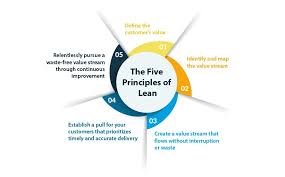
- Introduction to the five core Lean principles: Value, Value Stream, Flow, Pull, Perfection.
- Translating manufacturing Lean concepts to service, administrative, and digital processes.
- The enterprise-wide applicability of Lean thinking.
- Overcoming common misconceptions about Lean.
- Case Study: How a major healthcare provider used Lean principles to reduce patient wait times and improve care quality.
Module 3: Strategic Value Stream Mapping for Executives
- Advanced techniques for mapping end-to-end value streams across organizational silos.
- Identifying "hidden factories" and information flow bottlenecks.
- Developing future-state value stream maps aligned with strategic objectives.
- Quantifying the impact of process inefficiencies on financial performance.
- Case Study: A global financial institution's transformation of its loan approval process through value stream mapping, significantly reducing processing time.
Module 4: Waste Elimination (Muda): The Executive Lens
- In-depth analysis of the 8 Wastes of Lean (TIMWOODS) in executive and white-collar environments.
- Strategies for identifying and eliminating administrative waste, excessive approvals, and redundant reporting.
- The impact of organizational politics and silos on waste generation.
- Developing a culture of "waste-spotting" at all levels.
- Case Study: How a software development company reduced "waiting" waste by streamlining its development and deployment pipelines.
Module 5: Creating Flow: Uninterrupted Value Delivery
- Principles of continuous flow and single-piece flow in diverse organizational contexts.
- Breaking down functional silos to enable cross-functional collaboration and handoffs.
- Leveraging technology to facilitate seamless information and process flow.
- Managing exceptions and deviations without disrupting flow.
- Case Study: Amazon's focus on rapid inventory turns and efficient fulfillment centers to achieve unparalleled product flow.
Module 6: Implementing Pull Systems: Demand-Driven Operations
- Understanding the difference between push and pull systems in an executive context.
- Designing pull systems for various business functions (e.g., project management, customer service).
- The role of Kanban and other visual management tools for executive oversight.
- Balancing capacity and demand to avoid overproduction and underutilization.
- Case Study: Starbucks' implementation of a pull system for its drive-thru operations to reduce wait times and improve order accuracy.
Module 7: The Pursuit of Perfection: Continuous Improvement at Scale (Kaizen)
- Establishing a robust framework for continuous improvement across the organization.
- The role of A3 problem-solving for executive-level challenges.
- Creating a learning organization that embraces experimentation and iteration.
- Measuring and celebrating small improvements to sustain momentum.
- Case Study: GE's widespread adoption of Kaizen events to drive operational improvements across diverse business units.
Module 8: Lean Leadership: Cultivating a Lean Culture
- The fundamental shift in leadership mindset required for Lean transformation.
- Leading by example: Gemba walks for executives and servant leadership.
- Empowering employees through delegation, autonomy, and problem-solving authority.
- Communicating the "why" of Lean and managing resistance to change.
- Case Study: Southwest Airlines' culture of efficiency and employee empowerment as a Lean leadership exemplar.
Module 9: Lean and Digital Transformation: Synergies for the Future
- Integrating Lean principles with emerging technologies (AI, RPA, data analytics).
- Leveraging digitalization to enhance process automation and data visibility.
- Applying Lean to Agile development and digital product delivery.
- Avoiding "tech for tech's sake" and ensuring technology supports value creation.
- Case Study: How a leading e-commerce platform utilized Lean principles to optimize its backend systems and improve user experience through automation.
Module 10: Lean Metrics and Performance Management
- Identifying key performance indicators (KPIs) that truly reflect Lean progress.
- Developing visual management systems (Obeya, Dashboards) for executive oversight.
- Linking Lean improvements to financial outcomes and shareholder value.
- Avoiding vanity metrics and focusing on actionable insights.
- Case Study: How a manufacturing giant used OEE (Overall Equipment Effectiveness) as a Lean metric to drive significant improvements in production efficiency.
Module 11: Strategic Deployment (Hoshin Kanri) for Lean Success
- Aligning organizational goals with daily operational improvements.
- Cascading strategic objectives throughout the organization.
- The role of Catchball in fostering buy-in and collaboration.
- Regular reviews and adjustments to the strategic deployment process.
- Case Study: How a large retail chain used Hoshin Kanri to successfully roll out a company-wide customer service improvement initiative.
Module 12: Lean Supply Chain Management
- Applying Lean principles to optimize the entire supply chain, from suppliers to customers.
- Reducing lead times, inventory, and variability in the supply network.
- Building strong, collaborative relationships with suppliers.
- Strategies for supply chain resilience and risk mitigation.
- Case Study: Dell's pioneering use of Lean principles in its build-to-order supply chain to minimize inventory and maximize customer responsiveness.
Module 13: Lean for Innovation and Product Development
- Applying Lean principles to accelerate new product development cycles.
- Minimizing waste in the innovation process (e.g., unnecessary features, rework).
- Using Lean Startup methodologies for rapid prototyping and validation.
- Fostering a culture of experimentation and learning in R&D.
- Case Study: How a tech startup used Lean principles to iterate rapidly on its product, achieving market fit faster and with fewer resources.
Module 14: Sustaining the Lean Transformation
- Building a robust infrastructure for long-term Lean sustainability.
- Establishing governance, roles, and responsibilities for ongoing improvement.
- Embedding Lean principles into talent management and organizational design.
- Recognizing and rewarding Lean behaviors and achievements.
- Case Study: 3M's long-standing commitment to continuous improvement and innovation as a result of ingrained Lean practices.
Module 15: Executive Action Planning & Capstone Project
- Participants develop a personalized Lean action plan for their organization.
- Group coaching and peer feedback on executive Lean strategies.
- Identifying immediate opportunities for value creation and waste elimination.
- Presentation of executive Lean transformation proposals.
- Case Study: Participants will analyze and present a real-world Lean challenge from their own organization or a provided case.
Training Methodology
This highly interactive and results-oriented training program will utilize a blended approach combining:
- Interactive Lectures & Discussions: Engaging presentations of core Lean concepts and principles tailored for executive application.
- Real-World Case Studies: In-depth analysis of successful Lean implementations across diverse industries, focusing on executive-level challenges and solutions.
- Group Workshops & Simulations: Hands-on activities and problem-solving exercises to apply Lean tools and techniques in a collaborative setting.
- Value Stream Mapping Sessions: Guided exercises to map and analyze organizational processes, identifying areas for improvement.
- Executive Coaching & Mentorship: Opportunities for personalized guidance and feedback on individual Lean transformation strategies.
- Action Planning & Capstone Project: Participants will develop concrete plans for implementing Lean within their organizations, culminating in a presentation.
- Peer Learning & Networking: Facilitated discussions and activities to share insights and best practices with fellow executives.
Register as a group from 3 participants for a Discount
Send us an email: info@datastatresearch.org or call +254724527104
Certification
Upon successful completion of this training, participants will be issued with a globally- recognized certificate.
Tailor-Made Course
We also offer tailor-made courses based on your needs.
Key Notes
a. The participant must be conversant with English.
b. Upon completion of training the participant will be issued with an Authorized Training Certificate
c. Course duration is flexible and the contents can be modified to fit any number of days.
d. The course fee includes facilitation training materials, 2 coffee brea