Training Course on Masterclass in Advanced Critical Thinking Skills
Training Course on Masterclass in Advanced Critical Thinking Skills is meticulously designed to equip individuals with the sophisticated cognitive tools and frameworks required to analyze information, evaluate arguments, solve intricate problems, and make sound, evidence-based decisions.
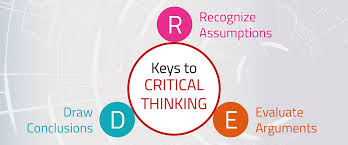
Course Overview
Training Course on Masterclass in Advanced Critical Thinking Skills
Introduction
In today's rapidly evolving and complex world, the ability to engage in advanced critical thinking is no longer a luxury but a necessity for personal and professional success. This Masterclass is meticulously designed to equip individuals with the sophisticated cognitive tools and frameworks required to analyze information, evaluate arguments, solve intricate problems, and make sound, evidence-based decisions. Through a blend of theoretical understanding and practical application, participants will master the nuances of logical reasoning, cognitive bias mitigation, and innovative problem-solving, ultimately fostering a mindset of intellectual rigor and strategic foresight.
This intensive training program delves deep into the core principles of critical analysis, moving beyond basic comprehension to cultivate a profound capacity for evaluative thinking and constructive skepticism. Participants will learn to dissect complex issues, identify underlying assumptions, and navigate ambiguity with confidence. By mastering advanced techniques in inference, deduction, and abductive reasoning, they will enhance their ability to generate insightful solutions and make impactful contributions in any domain. The Masterclass emphasizes the development of metacognitive skills, enabling individuals to reflect on their own thinking processes and continuously refine their approach to intellectual challenges.
Course Duration
10 days
Course Objectives
- Enhance Analytical Skills: Develop advanced techniques for information analysis and interpretation.
- Master Logical Reasoning: Apply principles of deductive and inductive reasoning to construct sound arguments (logical fallacies, argument analysis).
- Identify Cognitive Biases: Recognize and mitigate common biases that impede objective decision-making (bias awareness, debiasing techniques).
- Improve Problem-Solving Abilities: Utilize structured frameworks for tackling complex problems and generating innovative solutions (problem-solving strategies, creative problem-solving).
- Strengthen Evaluative Thinking: Critically assess information sources and arguments for credibility and validity (information literacy, source evaluation).
- Develop Decision-Making Proficiency: Employ evidence-based approaches to make well-informed and strategic decisions (evidence-based decision making, decision analysis).
- Foster Constructive Skepticism: Cultivate a questioning mindset to challenge assumptions and explore alternative perspectives (intellectual curiosity, challenging assumptions).
- Enhance Metacognitive Awareness: Reflect on and improve one's own thinking processes (self-reflection, cognitive enhancement).
- Apply Critical Thinking in Real-World Scenarios: Translate theoretical knowledge into practical application across diverse contexts (practical application, real-world problem solving).
- Improve Communication of Reasoning: Articulate complex arguments and justifications clearly and persuasively (persuasive communication, argument construction).
- Navigate Ambiguity and Uncertainty: Develop strategies for effective thinking in situations with incomplete or conflicting information (ambiguity tolerance, uncertainty management).
- Promote Collaborative Critical Thinking: Engage in constructive dialogue and leverage diverse perspectives in group settings (collaborative problem solving, team-based analysis).
- Cultivate a Growth Mindset for Critical Thinking: Embrace continuous learning and development of critical thinking skills (lifelong learning, skill development).
Organizational Benefits
- Improved Decision Quality: Organizations benefit from more informed and effective decisions made by employees at all levels.
- Enhanced Problem-Solving: Complex organizational challenges are addressed more efficiently and creatively.
- Increased Innovation: A culture of critical thinking fosters the generation of new ideas and solutions.
- Reduced Errors and Risks: Careful analysis and evaluation minimize costly mistakes and potential risks.
- Better Resource Allocation: Resources are utilized more strategically based on thorough evaluation.
- Improved Communication and Collaboration: Clearer reasoning and constructive dialogue enhance teamwork.
- Greater Adaptability to Change: Organizations with strong critical thinking skills can navigate market shifts more effectively.
- Enhanced Employee Engagement: Employees feel more empowered and valued when their critical thinking abilities are developed and utilized.
- Stronger Leadership: Leaders with advanced critical thinking skills can guide their teams more effectively.
- Increased Competitive Advantage: Organizations that prioritize critical thinking can outperform competitors through better strategic planning and execution.
Target Audience
- Business Leaders and Executives: Seeking to enhance strategic decision-making and organizational problem-solving.
- Managers and Supervisors: Aiming to improve team performance through effective analysis and problem resolution.
- Professionals in Technical Fields: Requiring strong analytical and logical reasoning for complex tasks.
- Project Managers: Needing to evaluate risks, solve issues, and make informed decisions throughout project lifecycles.
- Human Resources Professionals: Focused on talent development and fostering critical thinking within the organization.
- Educators and Trainers: Looking to incorporate advanced critical thinking principles into their teaching methodologies.
- Individuals Seeking Personal Development: Interested in enhancing their cognitive abilities for personal and professional growth.
- Consultants and Analysts: Who need to provide insightful analysis and strategic recommendations to clients.
Course Outline
Module 1: Foundations of Advanced Critical Thinking
- Defining advanced critical thinking and its importance.
- Exploring the core components: analysis, evaluation, inference, explanation, and self-regulation.
- Understanding the relationship between critical thinking and other cognitive skills.
- Identifying personal thinking styles and areas for development.
- Setting personal goals for critical thinking skill enhancement.
Module 2: Mastering Logical Reasoning
- In-depth exploration of deductive and inductive reasoning.
- Identifying and analyzing common logical fallacies in arguments.
- Constructing sound and persuasive arguments.
- Evaluating the strength and validity of different types of evidence.
- Applying logical principles to real-world scenarios.
Module 3: Recognizing and Mitigating Cognitive Biases
- Identifying a wide range of common cognitive biases (e.g., confirmation bias, anchoring bias).
- Understanding the neurological and psychological roots of biases.
- Developing strategies for recognizing and mitigating biases in oneself and others.
- Implementing techniques for more objective decision-making.
- Cultivating a mindset of intellectual humility.
Module 4: Advanced Techniques for Information Analysis
- Strategies for effectively gathering and evaluating information from diverse sources.
- Discerning credible and reliable information from misinformation.
- Analyzing data and identifying key patterns and insights.
- Using frameworks for structuring and organizing complex information.
- Applying critical thinking to information overload.
Module 5: Frameworks for Complex Problem Solving
- Exploring various structured problem-solving methodologies (e.g., root cause analysis, design thinking).
- Defining problems clearly and accurately.
- Generating creative and innovative solutions.
- Evaluating potential solutions based on various criteria.
- Implementing and assessing the effectiveness of solutions.
Module 6: The Art and Science of Decision Making
- Understanding different decision-making models and approaches.
- Evaluating risks and uncertainties in decision-making.
- Applying ethical considerations to decision-making processes.
- Making decisions under pressure and with limited information.
- Learning from past decisions and improving future choices.
Module 7: Cultivating Constructive Skepticism
- Developing a questioning and inquisitive mindset.
- Learning to challenge assumptions and conventional wisdom.
- Exploring alternative perspectives and viewpoints.
- Distinguishing between healthy skepticism and cynicism.
- Fostering open and critical dialogue.
Module 8: Enhancing Metacognitive Skills
- Understanding the principles of metacognition and self-awareness.
- Developing strategies for monitoring and evaluating one's own thinking.
- Identifying and addressing cognitive blind spots.
- Reflecting on learning experiences and adapting thinking processes.
- Promoting continuous improvement in critical thinking skills.
Module 9: Applying Critical Thinking in Communication
- Structuring arguments and presenting information logically and persuasively.
- Identifying and responding to flawed reasoning in others' communication.
- Engaging in constructive and productive discussions.
- Adapting communication styles for different audiences.
- Using critical thinking to navigate difficult conversations.
Module 10: Critical Thinking in Leadership and Management
- Applying critical thinking to strategic planning and organizational vision.
- Leading teams through complex problem-solving processes.
- Making sound judgments and decisions in leadership roles.
- Fostering a culture of critical thinking within teams and organizations.
- Mentoring and developing critical thinking skills in others.
Module 11: Navigating Ambiguity and Uncertainty
- Understanding the nature of ambiguity and uncertainty in various contexts.
- Developing mental models for dealing with complex and unpredictable situations.
- Employing flexible and adaptive thinking strategies.
- Making informed decisions in the absence of complete information.
- Learning to tolerate and manage uncertainty effectively.
Module 12: Collaborative Critical Thinking and Team Problem Solving
- Strategies for effective group discussions and brainstorming.
- Leveraging diverse perspectives and expertise within a team.
- Managing disagreements and conflicts constructively.
- Reaching consensus through critical evaluation of ideas.
- Facilitating collaborative problem-solving sessions.
Module 13: Critical Thinking and Innovation
- Exploring the relationship between critical thinking and creativity.
- Using critical thinking to evaluate and refine innovative ideas.
- Overcoming mental blocks to foster creative solutions.
- Applying critical thinking to the process of innovation.
- Developing a mindset that balances critical analysis with creative exploration.
Module 14: Ethical Considerations in Critical Thinking
- Understanding the ethical implications of critical thinking and decision-making.
- Recognizing and addressing potential biases in ethical reasoning.
- Applying ethical frameworks to complex dilemmas.
- Promoting fairness and objectivity in critical analysis.
- Cultivating ethical leadership through critical reflection.
Module 15: Developing a Growth Mindset for Lifelong Critical Thinking
- Understanding the principles of a growth mindset.
- Setting continuous learning goals for critical thinking development.
- Seeking out opportunities to practice and apply critical thinking skills.
- Reflecting on progress and identifying areas for ongoing improvement.
- Integrating critical thinking into daily life and professional practice.
Training Methodology
This Masterclass employs a highly interactive and engaging training methodology that combines:
- Interactive Lectures and Discussions: Facilitating the understanding of core concepts and principles.
- Case Studies and Real-World Examples: Applying critical thinking skills to practical scenarios.
- Individual and Group Exercises: Providing hands-on practice and reinforcing learning.
- Debates and Argument Analysis: Developing the ability to construct and evaluate arguments.
- Problem-Solving Workshops: Collaboratively tackling complex problems using learned frameworks.
- Self-Assessment and Reflection Activities: Encouraging metacognitive development.
- Practical Tools and Frameworks: Providing actionable techniques for immediate application.
- Feedback and Coaching: Offering personalized guidance for skill improvement.
Register as a group from 3 participants for a Discount
Send us an email: info@datastatresearch.org or call +254724527104
Certification
Upon successful completion of this training, participants will be issued with a globally- recognized certificate.
Tailor-Made Course