Training Course on Predictive Analytics for Business Foresight
Training Course on Predictive Analytics for Business Foresight empowers professionals to harness the power of data, advanced statistical modeling, and cutting-edge machine learning techniques to transform raw information into actionable predictions.
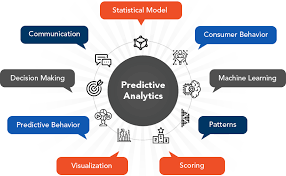
Course Overview
Training Course on Predictive Analytics for Business Foresight
Introduction
In today's hyper-competitive and data-rich business landscape, the ability to anticipate future trends and outcomes is no longer a luxury but a strategic imperative. Training Course on Predictive Analytics for Business Foresight empowers professionals to harness the power of data, advanced statistical modeling, and cutting-edge machine learning techniques to transform raw information into actionable predictions. By moving beyond traditional descriptive analytics, participants will gain the essential skills to proactively identify opportunities, mitigate risks, and optimize critical business functions, ensuring sustained growth and a decisive competitive advantage in an ever-evolving market.
This program delves deep into the practical application of predictive modeling across various industries, emphasizing real-world case studies and hands-on exercises. Participants will master the entire predictive analytics lifecycle, from data preparation and feature engineering to model building, validation, and deployment. The curriculum is meticulously designed to foster a data-driven culture within organizations, enabling strategic decision-making that is informed by robust quantitative insights and future-oriented perspectives.
Course Duration
10 days
Course Objectives
Upon completion of this comprehensive training, participants will be able to:
- Grasp the core concepts, methodologies, and strategic importance of predictive analytics in modern business.
- Learn advanced techniques for data cleaning, transformation, and creating impactful features for predictive models using Big Data and diverse datasets.
- Develop proficiency in essential statistical methods like regression analysis, time-series forecasting, and classification for business predictions.
- Utilize trending Machine Learning (ML) algorithms such as decision trees, random forests, and gradient boosting for advanced predictive modeling.
- Gain hands-on experience building and validating predictive models using industry-standard programming languages like Python or R.
- Understand various metrics for assessing model performance, including accuracy, precision, recall, F1-score, and ROC curves.
- Explore and apply predictive analytics to diverse business challenges, including customer churn prediction, fraud detection, and demand forecasting.
- Construct models to predict customer value, enabling targeted marketing and retention strategies.
- Leverage predictive insights to enhance supply chain efficiency and optimize inventory management.
- Apply predictive analytics to identify, quantify, and mitigate various business risks effectively.
- Translate complex analytical results into clear, actionable business recommendations for stakeholders.
- Learn best practices for deploying predictive models into production environments and monitoring their ongoing performance.
- Drive the adoption of predictive analytics within their organizations to cultivate a culture of data-driven decision-making.
Organizational Benefits
- Move from reactive to proactive strategies with data-backed foresight.
- Identify new revenue opportunities and optimize pricing strategies.
- Streamline processes, reduce waste, and optimize resource allocation.
- Personalize customer interactions, predict needs, and reduce churn.
- Proactively identify and mitigate financial, operational, and market risks.
- Outperform competitors by anticipating market shifts and customer behaviors.
- Foster a culture of continuous improvement and rapid adaptation to market changes.
- Unlock the hidden value within existing datasets for strategic gains.
Target Audience
- Business Analysts
- Data Analysts and Scientists
- Marketing & Sales Managers
- Operations & Supply Chain Managers
- Financial Analysts & Risk Managers
- IT Professionals & Project Managers involved in data initiatives
- Senior Leaders & Decision-Makers
- Consultants seeking to advise clients on data-driven strategies
Course Outline
Module 1: Introduction to Predictive Analytics & Business Value
- Defining Predictive Analytics: Beyond Descriptive and Diagnostic.
- The Business Imperative: Why Foresight is Critical for Modern Enterprises.
- Predictive Analytics Lifecycle: From Problem Definition to Deployment.
- Understanding Key Concepts: Prediction, Classification, Regression.
- Case Study: Revolutionizing Retail: Using predictive analytics to anticipate seasonal demand and optimize inventory levels, leading to a 20% reduction in stockouts and a 15% increase in sales during peak seasons for a major e-commerce retailer.
Module 2: Data Collection & Management for Predictive Models
- Identifying Relevant Data Sources: Internal, External, and Big Data.
- Data Acquisition Strategies: APIs, Databases, Web Scraping.
- Data Governance and Quality: Ensuring Accuracy and Reliability.
- Data Storage Solutions: Cloud vs. On-Premise for Analytics.
- Case Study: Healthcare Efficiency: A hospital chain leverages patient health records, demographic data, and appointment histories to predict no-show rates, optimizing scheduling and reducing resource waste by 10% through a robust data collection pipeline.
Module 3: Data Cleaning & Preprocessing
- Handling Missing Data: Imputation Techniques and Strategies.
- Outlier Detection and Treatment: Statistical and Visual Methods.
- Data Transformation: Normalization, Standardization, Binning.
- Feature Engineering: Creating Powerful Variables from Raw Data.
- Case Study: Financial Fraud Detection: A bank cleans and preprocesses transactional data, including identifying anomalous spending patterns and merging disparate customer information, to build a highly accurate fraud detection system that reduces false positives by 25%.
Module 4: Exploratory Data Analysis (EDA) & Visualization
- Uncovering Data Patterns: Statistical Summaries and Distributions.
- Visualizing Data Relationships: Scatter Plots, Histograms, Box Plots.
- Identifying Correlations and Trends for Predictive Insights.
- Tools for EDA: Python (Pandas, Matplotlib, Seaborn) or R (ggplot2).
- Case Study: Telecom Churn Analysis: A telecommunications company uses EDA to visualize customer call patterns, service usage, and billing cycles, revealing hidden correlations that significantly contribute to their churn prediction model accuracy.
Module 5: Introduction to Statistical Modeling for Prediction
- Linear Regression: Predicting Continuous Outcomes.
- Logistic Regression: Predicting Binary Outcomes (Classification).
- Assumptions and Interpretations of Regression Models.
- Introduction to Time Series Analysis: Forecasting Trends Over Time.
- Case Study: Real Estate Market Forecasting: Using linear regression, a real estate firm predicts property prices based on features like square footage, location, and number of bedrooms, achieving a 90% accuracy in market valuations.
Module 6: Fundamentals of Machine Learning for Prediction
- Supervised vs. Unsupervised Learning for Business Problems.
- Overfitting and Underfitting: Diagnosing and Addressing Model Issues.
- Cross-Validation Techniques: Robust Model Evaluation.
- Model Selection and Hyperparameter Tuning.
- Case Study: Customer Segmentation: An e-commerce platform uses K-Means clustering (unsupervised learning) to segment its customer base based on purchasing behavior, enabling highly targeted marketing campaigns that boost conversion rates by 18%.
Module 7: Classification Algorithms: Decision Trees & Ensemble Methods
- Decision Trees: Intuitive Models for Classification and Regression.
- Random Forests: Bagging for Improved Accuracy and Robustness.
- Gradient Boosting Machines (GBM): XGBoost, LightGBM, CatBoost.
- Feature Importance and Model Interpretability.
- Case Study: Credit Risk Assessment: A financial institution deploys a Gradient Boosting model to predict loan default risk, achieving a 30% reduction in bad loans while maintaining a competitive approval rate.
Module 8: Advanced Machine Learning: Support Vector Machines & Neural Networks
- Support Vector Machines (SVM): Powerful Classification and Regression.
- Introduction to Neural Networks and Deep Learning for Complex Data.
- Architectures for Predictive Tasks (e.g., Feedforward Networks).
- When to Use Advanced Models: Large Datasets and Complex Patterns.
- Case Study: Image Recognition for Quality Control: A manufacturing company uses a convolutional neural network (CNN) to predict product defects from visual inspections on the assembly line, leading to a 40% improvement in quality control efficiency.
Module 9: Time Series Forecasting for Business
- Components of Time Series: Trend, Seasonality, Cyclical, Irregular.
- ARIMA, SARIMA Models: Univariate Time Series Forecasting.
- Prophet by Facebook: Scalable Forecasting for Business.
- Evaluating Time Series Forecasts: MAE, RMSE, MAPE.
- Case Study: Energy Demand Prediction: A utility company uses SARIMA models to forecast electricity demand hourly, enabling optimized power generation and distribution, leading to a 5% reduction in operational costs.
Module 10: Model Evaluation & Validation
- Regression Metrics: R-squared, MAE, MSE, RMSE.
- Classification Metrics: Confusion Matrix, Accuracy, Precision, Recall, F1-Score.
- ROC Curves and AUC: Assessing Classifier Performance.
- Interpreting Model Results and Business Implications.
- Case Study: Marketing Campaign ROI: A marketing team rigorously evaluates their predictive models for customer response to campaigns using A/B testing and various metrics, ultimately optimizing their budget allocation for a 22% increase in campaign ROI.
Module 11: Deploying Predictive Models
- From Prototype to Production: Operationalizing Models.
- Model Deployment Platforms: Cloud-based Solutions (AWS SageMaker, Azure ML).
- API Development for Model Integration.
- Real-time vs. Batch Predictions.
- Case Study: Personalized Recommendations: A streaming service deploys a recommendation engine that updates in real-time, predicting user preferences and suggesting content, resulting in a 15% increase in user engagement.
Module 12: Model Monitoring & Maintenance
- Detecting Model Drift: When Predictions Lose Accuracy.
- Retraining Strategies: Scheduled vs. Event-Driven.
- A/B Testing for Model Updates.
- Ensuring Model Robustness and Scalability.
- Case Study: Fraud Model Evolution: An online payment processor continuously monitors its fraud detection model, retraining it monthly with new data to adapt to evolving fraud patterns, maintaining a 99% detection rate.
Module 13: Ethical Considerations & Bias in Predictive Analytics
- Data Privacy and Security: GDPR, CCPA, and Best Practices.
- Algorithmic Bias: Identifying and Mitigating Unfairness.
- Transparency and Explainability in AI Models.
- Responsible AI Development and Deployment.
- Case Study: Fair Lending Practices: A mortgage lender implements rigorous bias detection and mitigation techniques in its loan approval predictive model, ensuring equitable outcomes for all applicants and complying with fair lending regulations.
Module 14: Predictive Analytics in Specific Industries
- Finance: Credit Scoring, Stock Market Prediction, Risk Management.
- Retail: Demand Forecasting, Personalization, Churn Prediction.
- Healthcare: Patient Readmission, Disease Prediction, Treatment Optimization.
- Manufacturing: Predictive Maintenance, Quality Control.
- Case Study: Smart City Traffic Management: A city uses predictive analytics to forecast traffic congestion based on historical data, weather, and events, enabling dynamic traffic light adjustments and reducing commute times by 10% during peak hours.
Module 15: Building a Predictive Analytics Strategy & Roadmap
- Defining Business Problems for Predictive Solutions.
- Developing a Data Strategy for Foresight.
- Building a Predictive Analytics Team and Capabilities.
- Measuring ROI of Predictive Analytics Initiatives.
- Case Study: Enterprise-Wide Digital Transformation: A large multinational corporation develops a comprehensive predictive analytics roadmap, integrating AI-powered forecasting across all departments (marketing, sales, operations), leading to a 20% overall efficiency gain within two years.
Training Methodology
This training course employs a highly interactive and practical methodology to ensure maximum learning and skill acquisition:
- Instructor-Led Sessions: Engaging lectures and discussions covering theoretical concepts and best practices.
- Hands-on Workshops: Practical exercises using industry-standard tools (e.g., Python/R, Jupyter Notebooks) to build and deploy predictive models.
- Real-World Case Studies: In-depth analysis and discussion of actual business scenarios where predictive analytics has driven significant value.
- Group Activities & Discussions: Collaborative problem-solving and sharing of insights among participants.
- Live Demonstrations: Step-by-step walkthroughs of predictive modeling techniques and tool usage.
- Q&A Sessions: Dedicated time for addressing participant queries and fostering deeper understanding.
- Capstone Project (Optional): Opportunity to apply learned skills to a business problem of choice, mentored by instructors.
Register as a group from 3 participants for a Discount
Send us an email: info@datastatresearch.org or call +254724527104
Certification
Upon successful completion of this training, participants will be issued with a globally- recognized certificate.
Tailor-Made Course
We also offer tailor-made courses based on your needs.
Key Notes
a. The participant must be conversant with English.
b. Upon completion of training the participant will be issued with an Authorized Training Certificate
c. Course duration is flexible and the contents can be modified to fit any number of days.
d. The course fee includes facilitation training materials, 2 coffee breaks, buffet lunch and A Certificate upon successful completion of Training.
e. One-year post-training support Consultation and Coaching provided after the course.