Training Course on Regional Economic Blocs and Trade Agreements
Training Course on Regional Economic Blocs and Trade Agreements is meticulously designed to equip professionals with the strategic insights and practical tools necessary to navigate the complexities of regional economic integration
Skills Covered
Course Overview
Training Course on Regional Economic Blocs and Trade Agreements
Introduction
In today's interconnected global economy, understanding Regional Economic Blocs (REBs) and International Trade Agreements is paramount for businesses seeking sustainable growth and market expansion. These powerful instruments of economic integration profoundly shape the competitive landscape, influencing everything from supply chain optimization and market access to regulatory compliance and investment strategies. Businesses that proactively analyze and adapt to the evolving dynamics of global trade and regional integration gain a significant competitive advantage, unlocking new opportunities while effectively mitigating risks.
Training Course on Regional Economic Blocs and Trade Agreements is meticulously designed to equip professionals with the strategic insights and practical tools necessary to navigate the complexities of regional economic integration. Participants will delve into the real-world implications of various trade agreements, fostering an acute awareness of their impact on business operations, international trade finance, and market diversification. By mastering the nuances of these critical economic frameworks, businesses can strategically position themselves for global success and foster resilient cross-border collaborations.
Course Duration
10 days
Course Objectives
Upon completion of this training, participants will be able to:
- Analyze the historical evolution and contemporary relevance of Regional Economic Blocs (REBs).
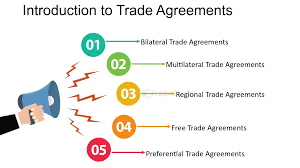
- Evaluate the different types of trade agreements (e.g., FTAs, Customs Unions, Common Markets, Economic Unions) and their specific implications.
- Assess the impact of REBs and trade agreements on global supply chains and logistics.
- Identify key opportunities for market entry and expansion within various regional blocs.
- Understand the complexities of tariff and non-tariff barriers and strategies for overcoming them.
- Develop robust strategies for ensuring regulatory compliance within diverse trade environments.
- Explore the role of digital trade and its interaction with existing trade agreements.
- Appraise the influence of geopolitical shifts and trade disputes on business strategies.
- Formulate effective export and import strategies tailored to regional trade dynamics.
- Examine the implications of REBs on foreign direct investment (FDI) flows and opportunities.
- Leverage intellectual property rights (IPR) within the framework of international trade agreements.
- Mitigate risks associated with currency fluctuations and trade finance in regional markets.
- Anticipate future trends in global economic integration and their potential business impact.
Organizational Benefits
- Employees will gain the knowledge to identify and capitalize on preferential market access opportunities within regional blocs, leading to increased export volumes and revenue.
- Improved understanding of trade agreements will enable more efficient and cost-effective global supply chain management, reducing lead times and mitigating disruptions.
- Teams will be equipped to navigate and minimize the impact of tariffs, quotas, and other non-tariff barriers, leading to significant cost savings.
- A deep dive into regulatory frameworks will ensure adherence to international trade laws, reducing the risk of penalties and legal disputes.
- Enhanced knowledge of FDI flows and regional stability will support more informed and profitable investment strategies.
- Organizations will gain a distinct edge by proactively adapting to evolving trade landscapes and leveraging new opportunities faster than competitors.
- Understanding trade disputes, geopolitical risks, and economic uncertainties will empower organizations to develop robust risk management frameworks.
- Investing in this specialized training fosters a highly skilled workforce capable of navigating the complexities of international business.
Target Audience
- Business Owners and Entrepreneurs
- Export and Import Managers
- International Business Development Professionals
- Supply Chain and Logistics Managers
- Trade Finance Specialists
- Legal and Compliance Officers
- Government Officials and Policy Makers
- Consultants advising businesses on international market strategies.
Course Outline
Module 1: Introduction to Regional Economic Blocs (REBs)
- Defining REBs: Types and Evolution
- Historical Context: Post-WWII integration movements.
- Key REBs Globally: EU, ASEAN, USMCA, AfCFTA, MERCOSUR, EAC, COMESA.
- Drivers of Regional Integration: Economic, political, and strategic motivations.
- The Role of REBs in the Multilateral Trading System (WTO).
- Case Study: The European Union's journey from a coal and steel community to a full economic and monetary union.
Module 2: Understanding Free Trade Agreements (FTAs)
- Core Principles of FTAs: Tariff elimination, rules of origin.
- Benefits and Challenges of FTAs for businesses.
- Negotiation and Implementation of FTAs.
- Sector-specific provisions in modern FTAs (e.g., services, digital trade, environment).
- Impact on domestic industries and consumer welfare.
- Case Study: Analyzing the impact of USMCA (formerly NAFTA) on North American manufacturing and agriculture.
Module 3: Customs Unions and Common Markets
- Customs Unions: Common External Tariff (CET) and its implications.
- Common Markets: Free movement of goods, services, capital, and labor.
- Policy Harmonization and its effects on business operations.
- Challenges of achieving deeper integration.
- Benefits for businesses in terms of market size and reduced trade friction.
- Case Study: The East African Community (EAC) and its progress towards a common market, highlighting opportunities and obstacles for businesses.
Module 4: Economic and Monetary Unions
- Characteristics of Economic Unions: Coordinated economic policies.
- Monetary Unions: Single currency and centralized monetary policy.
- Advantages and disadvantages for businesses operating within a monetary union.
- Fiscal and financial stability considerations.
- Impact on cross-border transactions and investment.
- Case Study: The Eurozone crisis and its lessons for businesses operating within a monetary union.
Module 5: Global Supply Chain Management in REBs
- Optimizing Supply Chains for regional integration.
- Rules of Origin: Compliance, documentation, and strategic implications.
- Logistics and Transportation within and across REBs.
- Customs procedures and trade facilitation initiatives.
- Resilience and diversification in regional supply chains.
- Case Study: How a multinational corporation adapted its supply chain strategy to leverage ASEAN's integrated market.
Module 6: Market Access and Expansion Strategies
- Identifying New Market Opportunities within REBs.
- Strategies for entering preferential markets.
- Understanding consumer behavior and cultural nuances in diverse regional markets.
- Competitive Analysis within integrated markets.
- Leveraging trade agreements for export growth.
- Case Study: A small and medium-sized enterprise (SME) successfully expanding into the MERCOSUR market.
Module 7: Regulatory Compliance and Standards Harmonization
- Navigating diverse regulatory landscapes in different REBs.
- Impact of standards harmonization on product development and market entry.
- Technical Barriers to Trade (TBTs) and Sanitary and Phytosanitary (SPS) measures.
- Best practices for ensuring compliance and avoiding non-tariff barriers.
- The role of mutual recognition agreements.
- Case Study: A food manufacturer adapting its products to meet EU import regulations and standards.
Module 8: Trade Finance and Investment within REBs
- Understanding payment mechanisms and currency considerations in regional trade.
- Accessing trade finance instruments (e.g., letters of credit, export credit insurance).
- Foreign Direct Investment (FDI) trends and opportunities within REBs.
- Investment protection agreements.
- Mitigating financial risks in cross-border transactions.
- Case Study: A company leveraging investment incentives to establish a manufacturing plant within an African regional economic community.
Module 9: Digital Trade and E-commerce in Regional Blocs
- The rise of digital trade and its implications for traditional trade agreements.
- E-commerce regulations and cross-border data flows within REBs.
- Challenges and opportunities for online businesses.
- Digital trade provisions in new trade agreements.
- Cybersecurity and data privacy considerations.
- Case Study: An e-commerce platform navigating different data protection laws and online consumer regulations across ASEAN member states.
Module 10: Geopolitics, Trade Disputes, and Risk Mitigation
- The interplay between geopolitical trends and regional trade.
- Understanding trade disputes and their resolution mechanisms (e.g., WTO dispute settlement).
- Impact of political instability and sanctions on business operations.
- Developing strategies for political risk mitigation.
- The future of multilateralism vs. regionalism.
- Case Study: Analyzing the impact of specific trade tensions (e.g., US-China trade war) on global supply chains and business profitability.
Module 11: Sectoral Implications of Trade Agreements
- Impact on key sectors: Agriculture, manufacturing, services, technology.
- Opportunities and challenges for specific industries within REBs.
- Identifying sectors most affected by trade liberalization.
- Strategies for sectoral competitiveness.
- The role of innovation and technology transfer.
- Case Study: The automotive industry's adaptation to regional content requirements and trade preferences in the North American market.
Module 12: Intellectual Property Rights (IPR) in Trade Agreements
- Protection of IPR across regional blocs.
- Enforcement mechanisms and dispute resolution for IPR.
- Implications for innovation, R&D, and technology transfer.
- Navigating different legal frameworks for patents, trademarks, and copyrights.
- Counterfeiting and piracy issues.
- Case Study: A technology company protecting its intellectual property when expanding into new markets within the EU and other blocs.
Module 13: Sustainable Trade and Ethical Considerations
- Environmental and social clauses in trade agreements.
- Corporate Social Responsibility (CSR) in global supply chains.
- Labor standards and human rights considerations.
- Green trade and sustainable development initiatives.
- Ethical sourcing and fair trade practices.
- Case Study: A clothing brand implementing sustainable sourcing practices across its global supply chain, complying with various regional trade regulations.
Module 14: Future Trends in Regional Economic Integration
- Emerging REBs and deepening existing ones.
- The rise of mega-regional trade agreements (e.g., CPTPP, RCEP).
- Impact of technological advancements (AI, blockchain) on trade.
- The future of global trade governance.
- Resilience and adaptation in a changing global trade environment.
- Case Study: Examining the potential implications of the African Continental Free Trade Area (AfCFTA) for businesses operating across Africa.
Module 15: Strategic Planning and Implementation
- Developing a comprehensive business strategy for navigating REBs.
- Risk assessment and mitigation planning.
- Building internal capacity for international trade.
- Leveraging trade intelligence and market research.
- Action planning for immediate implementation.
- Case Study: Participants develop a strategic plan for a hypothetical business looking to expand into a new regional economic bloc.
Training Methodology
This highly interactive training course will employ a blended learning approach, combining:
- Expert-led presentations: Delivered by seasoned professionals with extensive experience in international trade and economic integration.
- Case studies and real-world examples: Deep dives into practical scenarios and successful (or unsuccessful) business strategies within various REBs.
- Group discussions and brainstorming sessions: Fostering peer learning and diverse perspectives on complex trade issues.
- Interactive exercises and simulations: Enabling participants to apply theoretical knowledge to practical challenges.
- Q&A sessions: Providing ample opportunities for participants to seek clarification and address specifi