Training Course on Value Chain Development and Market Linkages
Training Course on Value Chain Development and Market Linkages helps professionals understand value chains from raw material sourcing to the final product delivery
Course Overview
Training Course on Value Chain Development and Market Linkages
Introduction
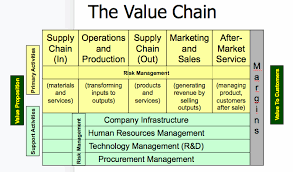
In today’s competitive global market, businesses and organizations must ensure their value chains are optimized for efficiency and sustainability to remain competitive. Training Course on Value Chain Development and Market Linkages helps professionals understand value chains from raw material sourcing to the final product delivery. This course offers participants the knowledge and skills necessary to enhance their value chains and develop strong market linkages that maximize their competitive advantage, improve business performance, and foster growth in various sectors.
Value chain development involves a systematic process of managing the flow of goods, services, and information to improve productivity and market access. It goes beyond simple supply chain management by considering the economic, environmental, and social impacts throughout the value chain. This course will guide participants through the strategies for identifying, developing, and optimizing value chains in both local and global contexts, allowing them to integrate sustainable practices that benefit all stakeholders involved, from suppliers to end consumers.
Market linkages, on the other hand, are vital for ensuring that products and services reach the right markets efficiently. Understanding how to connect producers, suppliers, and consumers within a well-functioning market ecosystem is critical for business growth. This course covers key aspects of market linkage development, including how to leverage digital platforms, strengthen partnerships, and enhance market access. By the end of the training, participants will be equipped to strengthen the market presence of their organizations and improve profitability by making smarter, data-driven decisions.
Course Duration
5 Days
Course Objectives
- Understand the key concepts and principles of value chain development.
- Learn to assess and map value chains to identify opportunities for improvement.
- Develop strategies for optimizing value chains to improve productivity and reduce costs.
- Gain practical knowledge of market linkage development and market access strategies.
- Understand the role of technology and innovation in value chain and market linkages.
- Identify sustainable practices that can be integrated into value chain management.
- Learn how to strengthen partnerships within value chains for enhanced collaboration.
- Gain skills to analyze market trends and align value chains with market demands.
- Learn how to leverage data to make informed decisions in value chain management.
- Develop strategies to mitigate risks in the value chain and market linkages.
Organizational Benefits
- Improved business performance through optimized value chains and market access.
- Enhanced competitive advantage by effectively managing value chain operations.
- Better resource allocation and cost management across the value chain.
- Increased market reach and access by developing strategic market linkages.
- Improved relationships with suppliers, producers, and customers through stronger partnerships.
- Increased profitability from efficient value chain management and streamlined market connections.
- Reduced risks in production and market entry by identifying bottlenecks and vulnerabilities.
- Enhanced innovation and the adoption of technology to improve value chain efficiency.
- Strengthened sustainability efforts by integrating environmentally and socially responsible practices.
- Improved ability to respond to market changes and consumer demands with agility.
Target Participants
- Business owners and managers looking to optimize their value chain operations.
- Supply chain managers and logistics professionals.
- Marketing and sales professionals seeking to enhance market access.
- Entrepreneurs aiming to expand their market reach and efficiency.
- Development professionals working in agriculture, manufacturing, and other industries.
- NGOs and international organizations supporting market access for small businesses.
- Policy makers and consultants working in the field of business development and economic growth.
Course Outline
Module 1: Introduction to Value Chain Development
- Defining value chains and their components.
- The importance of value chain analysis for business growth.
- Key stages in value chain development: from raw materials to finished products.
- Identifying stakeholders and their roles in value chains.
- Case study: Value chain development in the coffee industry.
Module 2: Mapping and Analyzing Value Chains
- Techniques for mapping value chains and identifying value-added activities.
- Tools for assessing value chains: SWOT, PESTLE, and value chain mapping.
- How to identify inefficiencies and bottlenecks in the value chain.
- Conducting cost-benefit analysis within the value chain.
- Case study: Mapping the value chain of a textile manufacturing company.
Module 3: Optimizing Value Chains for Efficiency
- Lean principles and waste reduction in value chains.
- Redesigning value chains to improve flow and minimize costs.
- Best practices for supplier and inventory management.
- The role of innovation and technology in optimizing value chains.
- Case study: Optimizing the value chain in a food processing business.
Module 4: Developing Market Linkages
- Understanding market linkages and their importance for business growth.
- Identifying and selecting the right market segments.
- Leveraging digital platforms and e-commerce for market access.
- Strengthening market linkages through strategic partnerships.
- Case study: Building market linkages for smallholder farmers in Africa.
Module 5: Sustainable Practices in Value Chain and Market Linkages
- The concept of sustainability in value chains and market linkages.
- Integrating environmental and social responsibility into value chain strategies.
- Managing resources sustainably across the value chain.
- Ethical sourcing and fair trade practices.
- Case study: Sustainable sourcing in the fashion industry.
Module 6: Risk Management and Future Trends in Value Chains
- Identifying and mitigating risks within value chains and market linkages.
- Adapting to disruptions: COVID-19 and other global challenges.
- Emerging trends in value chain development and market linkages.
- The future of supply chains: Automation, AI, and blockchain.
- Case study: Risk management strategies in the global electronics supply chain.
Training Methodology
This course employs a participatory and hands-on approach to ensure practical learning, including:
- Interactive lectures and presentations.
- Group discussions and brainstorming sessions.
- Hands-on exercises using real-world datasets.
- Role-playing and scenario-based simulations.
- Analysis of case studies to bridge theory and practice.
- Peer-to-peer learning and networking.
- Expert-led Q&A sessions.
- Continuous feedback and personalized guidance.
Register as a group from 3 participants for a Discount
Send us an email: info@datastatresearch.org or call +254724527104
Certification
Upon successful completion of this training, participants will be issued with a globally- recognized certificate.
Tailor-Made Course
We also offer tailor-made courses based on your needs.
Key Notes
a. The participant must be conversant with English.
b. Upon completion of training the participant will be issued with an Authorized Training Certificate
c. Course duration is flexible and the contents can be modified to fit any number of days.
d. The course fee includes facilitation training materials, 2 coffee breaks, buffet lunch and A Certificate upon successful completion of Training.
e. One-year post-training support Consultation and Coaching provided after the course.
f. Payment should be done at least a week before commence of the training, to DATASTAT CONSULTANCY LTD account, as indicated in the invoice so as to enable us prepare better for you.