Waterfall and Agile Methodologies in ERP Implementation Training Course
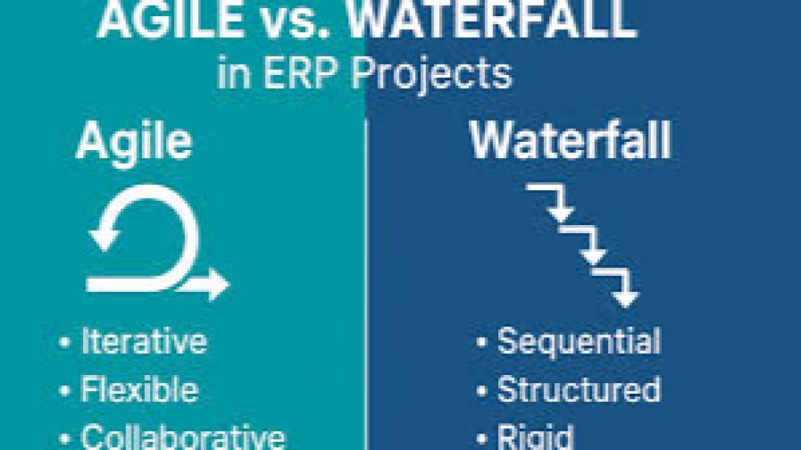
Waterfall and Agile Methodologies in ERP Implementation Training Course provides a comprehensive understanding of how Waterfall and Agile methodologies compare in the context of ERP projects, offering insights into which approach best suits specific organizational needs.
Course Overview
Waterfall and Agile Methodologies in ERP Implementation Training Course
Introduction
Enterprise Resource Planning (ERP) systems are vital for businesses seeking to streamline operations, improve efficiency, and foster growth. The successful implementation of an ERP system can determine the trajectory of an organization’s future success. When it comes to ERP implementation, two project management methodologies Waterfall and Agile are commonly utilized. Each approach has distinct advantages and challenges that impact the overall outcome of the implementation process. Waterfall and Agile Methodologies in ERP Implementation Training Course provides a comprehensive understanding of how Waterfall and Agile methodologies compare in the context of ERP projects, offering insights into which approach best suits specific organizational needs. By understanding the nuances of each methodology, participants will be better equipped to make informed decisions, minimize risks, and ensure smoother ERP deployments.
The course will delve into both methodologies' project life cycles, offering practical tools and real-world case studies to highlight their application in ERP implementation. Through an in-depth exploration of Waterfall and Agile, participants will gain expertise in how these methodologies influence project timelines, resource allocation, budget management, and end-user adoption. By the end of this course, participants will be able to confidently assess the most suitable approach based on the specific needs of their organization or client, ensuring the successful deployment of ERP systems that align with organizational goals.
Course Duration
5 days
Course Objectives
- Understand the fundamentals of ERP implementation methodologies Waterfall and Agile.
- Evaluate the differences between Waterfall and Agile project management in ERP implementations.
- Identify key challenges in ERP system deployment for each methodology.
- Learn how to assess organizational readiness for different implementation approaches.
- Implement best practices for project planning and risk management in ERP projects.
- Analyze case studies of successful ERP deployments using Waterfall and Agile approaches.
- Examine ERP life cycle stages and their alignment with Waterfall and Agile methodologies.
- Discover Agile frameworks in the context of ERP system development.
- Explore the role of stakeholders in both Waterfall and Agile ERP projects.
- Master techniques for scope management and timeline optimization in ERP implementation.
- Review critical success factors for both Waterfall and Agile ERP project management.
- Learn to adapt methodologies based on the project's complexity, size, and objectives.
- Gain insights into hybrid approaches combining Waterfall and Agile for ERP implementation.
Target Audience
- ERP Project Managers responsible for overseeing ERP system implementations.
- IT Managers and Technical Leads interested in understanding project management methodologies.
- Business Analysts looking to improve the accuracy and efficiency of ERP requirement gathering and documentation.
- Enterprise Architects aiming to optimize ERP integration strategies.
- Consultants working with organizations on ERP selection and deployment strategies.
- Change Management Professionals seeking to understand the impact of project methodologies on stakeholder engagement.
- CIOs and CTOs looking for strategic insights on ERP deployment best practices.
- Corporate Trainers aiming to educate internal teams on ERP methodologies.
Training Modules
Module 1: Introduction to ERP and Project Management Methodologies
- Understanding the core components of ERP systems.
- The importance of project management in ERP implementations.
- Overview of the Waterfall model and its phases.
- Case study: principles and key frameworks.
- Comparative analysis of Waterfall vs. Agile for ERP projects.
Module 2: Waterfall Methodology in ERP Implementation
- Detailed overview of the Waterfall approach in ERP projects.
- Stages of the Waterfall model in ERP system deployment.
- Key benefits and limitations of Waterfall in ERP projects.
- Case study: A large-scale manufacturing ERP project.
- Best practices for Waterfall ERP implementations.
Module 3: Agile Methodology in ERP Implementation
- Core principles of Agile project management.
- Overview of Agile frameworks (Scrum, Kanban) for ERP deployments.
- Benefits and challenges of Agile ERP implementations.
- Case study: ERP implementation in a fast-paced retail environment.
- Techniques for fostering Agile culture in ERP projects.
Module 4: Hybrid Models: Combining Waterfall and Agile in ERP
- Benefits of using a hybrid approach in complex ERP projects.
- Identifying the right mix of Waterfall and Agile phases.
- Case study: A financial services organization using hybrid methodologies.
- Project management tools for hybrid implementations.
- Lessons learned from hybrid ERP project failures and successes.
Module 5: Project Lifecycle in ERP Implementations
- Phases of the ERP project lifecycle: Initiation, planning, execution, and closure.
- Tailoring Waterfall and Agile to different lifecycle stages.
- Critical checkpoints and decision points.
- Ensuring stakeholder alignment at each stage.
- Case study: A healthcare organization’s ERP project lifecycle.
Module 6: Resource Management and Risk Mitigation
- Identifying resource needs for both Waterfall and Agile ERP projects.
- Risk identification, assessment, and management in ERP implementations.
- Strategies for mitigating risks during Waterfall and Agile implementations.
- Case study: Managing resource constraints in an Agile ERP deployment.
- Tools and techniques for successful risk management.
Module 7: Stakeholder Engagement and Change Management
- Defining stakeholders in ERP projects and their roles.
- Effective communication strategies for Waterfall and Agile projects.
- Change management best practices for ERP implementations.
- Case study: Managing user resistance in a Waterfall ERP implementation.
- Building trust and collaboration with stakeholders.
Module 8: Post-Implementation Review and Continuous Improvement
- Conducting a post-implementation review for ERP success.
- The role of feedback loops in Agile ERP deployments.
- Key performance indicators (KPIs) for assessing ERP project success.
- Case study: Continuous improvement in a post-implementation ERP environment.
- Leveraging lessons learned to refine future ERP projects.
Training Methodology
This course employs a participatory and hands-on approach to ensure practical learning, including:
- Interactive lectures and presentations.
- Group discussions and brainstorming sessions.
- Hands-on exercises using real-world datasets.
- Role-playing and scenario-based simulations.
- Analysis of case studies to bridge theory and practice.
- Peer-to-peer learning and networking.
- Expert-led Q&A sessions.
- Continuous feedback and personalized guidance.
Register as a group from 3 participants for a Discount
Send us an email: info@datastatresearch.org or call +254724527104
Certification
Upon successful completion of this training, participants will be issued with a globally- recognized certificate.
Tailor-Made Course
We also offer tailor-made courses based on your needs.
Key Notes
a. The participant must be conversant with English.
b. Upon completion of training the participant will be issued with an Authorized Training Certificate
c. Course duration is flexible and the contents can be modified to fit any number of days.
d. The course fee includes facilitation training materials, 2 coffee breaks, buffet lunch and A Certificate upon successful completion of Training.
e. One-year post-training support Consultation and Coaching provided after the course.
f. Payment should be done at least a week before commence of the training, to DATASTAT CONSULTANCY LTD account, as indicated in the invoice so as to enable us prepare better for you.